
Can you reach a top US university with only IB?
At some point in DP1, most IB students have the same quiet fear: What if the thing that makes my schedule so hard is also the thing US universities don’t understand? You look around and see Americans talking about APs. You hear “test optional” and wonder if that helps or hurts. You refresh forums that treat admissions like weather forecasts.
Here’s the calmer truth: you can absolutely get into a top university in the US doing only the IB. In many cases, the full IB Diploma is one of the clearest signals of academic rigor you can send. The real question is not “Is IB enough?” It’s “Am I using the IB to tell the strongest possible story about what I can do?”

Quick checklist: the IB-to-US admissions essentials
Use this as your simple north star while you revise for exams and build your application:
-
Take the full IB Diploma where possible (it reads as breadth + depth).
-
Choose HLs that match your intended major (or your best strength if undecided).
-
Aim for strong predicted grades and consistent evidence (tests, mocks, coursework).
-
Turn TOK, EE, and CAS into application material (insight, research, impact).
-
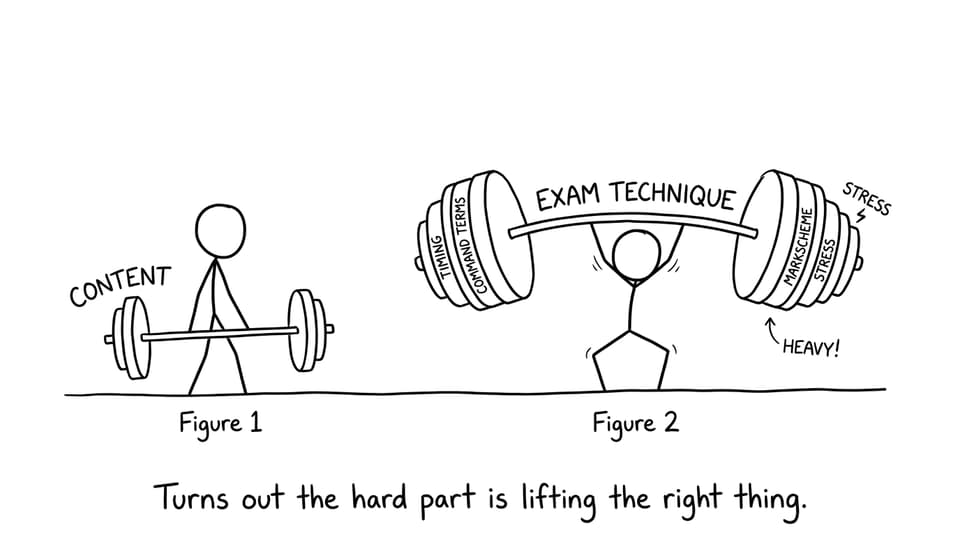
Train exam performance, not just knowledge (timed practice, feedback loops).
If you want one place to consolidate your workflow, start at RevisionDojo for IB.
What the IB Diploma really signals to US admissions
The IB Diploma Programme is a two-year curriculum (ages 16--19) built around six subjects plus three core components:
-
Extended Essay (EE): independent research
-
Theory of Knowledge (TOK): critical thinking about knowledge and claims
-
CAS: creativity, activity, service with reflection
To an admissions reader, that structure matters because it mirrors what college demands: sustained workload, academic writing, and self-management. In other words, the IB is not only content. It’s training.
US universities evaluate you in context. If your school offers IB and you choose it (or it’s the main option available), it becomes the lens through which your academic choices are understood.

IB vs AP (what matters more than the label)
AP is more common in the US, but “common” isn’t “better.” What selective colleges want is evidence you took the most demanding path available and performed well. The IB often stands out because it includes:
-
long-form writing (EE, many IAs)
-
internal assessments with sustained deadlines
-
breadth across disciplines
That’s why “only IB” can be a strength: it’s a coherent system, not a scattered set of single-course challenges.
Typical IB score expectations for top US universities
There is no single cutoff, but patterns are fairly consistent:
-
Most competitive private universities (think Ivy-level selectivity): often 40--45 predicted or final
-
Highly selective public flagships: often 36--40 predicted or final
Within those totals, your HL performance can matter more than the headline number. A student with a slightly lower total but perfect alignment between HLs and major (plus strong writing and activities) can be more compelling than a student with a higher score but no clear academic story.
To keep your expectations grounded during exam season, use the IB Grade Calculator to translate practice marks into realistic outcomes.
Choose IB HLs like you’re building a narrative
A useful mental model: your IB subjects are evidence. They’re not just “requirements.”
Strong HL combinations (common examples)
-
Engineering: HL Math AA + HL Physics (and often Chemistry)
-
Pre-med style pathways: HL Biology + HL Chemistry
-
Humanities: HL English + HL History (or Global Politics)
-
Business/econ: HL Economics (plus strong math)
You don’t need the “perfect” trio. You need a defensible one: a set of HLs that makes your intended direction believable.
If you’re trying to convert revision into real score gains, build a system around practice: the free Questionbank is designed for targeted drilling with mark-scheme-aligned feedback.
How EE, TOK, and CAS become application assets
Elite admissions is not only about proving you worked hard. It’s about proving you worked hard on something that mattered to you.
-
EE: gives you a research story, not just a grade
-
TOK: gives you language for nuance, ambiguity, and argument
-
CAS: gives you evidence of commitment and reflection
A strong US application often takes one or two threads and runs them through everything: course choices, activities, essays, and recommendation letters. The IB core makes that easier because you already have built-in raw material.
When the EE or an IA feels messy, it helps to get fast, criterion-aware feedback. That’s where RevisionDojo’s Grading tools and Coursework Library can reduce the “I’m guessing” phase, and Tutors can help you turn a vague draft into a clear argument.
What else you need beyond IB (yes, even with a 45)
Top US universities read applications holistically. That means your IB scores are crucial, but they sit beside:
-
Essays that show voice and reflection
-
Recommendations that describe how you think and contribute
-
Activities that show depth (not just a long list)
-
Standardized tests where required or strategic (varies by school)
The best approach is to let your IB workload simplify your life, not complicate it. Your strongest essays often come from what you already do every week: wrestling with a TOK claim, revising an EE argument, or learning to write under pressure.
To train that pressure, mix learning with simulation. Combine Digital IB Study Notes with weekly timed practice using Online IB Mock Exams so your preparation becomes measurable.
Common myths about IB and US admissions
Myth: “You need APs to get into US colleges.”
If you’re doing the full IB, you’re already in one of the most rigorous mainstream programs. Admissions readers focus on how well you did in the hardest curriculum available to you.
Myth: “The IB is too international.”
Selective US universities admit students from many systems. The IB is familiar, and its assessment style often helps you write stronger essays and handle college-level work sooner.
Myth: “Colleges don’t understand predicted grades.”
They do. Predicted grades are common in global admissions, and your school profile helps explain how predictions are made.
A practical IB plan for students preparing for exams
A plan that works is usually boring in the best way:
-
Learn: use Study Notes to get clean, syllabus-aligned understanding.
-
Remember: reinforce with Flashcards and spaced repetition.
-
Apply: drill weak topics in the IB Question Bank guide mindset (practice, feedback, fix, repeat).
-
Simulate: sit full papers with IB Predicted Papers and review mistakes for patterns.
-
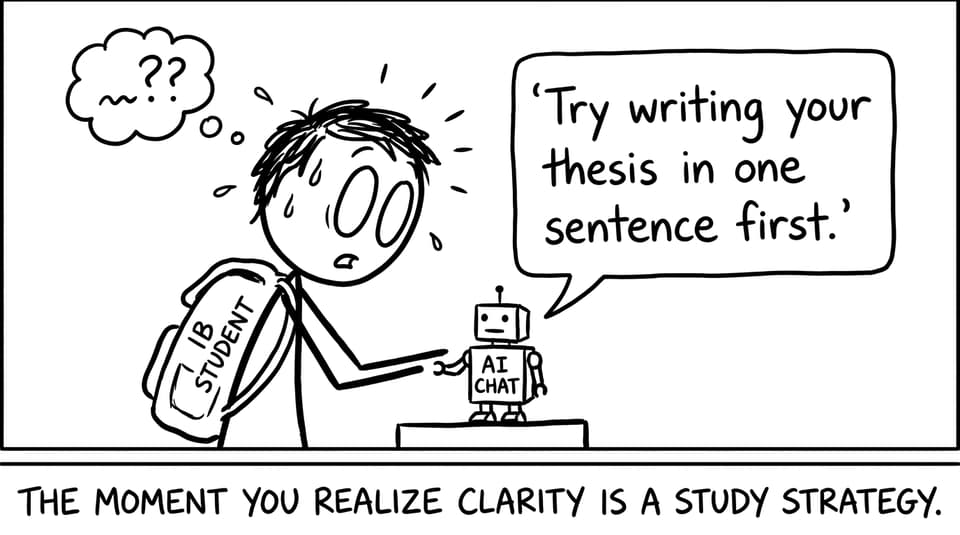
Get unstuck: use AI Chat to clarify concepts quickly so you don’t lose momentum.
If you want the philosophy behind predicted practice, read IB Predicted vs Specimen Papers: What They Mean.
Closing: let IB be your advantage, not your anxiety
You can get into a top US university doing only the IB. The students who do it aren’t necessarily the ones with perfect lives or superhuman discipline. They’re the ones who turn the IB into proof: proof of rigor, proof of writing ability, proof they can handle pressure, and proof they can commit to something over time.
If you want a calmer, more organized way to build that proof, RevisionDojo is built to be the all-in-one IB resource: Questionbank, Study Notes, Flashcards, AI Chat, Grading tools, Predicted Papers, Mock Exams, Coursework Library, and Tutors. Start with one subject, one weak topic, and one timed session this week. Then let the evidence stack up.
