
If your brain feels like it’s running a marathon while your calendar keeps adding hills, you’re not imagining it. IB season can turn smart students into exhausted ones: the kind who can explain the topic perfectly at 4pm, then panic at 11pm because “what if I forget everything tomorrow?”
Therapy won’t magically do your IB revision for you. But it can make you the kind of person who shows up consistently, thinks more clearly under pressure, and recovers faster after a bad day. And those are exam skills, even if they don’t look like exam skills.
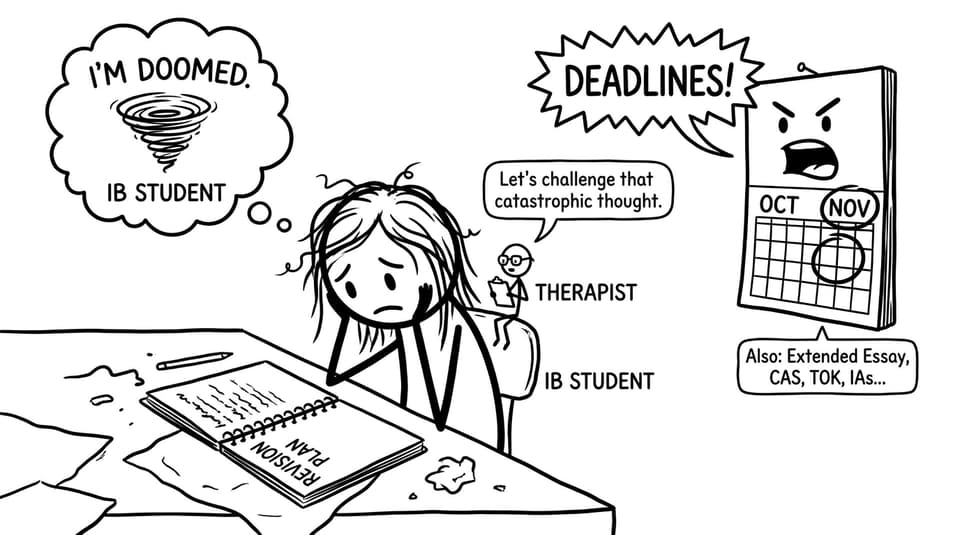
A quick checklist: signs therapy could help your IB performance
Therapy is worth considering for IB students when the problem isn’t intelligence, but friction:
-
You revise, but anxiety keeps hijacking focus.
-
You procrastinate, then hate yourself for procrastinating.
-
You feel burned out, even when you “didn’t do enough.”
-
One low mark becomes a story about your future.
-
Sleep is inconsistent, and your memory feels worse.
If any of this feels familiar, you’re not alone. And you’re not “weak.” You’re experiencing a normal stress response in an unusually intense program.
How therapy supports better IB grades (without being a study hack)
Therapy helps because it reduces the invisible costs of studying: rumination, perfectionism, avoidance, and panic. When those costs drop, the same hour of IB revision produces more learning.
Cognitive Behavioral Therapy (CBT) helps you study with less fear
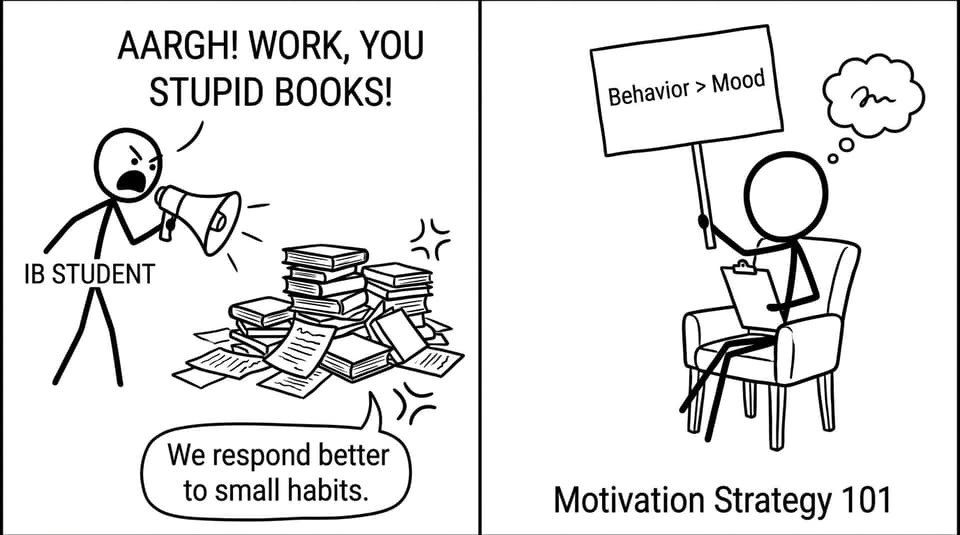
CBT trains you to notice the thought that spikes stress (“I’m going to fail”) and replace it with something accurate and workable (“I’m behind on this unit, so I’ll do 20 targeted questions and review mistakes”). That shift matters in IB because your consistency is more important than your moods.
A good next step is pairing CBT thinking with structured practice. When your plan is fuzzy, anxiety fills the gap. RevisionDojo makes it concrete with Study Notes, Flashcards, and a topic-based Questionbank that turns “revise Chemistry” into “do 15 questions on equilibrium, then review errors.”
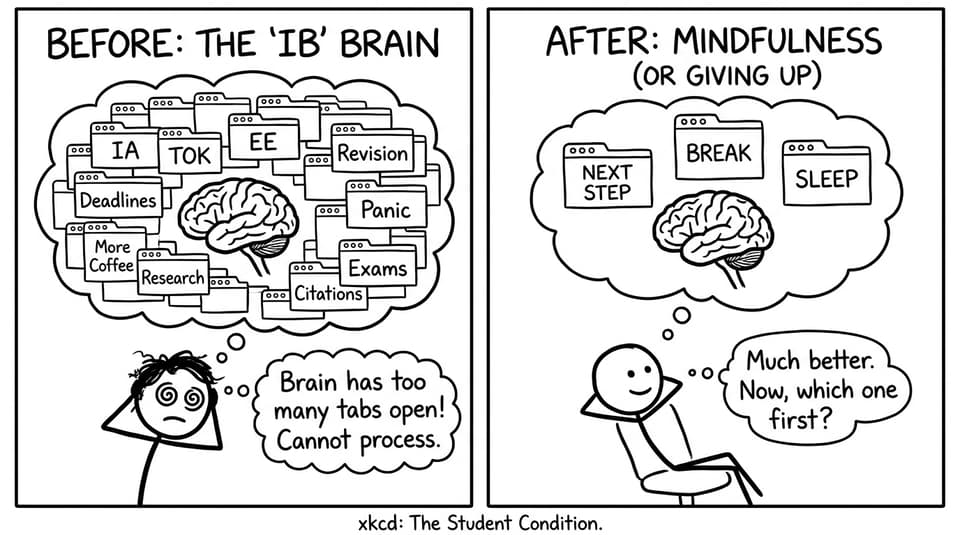
Mindfulness reduces test anxiety and improves attention control
Mindfulness isn’t about “emptying your mind.” It’s about noticing when your attention slips, then gently bringing it back. In IB exam prep, that can look like returning to the next question instead of spiraling over the last one.
For practical routines that protect calm while you keep momentum, see How to Cope with IB Exam Stress & Anxiety About Failing.
Academic coaching-style therapy builds motivation through systems
Many students wait to “feel motivated” before they work. Therapy can flip that: build tiny actions first, let motivation follow. That’s why systems like timed blocks, checklists, and weekly review sessions are so effective in IB.
If you want a structure that works on chaotic weeks, borrow from The Ultimate Daily IB Study Schedule and How to Create a Balanced IB Study Schedule.
How to combine therapy skills with RevisionDojo (a realistic plan)
Here’s a simple way to integrate therapy and IB prep without turning your life into a self-improvement project:
-
Name the pattern (therapy): “I avoid Maths because I feel stupid.”
-
Shrink the task (strategy): 10 minutes of notes, then a short Questionbank set.
-
Track evidence (therapy): log what happened when you started anyway.
-
Train performance (RevisionDojo): use Mock Exams, Grading tools, and Predicted Papers to rehearse pressure in controlled doses.
If burnout is already in the picture, read Avoid Burnout in Year 2 of IB and IB Burnout Psychology: Why It Happens and How to Recover.
A calmer way to win at IB
The most powerful change isn’t becoming a different person before exams. It’s becoming someone who can feel stress and still take the next useful step. Therapy helps you build that skill. RevisionDojo helps you turn that skill into points with Study Notes, Flashcards, a Questionbank, AI Chat, Mock Exams, Grading tools, Predicted Papers, and more.
If you’re preparing for IB exams right now, choose one small action today: one topic, one timed set, one review. Then repeat tomorrow. That’s how confidence is built.