The night before an IB exam can make smart people think dumb thoughts.
You stare at the syllabus. Your group chat is pinging. Your brain starts negotiating: What if I just… found a shortcut? Not because you’re a “bad student,” but because pressure squeezes your world down to one number.
If you’re asking, “Can I cheat on an IB exam?” the honest answer is that attempts happen. But the better answer is this: in the IB, cheating is usually a short-term fantasy with long-term consequences. And there are safer, faster ways to improve your result that don’t gamble your diploma, your university plans, or your peace of mind.
The quick checklist (before you do something irreversible)
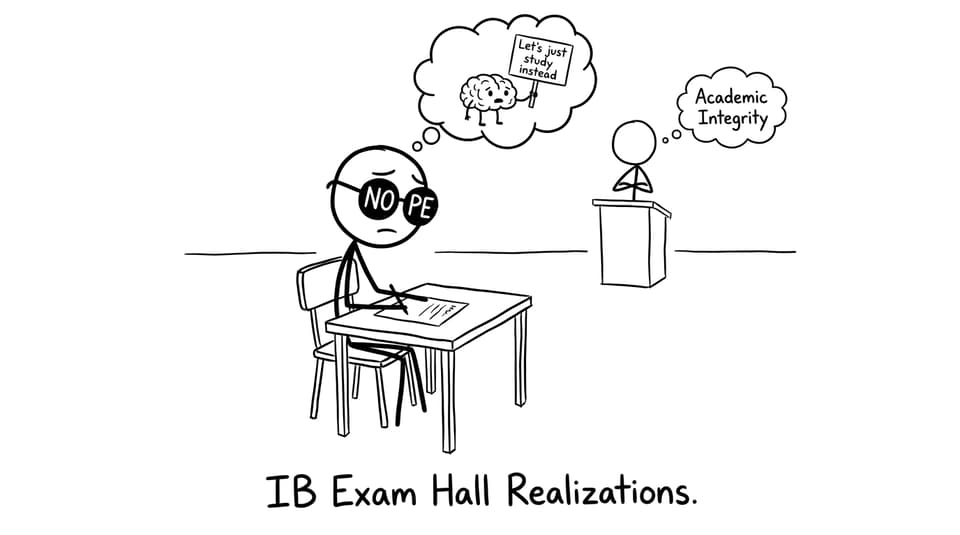
If you feel tempted to cheat in the IB, pause and run this checklist:
-
Are you actually behind on content, or behind on practice under time?
-
Do you know your weakest two topics, or just feel “generally doomed”?
-
Have you done a timed block this week (even 25-45 minutes)?
-
Have you asked for help in a way that stays ethical (teacher, friend explaining concepts, tutor)?
-
Have you used tools that give fast feedback rather than vague motivation?
For a clean study loop that works when time is tight, start with the RevisionDojo App workflow for IB exam prep and build from there.
Can you cheat on an IB exam (and get away with it)?
Most students asking this aren’t trying to become criminals. They’re trying to escape panic.
But the IB is built to reduce the odds that misconduct slips through. Schools invigilate exams tightly, and the IB also investigates academic integrity concerns across coursework and written submissions. Detection doesn’t only happen in the room. It can happen after the fact, when patterns, wording, or anomalies show up in moderation and marking.
Common forms of IB misconduct the programme monitors include:
-
Plagiarism in Internal Assessments (IAs) and the Extended Essay (EE)
-
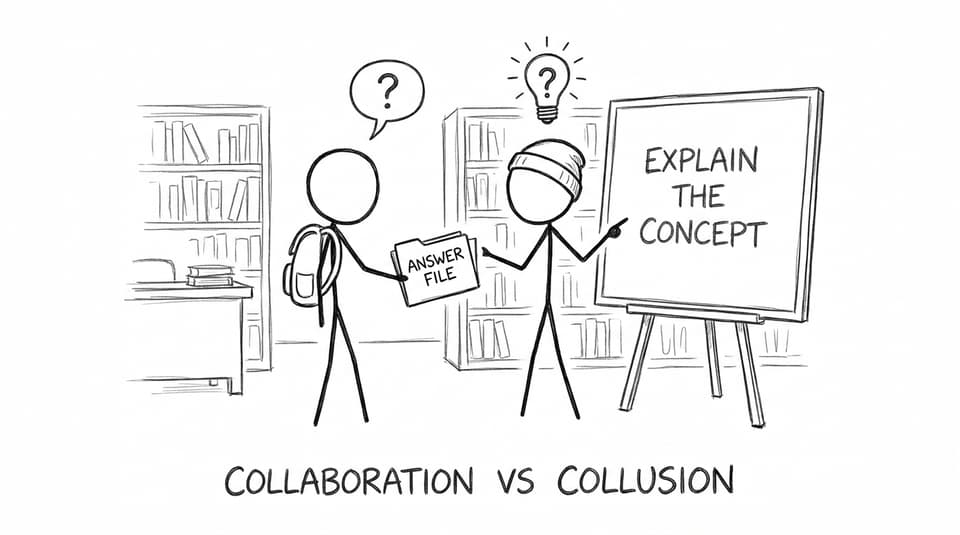
Collusion (coordinating answers or sharing work inappropriately)
-
Using unauthorised materials, devices, or notes during an exam
-
Submitting work that is not authentically your own (including heavy AI-generated text without proper acknowledgement)
If you want to replace anxiety with a plan, build exam confidence through real practice: the RevisionDojo Questionbank is designed for exam-style drilling with feedback, which is what panic is usually asking for.
What happens if you’re caught cheating in the IB?
In the IB, consequences can be severe because the programme treats integrity as part of the qualification itself.
Depending on what happened and when it’s found, outcomes can include:
-
A zero for the affected component
-
Withholding of results
-
Disqualification from the IB Diploma
-
School disciplinary action
-
Universities being notified (which can affect offers)
The part students underestimate is the timing: even if something “works” in the moment, the risk can return later when work is reviewed, moderated, or questioned.
There’s also the quieter consequence: the months after can feel like living with a low-grade alarm in your chest. You don’t just fear being caught. You stop trusting your own ability.
Three real-world patterns (and what they teach)
These examples reflect common integrity issues seen across the IB ecosystem.
Extended Essay plagiarism
A student copies sections from online sources and cites poorly (or not at all). The EE can be awarded zero, which can jeopardise the diploma even if other subjects went well.
What it teaches: In the IB, “almost original” can still count as not authentic. Learn citation properly early and keep your draft trail.
Collusion through messaging apps
A group shares answers before or around an exam. Students who “only received” the info can still be investigated.
What it teaches: In the IB, passive involvement can still be misconduct. Study together, but don’t trade answers.
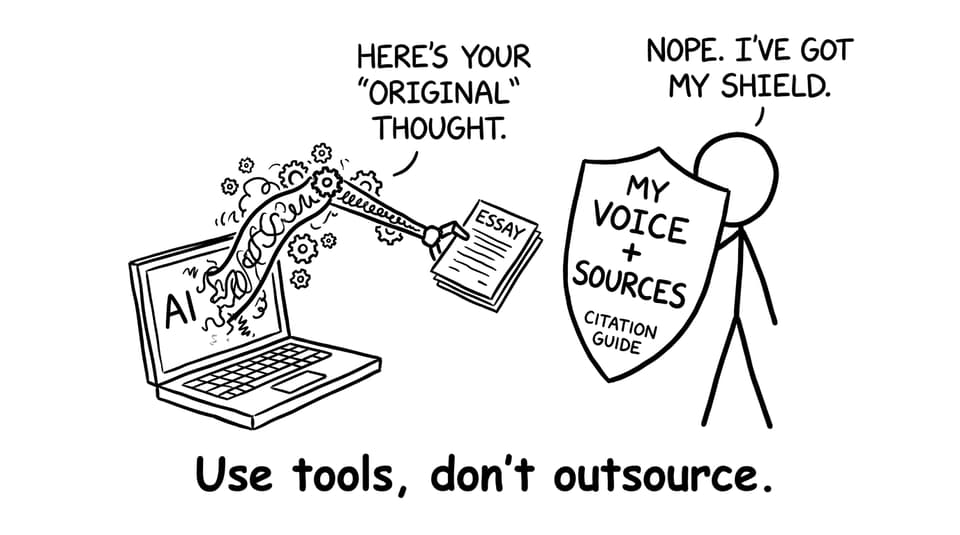
AI-generated coursework
A student submits text generated largely by AI without meaningful personal input or proper acknowledgement. Inconsistencies in voice, odd references, or mismatch with the task can trigger scrutiny.
What it teaches: Use tools to learn, not to replace your thinking. If you use AI, keep it transparent and make the work genuinely yours.
For an ethical support system, RevisionDojo offers AI Chat for explanations and Grading tools to improve writing against mark-scheme expectations, without pretending someone else’s work is yours.
Why cheating isn’t worth it (even if you’re desperate)
Cheating feels like control. Usually it’s the opposite.
The academic risk is asymmetric
One decision can wipe out years of work. The IB doesn’t treat misconduct like a small mistake; it treats it like a breach of the qualification’s foundation.
The stress compounds
Students imagine cheating will reduce pressure. Often it creates a new kind: fear-based studying, hypervigilance, and isolation from teachers who could actually help.
You lose the skill you came here for
The IB is hard partly because it demands clear thinking under constraints. Cheating swaps that skill for a fragile gamble. And fragile gambles break at the exact moment you need stability.
What to do instead: a high-integrity plan that raises your IB score
This is the part that matters: what to do when you’re behind and the IB clock is loud.
Use the 60-minute loop (repeatable, not heroic)
-
10 min: Patch one gap using Study Notes
-
35 min: Do targeted practice in a Questionbank
-
15 min: Review mistakes, make 3 “error rules,” and convert them into Flashcards
RevisionDojo is built around this loop: Study Notes, IB Flashcards, and the Questionbank feature all connect so you don’t waste time deciding what to do next.
Add one timed session each week
Timed practice changes everything in the IB because it turns fear into data.
Use IB Predicted Papers and realistic Mock Exam practice guidance to build stamina, pacing, and mark-scheme accuracy.
If you’re unsure how to structure the final stretch, the routine in Is 1 Month Enough to Study for IB Exams? gives a calm, practical roadmap.
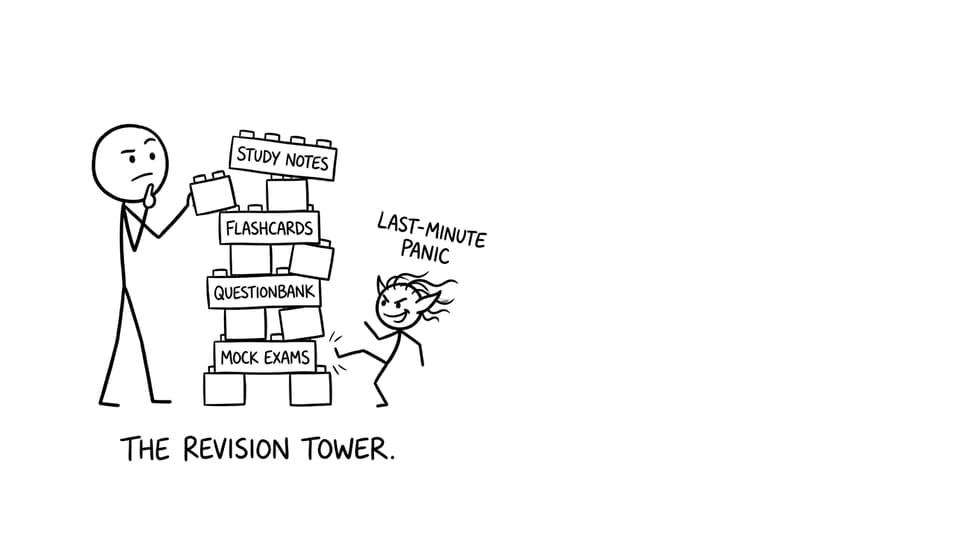
The calm truth: the IB is hard, but shortcuts are harder
When students consider cheating in the IB, it’s rarely because they don’t care. It’s because they care so much they can’t see a next step.
So take the next step that keeps your future intact: build one honest loop today. Use RevisionDojo for IB to combine Questionbank practice, Study Notes, Flashcards, AI Chat, Grading tools, Predicted Papers, Mock Exams, the Coursework Library, and Tutors into a plan you can actually follow.
Your goal isn’t to “get away with it.” Your goal is to walk into the IB exam knowing your score is yours.


