Join 650k+ students breezing through the IBReady to breeze through the IB?
If you have ever drawn a neat Lewis structure in IB Chemistry and then realized chlorine seems to be “breaking the rules,” you are not alone. One minute you are confidently applying the octet rule, and the next you are staring at ClF₃, ClF₅, or ClO₄⁻ wondering whether the syllabus is quietly gaslighting you.
The good news is that this is a real, testable exception, and once you can explain it in IB-friendly language, it becomes a reliable mark scorer in bonding, Lewis structures, and structure questions.
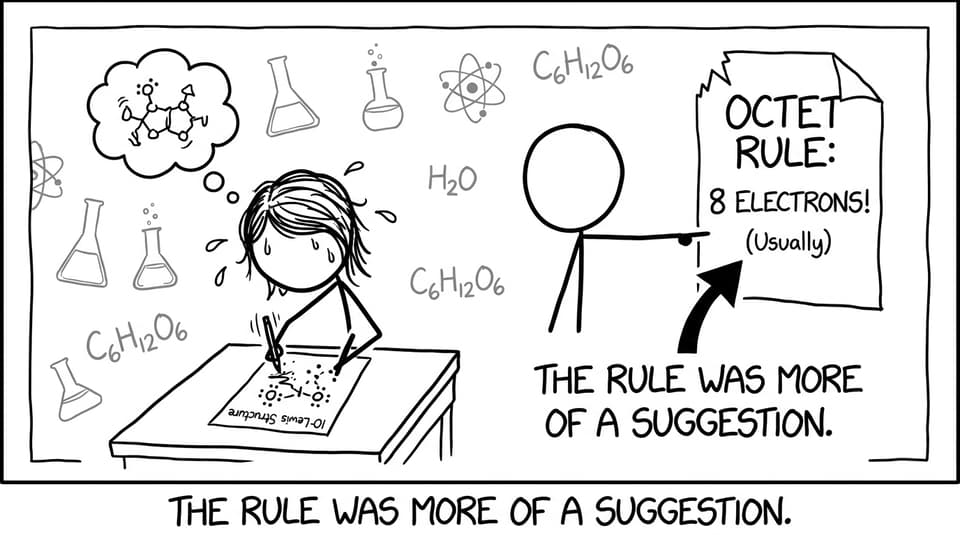
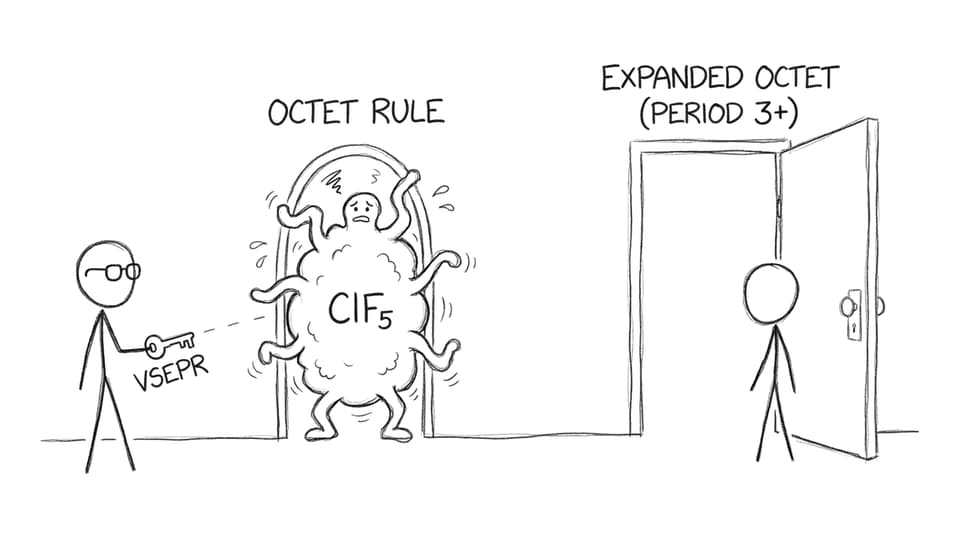
The rule was more of a suggestion
Quick checklist for expanded octets (chlorine edition)
Use this mini-checklist whenever an IB Chemistry question hints that chlorine has “too many electrons”:
Chlorine is a Period 3 element, so it has access to orbitals beyond 3s and 3p.
Some stable chlorine species require more than four electron domains around the central atom.
Expanded octets often appear when they help minimize formal charge and produce a lower-energy picture.
Period 2 elements (C, N, O, F) cannot do this in the same way.
For a syllabus-aligned refresher, RevisionDojo’s notes on the topic are here: .
The core idea in IB Chemistry: why chlorine can exceed 8 electrons
In early IB Chemistry, the octet rule is taught as a sturdy default: atoms share electrons to reach a noble-gas-like arrangement. That mental model works beautifully for second-period elements.
But chlorine lives in Period 3. It is larger, has a higher principal quantum number, and in the IB model it can access the 3d subshell when bonding requires it. In exam terms, that “availability” is the permission slip that lets chlorine form more than four bonds or hold more than eight electrons around the central atom.
It helps to connect this to the real exam skill: you are not being asked to philosophize about orbitals. You are being asked to draw a sensible Lewis structure and justify it with the syllabus language.
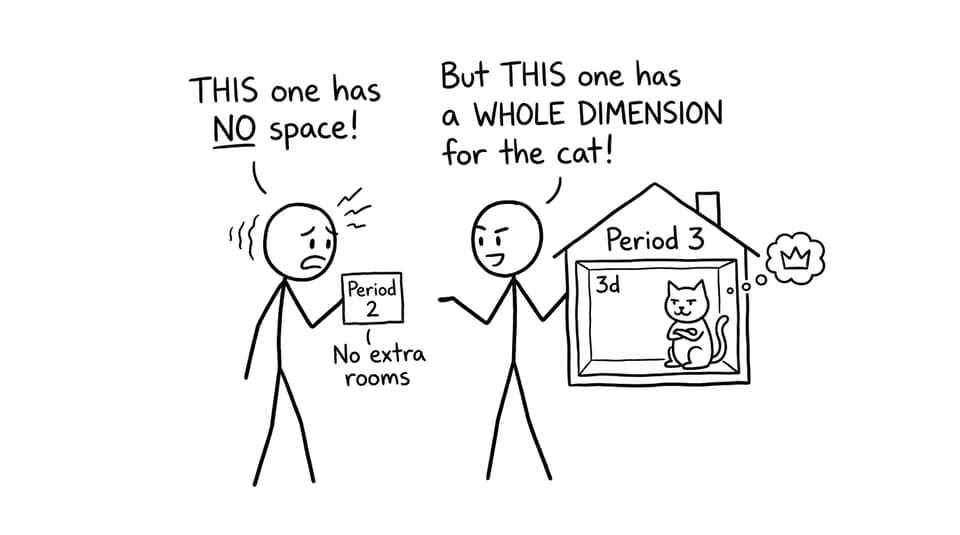
Period 2 has no extra rooms, Period 3 has a 3d room
Expanded octet examples you should recognize
These are the examples that repeatedly show up across IB Chemistry markschemes and revision resources.
ClF₃: 10 electrons around chlorine
When chlorine is central in ClF₃, it has:
3 bonding pairs to F
2 lone pairs on Cl
That is 5 electron domains total (10 electrons around the chlorine center). The structure is consistent with VSEPR (overall electron-domain geometry trigonal bipyramidal), and it is a classic expanded-octet case.
ClF₅: 12 electrons around chlorine
In ClF₅, chlorine is surrounded by:
5 bonding pairs
1 lone pair
That makes 6 electron domains (12 electrons around Cl). If you are also thinking “octahedral electron geometry,” you are already translating Lewis structures into shape reasoning, which is exactly what IB Chemistry likes to reward.
ClO₄⁻: formal charge pushes you past the octet
Perchlorate, ClO₄⁻, is where many students lose time. The reason is subtle: you can draw a structure that forces chlorine to keep an octet, but it often creates messy formal charges. The preferred IB approach is to select the structure that minimizes formal charge (and places negative charge on the more electronegative atoms, oxygen).
Why Period 2 elements cannot expand (the contrast examiners love)
A common IB Chemistry question is not “Can chlorine expand?” but “Explain why chlorine can, but fluorine cannot.” Your contrast points are:
Period 2 elements only have 2s and 2p available in the valence shell.
There is no 2d sublevel, so there is no comparable “extra capacity” in the IB model.
Period 2 atoms are smaller, so extra electron density creates stronger repulsions in a tighter space.
This is one reason exam questions often pair chlorine (expandable) with fluorine (not expandable): it tests whether you understand the scope of the octet rule.
IB Chemistry wording that earns marks (copy the structure, not the sentence)
When you explain expanded octets, your goal is to be brief, specific, and syllabus-aligned. A strong template is:
“Chlorine is a Period 3 element and can access higher-energy orbitals (including the 3d subshell) so it can accommodate more than eight electrons in covalent bonding, giving a lower-energy structure with reduced formal charges/electron repulsion.”
Notice what this does:
Names the period (fast context)
Mentions “access” rather than claiming d orbitals always bond
Links expansion to stability (formal charge and/or repulsion)
Conclusion: turn “octet confusion” into predictable marks
Chlorine can have an expanded octet in IB Chemistry because it is a Period 3 element and, in the IB bonding model, can access higher-energy orbitals that allow more than eight electrons around the central atom. The exam payoff is practical: it helps you draw correct Lewis structures for species like ClF₃, ClF₅, and ClO₄⁻, and it strengthens your explanations around formal charge and stability.
If you want this to feel automatic before your exams, use RevisionDojo as your loop: learn the idea in the Expanded Octet Notes, drill it with Flashcards, then pressure-test it in the IB Chemistry Questionbank with AI feedback, grading tools, and mock exams. That is how IB Chemistry stops being a set of rules to memorize and becomes a system you can explain under time pressure.