If you’ve ever opened your DAW, played a promising four-bar idea, and then panicked because you don’t know how it becomes an “IB-ready” piece, you’re not alone. IB Music composition is one of the few parts of the Diploma where your best idea can still lose marks if you can’t show control, development, and reflection.
The good news: composition for IB Music isn’t a mystical talent test. It’s a craft with clear expectations. When you build your workflow around those expectations, the composing portfolio (and HL Contemporary Music Maker work) becomes structured, repeatable, and surprisingly calm.
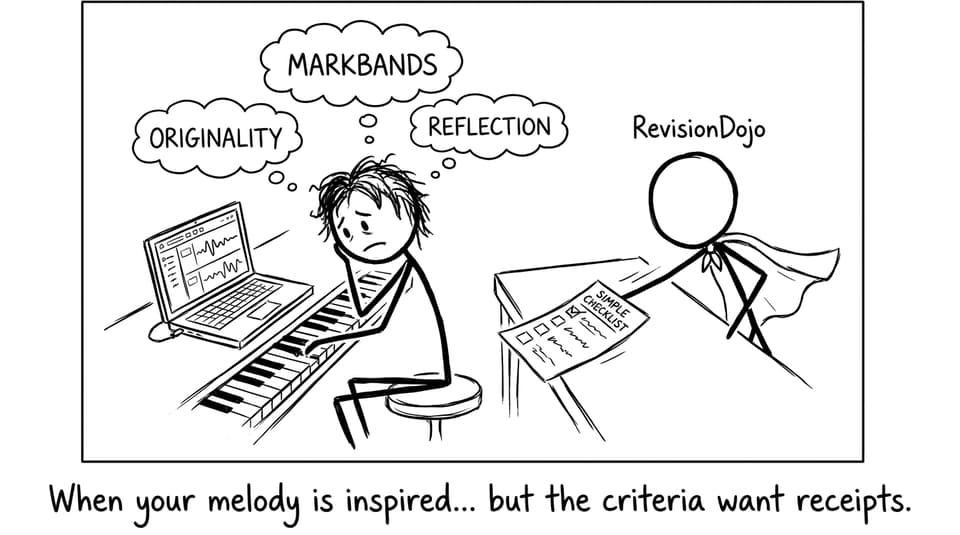
Quick checklist: what “smart” IB Music composition prep looks like
Use this as your weekly anchor for IB Music:
-
Read the criteria first and compose toward them, not just toward your taste.
-
Plan a limited palette (motifs, harmonic language, textures) so your piece sounds intentional.
-
Draft fast, revise slowly: version numbers beat “one perfect take.”
-
Write reflection as you go (not the night before submission).
-
Get feedback loops: self-check, rubric-check, then teacher/tutor check.
If you want one hub that supports that entire loop, RevisionDojo is built to do it with Study Notes, Flashcards, AI Chat, Grading tools, Predicted Papers, Mock Exams, a Coursework Library, a Questionbank, and Tutors.
The most important resource: the IB Music composition criteria
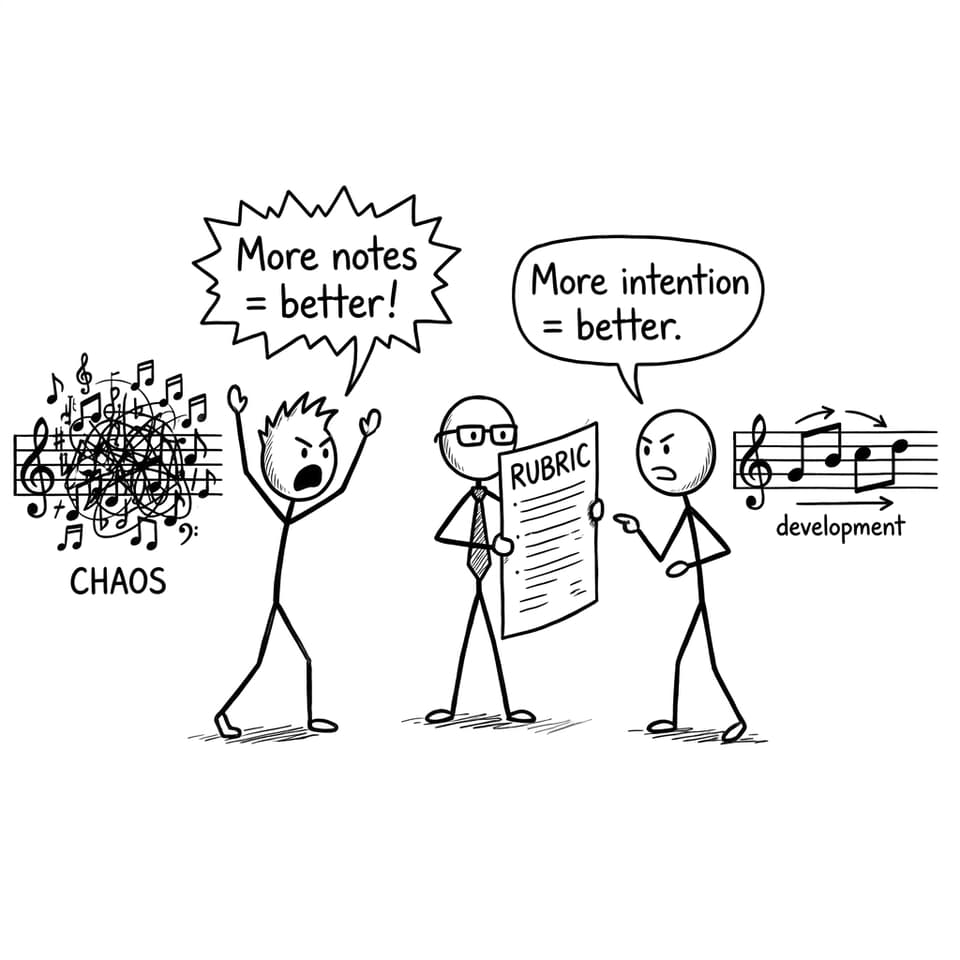
The biggest mistake in IB Music composition is treating assessment like an afterthought. Examiners aren’t only listening for a “nice” track. They’re listening for evidence of decisions.
Start here: What Examiners Look for in IB Music Compositions. It’s the kind of overview you return to before each draft because it reminds you what your music needs to prove.
A practical way to use criteria while composing:
-
After each draft, write three sentences: “My main idea is… I developed it by… I controlled the structure by…”.
-
If you can’t finish those sentences, your next session isn’t “compose more”; it’s “clarify intention.”
Best resources for developing ideas (without repeating yourself)
Every IB Music student hits the same wall: you like your motif, but you don’t know how to grow it. Development is where marks live.
Try this resource pair:
-
What Examiners Look for in IB Music Portfolios to understand how “process evidence” strengthens your final submission.
-
How to Use Technology (GarageBand, Logic, Sibelius, etc.) in IB Music to turn experiments into controlled choices (texture layers, articulation, automation, orchestration).
Inside RevisionDojo, this is where students often combine AI Chat (to clarify theory options fast), Flashcards (to lock in terminology like modulation types, cadential patterns, rhythmic devices), and the Study Notes mindset: small, syllabus-aligned chunks instead of endless wandering.
Best resources for reflection (the part that quietly separates 6 from 7)
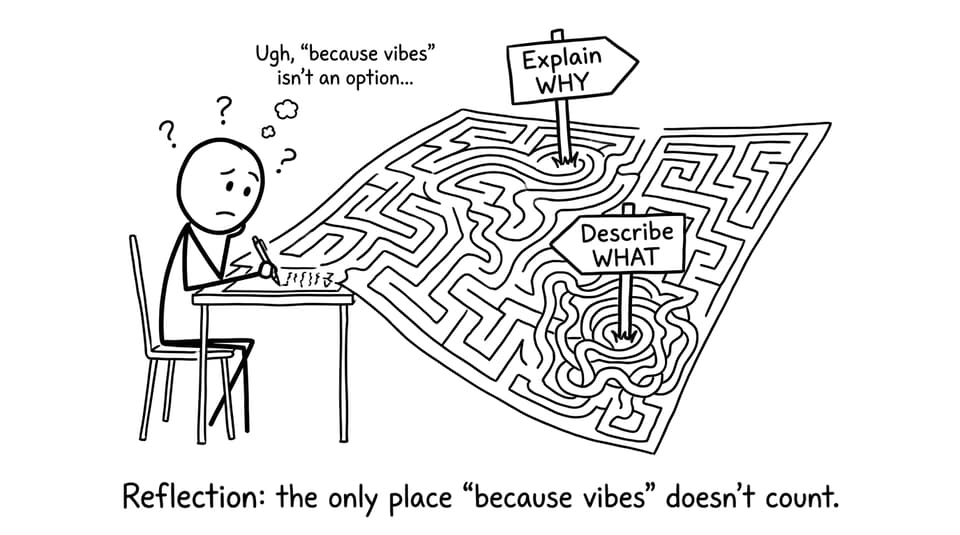
Reflection in IB Music isn’t a diary. It’s a map of cause and effect: I chose X, so the music does Y.
A strong reflection habit is to write during composing, not after:
-
What did I try today?
-
What changed between Draft 2 and Draft 3?
-
What problem did the change solve?
Use this guide when you need structure and wording that sounds examiner-friendly:
RevisionDojo’s Grading tools and Coursework Library are especially useful here because you can compare your reflection against what strong, rubric-aware writing looks like, then iterate.
Best resources for staying aligned with the whole IB Music course
Composition doesn’t sit alone in IB Music. Your exploring, listening, and presenting work can feed your composing choices, and your composing can give you better examples for analysis.
These links help you keep the full course context in view:
And if your listening analysis is shaky, fixing it will improve your composing vocabulary fast:
Conclusion: compose like an IB Music student, not just a musician
The heart of IB Music composition is still art. But the path to top marks is craft: purposeful choices, clear development, and reflection that explains your decisions like evidence.
If you want your composing process to feel less like guesswork and more like a system, make RevisionDojo your home base for IB Music: use the guidance above, build your draft-and-reflect workflow, and lean on the platform’s Questionbank-style practice mindset, Study Notes, Flashcards, AI Chat, Grading tools, Predicted Papers, Mock Exams, Coursework Library, and Tutors to keep your work examiner-ready from the first sketch to the final submission.