




If you have ever stared at your IB planner and thought, “This feels like six subjects taped to three extra projects,” you are not imagining it. The IB can feel like a lot because it is a lot. But that weight is also part of why the IB carries so well into university and beyond: it trains you to think clearly when life is busy.
This guide takes a balanced look at the benefits and drawbacks of the IB Diploma, with an exam-focused lens. The goal is not to romanticize the stress, or to scare you off. It is to help you use what the IB gives you, manage what it demands, and walk into exams feeling steady.
IB Diploma at a glance: a quick checklist
When the IB feels overwhelming, zoom out. Most of the experience can be traced to a few predictable forces:
-
Breadth: languages, sciences, humanities, and math push you to stay versatile.
-
Depth: HL courses reward precision and sustained effort.
-
Core: TOK, EE, and CAS train reflection, research, and follow-through.
-
Assessment style: success comes from practice, not just reading.
-
Time pressure: your habits matter more than your motivation.
If you want a single home base for all of that, start with the RevisionDojo for IB hub, then build your routine outward.
The biggest benefits of the IB (especially for exams)
The IB teaches you how to think, not just what to know
A quiet advantage of the IB is that it constantly asks, “How do you know?” TOK, the Extended Essay, and even structured mark schemes train you to justify claims, weigh evidence, and write with purpose.
That matters in exam season because strong thinking creates strong decisions: what to revise today, how to answer a command term, when to move on from a stuck question. If your revision is feeling fuzzy, using Digital IB Study Notes can help you turn “I kind of get it” into “I can explain it under time.”
Global recognition, plus real readiness for university
Universities tend to respect the IB because it is consistent: multiple subjects, multiple formats, and long-term projects. But the bigger win is internal: many students arrive at university already knowing how to research, cite, draft, and revise.
A practical way to turn that readiness into exam marks is to treat exam prep like a skill, not a mood. Build that with targeted practice in the RevisionDojo Questionbank, where you can practice exam-style questions and get instant feedback that keeps you honest.
Breadth creates flexibility (even if it feels annoying mid-year)
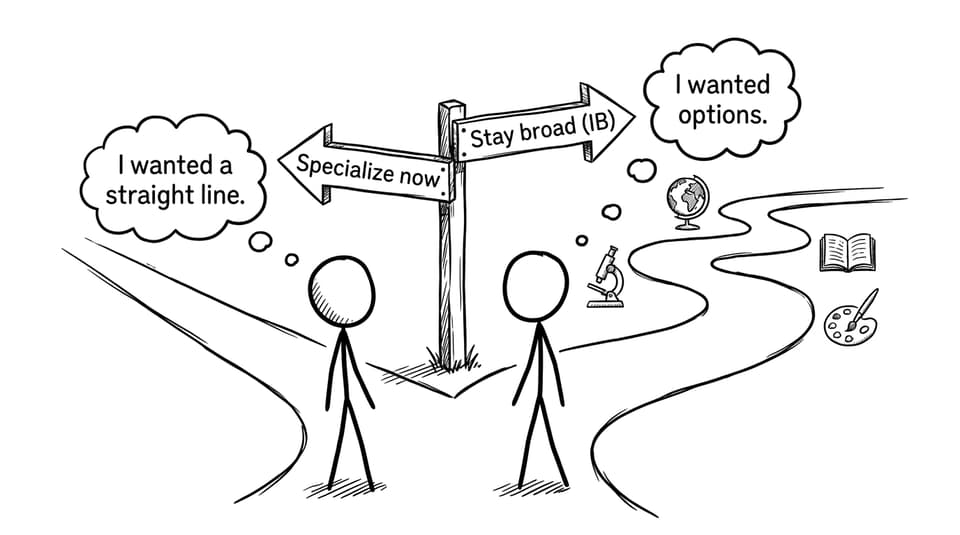
The IB can feel restrictive if you want to specialize early. Yet for many students, breadth becomes a safety net: you discover strengths, keep options open, and build interdisciplinary links that make essays sharper.
That is especially useful in essay-heavy subjects, where connections often separate a good response from a top one. If you want systems that make breadth manageable, the guide on How to Organize Your IB Notes Throughout the Year is a strong reset.
The real drawbacks of the IB (and how to soften them)
The workload is real, but it becomes lighter with a system
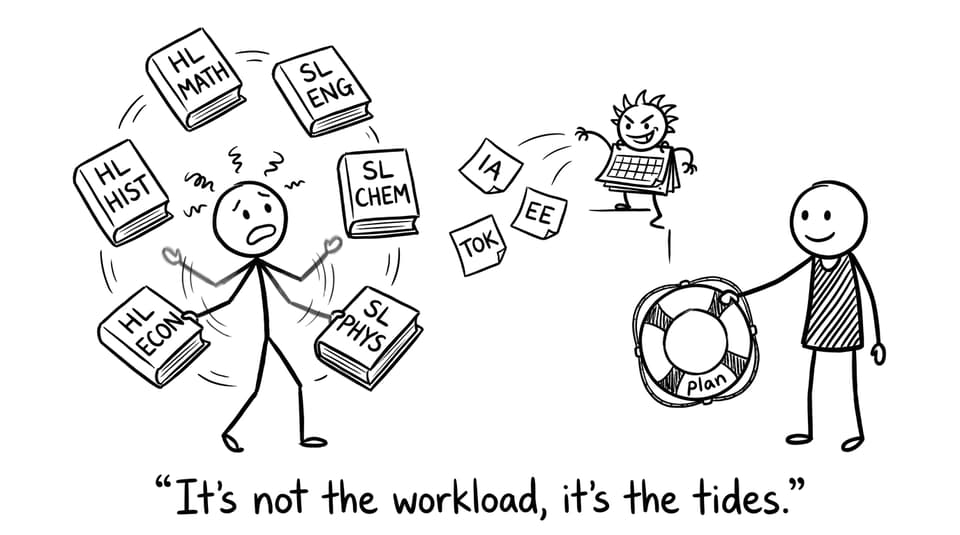
The common complaint about the IB is not wrong: six subjects plus IAs, EE, TOK, and CAS creates overlapping deadlines. The mistake is assuming the solution is “work harder.” Most of the time, the solution is “work smaller, more consistently.”
A high-leverage routine looks like this:
-
10 minutes daily: IB Flashcards with Spaced Repetition to keep recall alive.
-
3--4 sessions weekly: Study Notes, then Questionbank sets on one topic.
-
1 timed session weekly: simulate pressure using IB Predicted Papers or platform mock exams.
If you want the exact workflow, use RevisionDojo App: The Smarter Way to Prep for IB Exams.
Pressure can build quickly when feedback is slow
In the IB, waiting a week to learn what you did wrong is expensive. It costs time and confidence. That is why fast feedback loops matter.
RevisionDojo helps here with AI Chat, Grading tools, and Tutors, so you can fix misconceptions while they are still small. When you can, run your written work through feedback tools, then return to practice questions immediately. Confidence grows from evidence.
Access and cost vary by school
The IB can be expensive for schools to run, and students experience different levels of support. That is frustrating, but it is also why independent tools matter.
RevisionDojo is built to be a reliable equalizer: Study Notes, Flashcards, Questionbank, Mock Exams, Predicted Papers, and a Coursework Library live in one place, so you spend less time hunting and more time improving.

A balanced way to decide: is the IB worth it for you?
The IB is worth it for many students because the difficulty is structured. You do not just survive the work; you learn how to handle complex weeks, prioritize, and produce under constraints.
But it helps to be honest about fit. The IB rewards students who can build routines, ask for help early, and practice under time. If that is you (or you want it to be you), the IB can be a genuinely positive experience, not just a prestigious one.
Closing: Use the IB as a training ground, not a trial
The fairest way to describe the IB is this: it is demanding, and it is designed that way. The benefit is that it can make you sharper, more resilient, and more confident than you expect, especially if you build the right system.
If you are an IB student preparing for exams, let RevisionDojo be your control panel: Questionbank for targeted practice, Study Notes for fast clarity, Flashcards for daily recall, AI Chat and Grading tools for feedback, Predicted Papers and Mock Exams for realistic rehearsal, plus a Coursework Library and Tutors when you need deeper support. Start at the RevisionDojo IB hub and turn your effort into results.