Unemployment rarely arrives with drama. It usually shows up quietly: a shorter shift roster, a delayed contract renewal, a “we’ll call you.” In IB Economics, that quiet moment matters because unemployment is not just a statistic. It is a leak in the economy’s engine and a pressure point in society. And once you learn to see those leaks, your macro evaluation becomes sharper, calmer, and far more exam-ready.
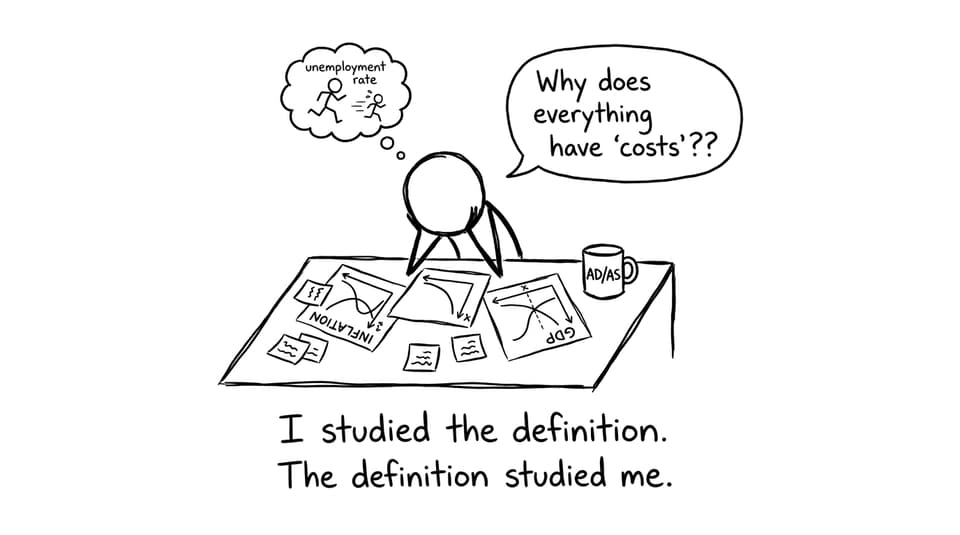
The IB Economics checklist: costs you must mention
If a question asks about the costs of unemployment, train yourself to hit these four areas (then evaluate):
-
Individuals: income loss, wellbeing, opportunity costs
-
Society: inequality, social cohesion, crime, education outcomes
-
Firms and the economy: lost output (real GDP), lower productivity
-
Government: lower tax revenue + higher welfare spending
For syllabus-aligned definitions and causes, start with Types and causes of unemployment and the deeper Types and causes of unemployment study notes.
IB Economics: the social costs start with a missing paycheck
In IB Economics, it’s tempting to treat unemployment as a clean macro variable: the unemployment rate rises, policymakers respond, graphs shift. But for the person living it, unemployment changes what is purchased, postponed, and quietly endured.
When income falls, essentials become decisions: rent vs transport, food quality vs bills, social life vs saving. That stress is not only personal. It often spills into mental health, family stability, and community trust. Over time, areas with persistent unemployment can experience weaker school performance, higher crime, and lower social cohesion. These are social costs because they reduce overall wellbeing and can persist even when growth returns.
To connect this to broader macro goals (and pick up evaluation marks), link unemployment to the government’s objectives in macroeconomics using IB Economics 3 Macroeconomics notes.
IB Economics: the economic costs are “lost output” plus long-run damage
The headline economic cost in IB Economics is lost output. If willing and able workers are idle, the economy produces below its productive potential (often framed as a negative output gap). That means lower real GDP than possible, and fewer goods and services than society could have enjoyed.
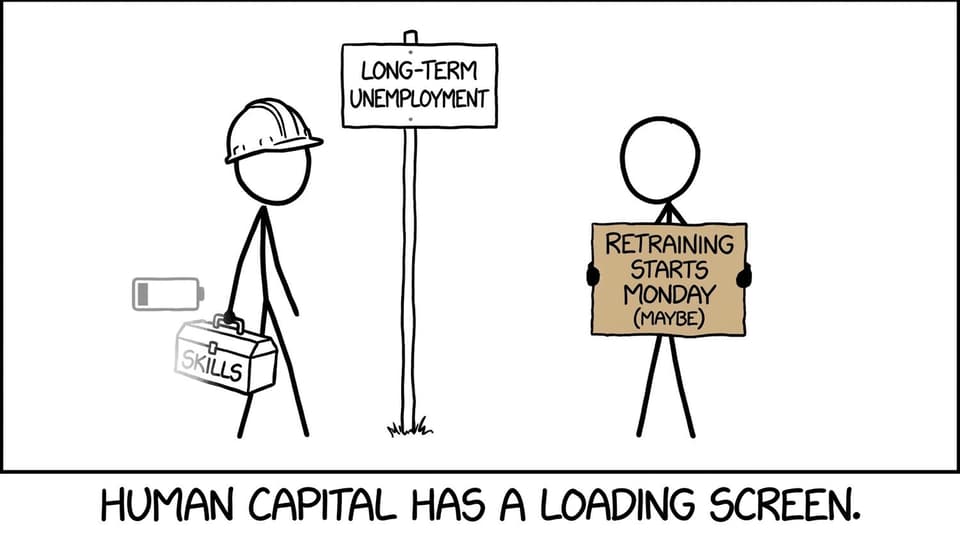
But the long-run story is often worse than the short-run story. Extended unemployment can reduce human capital: skills erode, confidence falls, networks thin out, and employability declines. This increases the risk of structural unemployment and weakens productivity growth over time.
For a focused syllabus pathway on consequences, use Consequences of unemployment (topic hub) alongside RevisionDojo’s tools like Study Notes and Flashcards to lock definitions and evaluation phrases.
IB Economics: why government budgets get squeezed
Unemployment hits public finances from both sides.
First, tax revenue falls because fewer people earn wages and spending often drops (lower income and consumption tax receipts). Second, government spending rises through unemployment benefits, welfare support, and retraining programs. This combination can widen the budget deficit and increase public debt, or force cuts to services like healthcare and education.
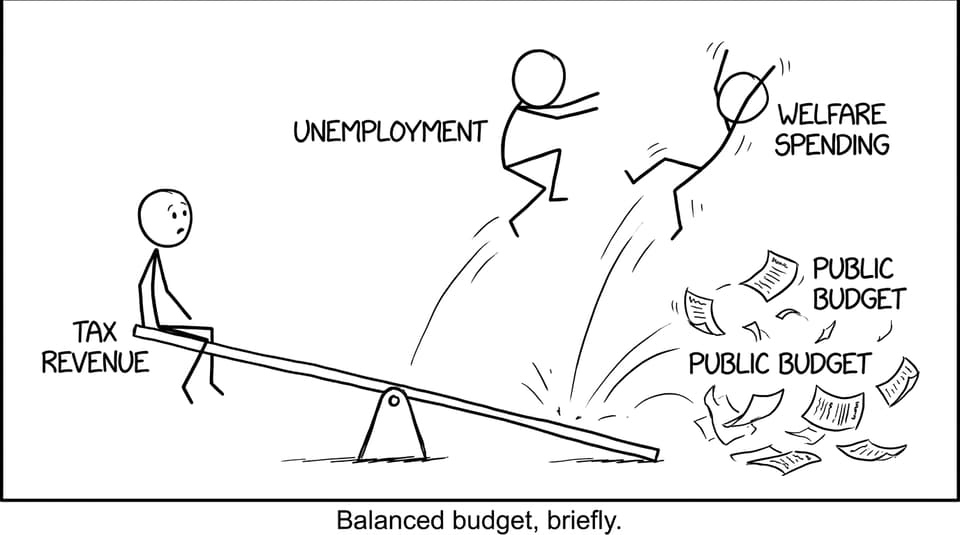
In exam evaluation, this is a great place to discuss trade-offs: supporting households may stabilise demand, but persistent deficits can limit future policy flexibility.
A quick exam technique note (how to write it)
When you’re under timed conditions, structure wins marks. Use a clean definition, then separate economic vs social costs, and finish with evaluation (short run vs long run, size of unemployment, type of unemployment).
If you want to tighten your writing process for IB Economics, use Step-by-step approach to writing IB Economics essays and avoid common traps from Top 7 IB Economics HL mistakes.
Bring it home with RevisionDojo
Unemployment is one of those IB Economics topics that rewards clear chains of reasoning: unemployed workers mean lost output, weaker budgets, and real social strain. To turn that understanding into marks, RevisionDojo helps you practise the exact skills the exam rewards: Questionbank responses under time pressure, Study Notes for clean definitions, Flashcards for fast recall, and AI Chat to test your explanations. When you’re ready to level up, add Grading tools, Predicted Papers, Mock Exams, the Coursework Library, and Tutors so your evaluation sounds confident, balanced, and exam-authentic.
For broader revision planning, see Methods for effective IB Economics revision and browse more topics via All IB Economics posts.
Near the end of your revision, remember the simple idea at the heart of IB Economics: unemployment isn’t only the absence of a job. It’s the presence of costs: economic, social, and lasting.