


A hook worth remembering
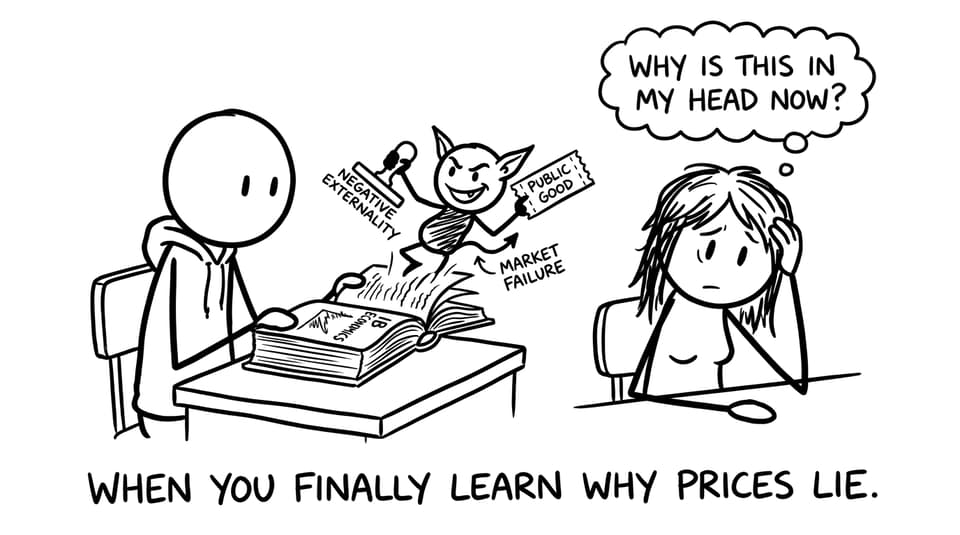
The first time you notice a price “working,” it feels like magic: a coffee costs what it costs, you pay, and the world moves on. Then IB Economics introduces a more uncomfortable idea: sometimes prices whisper only part of the truth. That gap between what a market delivers and what society actually needs is market failure. And in exams, it’s the difference between writing “the government should intervene” and explaining when, how, and why that choice might backfire.
Market failure in one exam-ready line
In IB Economics, market failure happens when the free market allocates resources inefficiently, creating a net welfare loss. Your job is to diagnose the cause, show the consequence (often with a diagram), and evaluate the best response.
Quick checklist (what to look for)
-
Externalities (costs/benefits spill over to third parties)
-
Public goods (non-rival, non-excludable, free-rider problem)
-
Information asymmetry (adverse selection, moral hazard)
-
Market power (monopoly/oligopoly outcomes)
For a syllabus map of where these sit, use the IB Economics resources hub.
Why understanding market failure matters in IB Economics exams
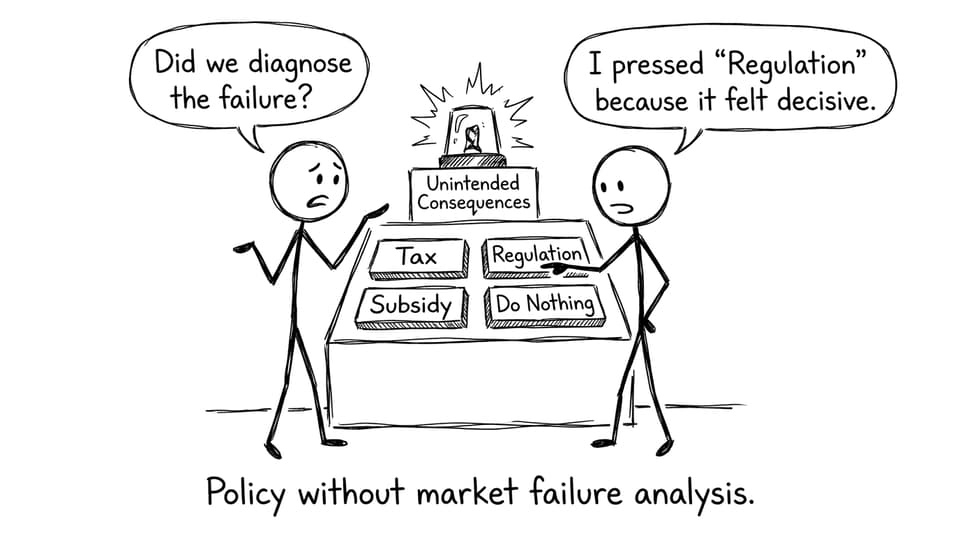
Examiners reward students who can move from definitions to judgment. Understanding market failure matters because it structures your evaluation: you identify the failure, justify intervention, then weigh limitations like government failure, administrative costs, or unintended consequences.
When you revise this unit, it helps to practice with exam-style prompts that force you to choose a policy tool and defend it. RevisionDojo’s Microeconomics Questionbank is built for that kind of pressure.
Externalities: when private choices create public side effects
Externalities are the classic gateway into market failure in IB Economics because they make the “invisible hand” look a little clumsy. If a factory pollutes, the market price of its product ignores health costs borne by others. If education creates spillover benefits, the market may under-consume it.
To sharpen your definitions and examples, revise with the 2.8 market failure notes on externalities and public goods, then test yourself using the matching 2.8 Questionbank.
Public goods: the free-rider problem in plain sight
Public goods matter because markets struggle to profitably supply something people can consume without paying. That’s why street lighting, national defense, or basic disease surveillance tend to require collective provision.
If you want a crisp, exam-friendly explanation with examples, use What Are Public Goods? | IB Economics Market Failure Guide. In IB Economics, strong answers also explain why underprovision happens and what interventions (taxation, state provision, regulation) might solve it.
Information asymmetry: when one side knows too much
Markets also fail when buyers and sellers don’t share the same information. That imbalance can distort incentives, shrink trust, and reduce mutually beneficial trades.
For a clear explanation you can borrow language from (and then adapt in your own words), revise Why Does Asymmetric Information Lead to Market Inefficiency?. If you want a deeper example set (adverse selection, moral hazard, signalling), the asymmetric information question explainer is a useful reference point.
Market power: when “because I can” becomes the business model
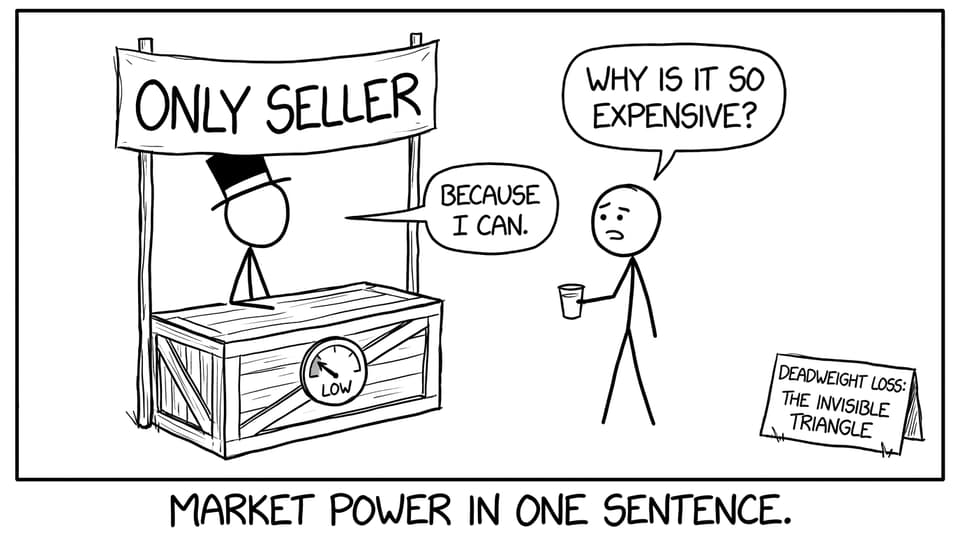
Market power matters in IB Economics because it creates underproduction, higher prices, and deadweight loss. A monopoly doesn’t aim for social efficiency; it aims for profit maximization.
RevisionDojo breaks this down by syllabus point in 2.11 Market Failure - Market Power and supports it with market power notes plus a targeted 2.11 Questionbank.
Closing: turn theory into exam leverage with RevisionDojo
Market failure isn’t just a chapter in IB Economics. It’s a lens for explaining why real economies look messy, and a framework for earning evaluation marks under time pressure. If you want to revise this unit efficiently, combine RevisionDojo’s Study Notes, Flashcards, Questionbank, AI Chat, and Grading tools to tighten definitions, sharpen diagrams, and practice policy evaluation. Add Predicted Papers, Mock Exams, the Coursework Library, and Tutors when you need realistic exam pacing and feedback. Learn the logic of market failure, and you’ll start seeing policy questions as patterns you can solve, not surprises you have to survive.