
A hook you can feel on results day
Two students sit the same IB Economics exam. Same classroom, same time limit, same data response. Yet their outcomes can look wildly different. That isn’t just an education story--it’s a market story.
In IB Economics, markets are often described as efficient systems for allocating scarce resources. But efficiency is not the same as equality. Markets can do exactly what they’re designed to do--match incentives with rewards--and still produce unequal outcomes.
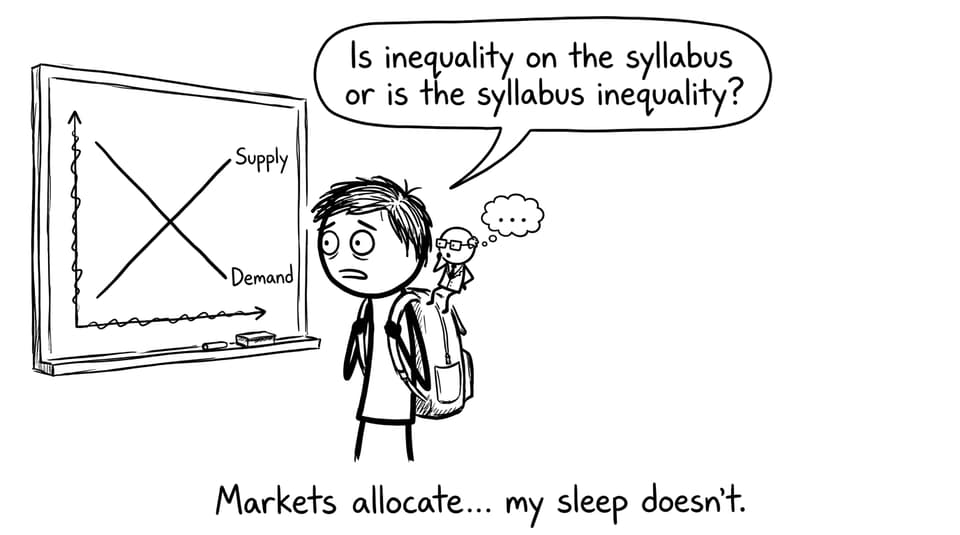
Quick exam checklist: the 4 drivers of unequal outcomes
Use this as a fast structure for Paper responses in IB Economics:
-
Different starting resources (human capital and asset ownership)
-
Different bargaining power (market power in product and labour markets)
-
Technological change (skill-biased shifts in labour demand)
-
Unequal opportunity (education, health, finance, networks)
For syllabus-aligned support, start from the IB Economics resource hub.
IB Economics: Markets reward what’s scarce, not what’s fair
A market wage is not a moral score. It’s a price. In IB Economics, prices rise when something is relatively scarce and highly demanded. That’s why surgeons earn more than baristas even if both work hard.
The key mechanism is differences in productivity and the demand for certain skills. Students with access to better education and training become higher-productivity workers. Their labour supply may be limited, while demand is strong, so wages rise.
This links directly to equity theory in the syllabus. If you need a clean definition distinction for essays, RevisionDojo’s notes on the market’s inability to achieve equity give you the exact language examiners like.
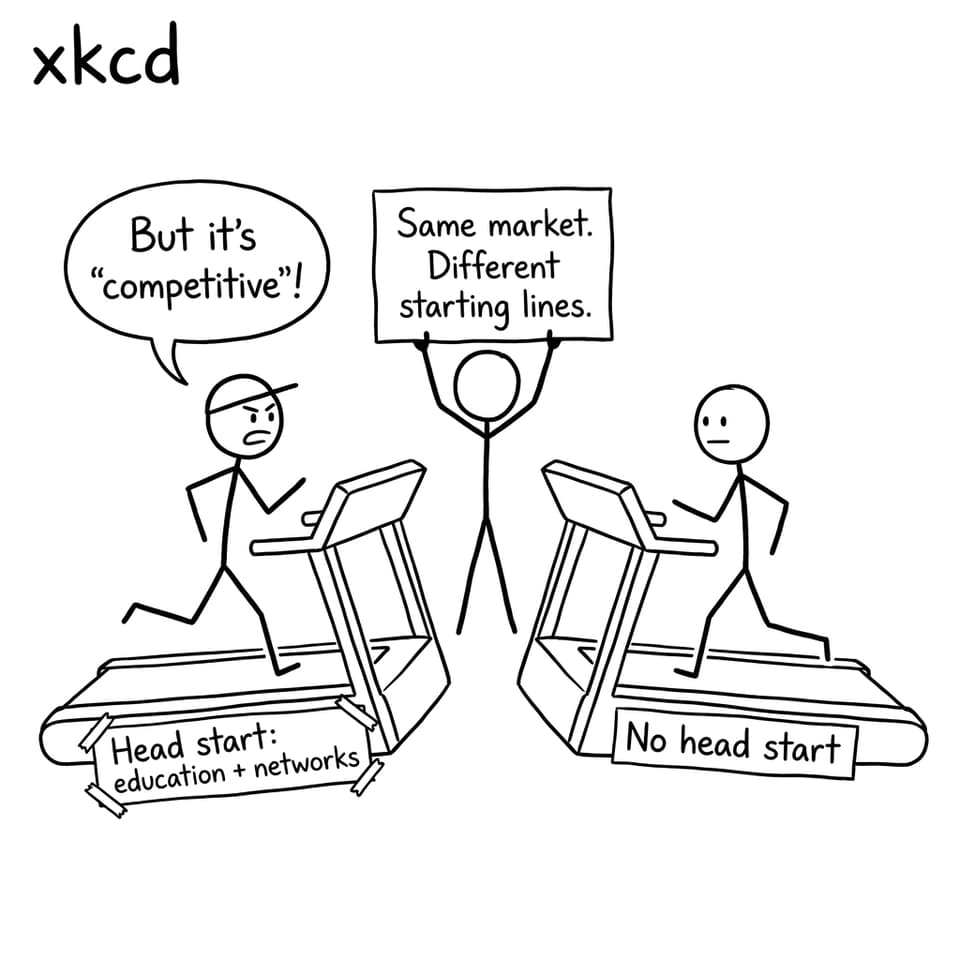
IB Economics: Market power concentrates income and wealth
Even if workers had identical skills, markets can still produce unequal outcomes when some firms (or workers) have more power.
In IB Economics, market power lets firms set prices above competitive levels. Those extra profits tend to flow to owners, shareholders, and top executives. Over time, that becomes wealth concentration, not just income differences.
If you’re revising market structures, connect inequality to monopoly and oligopoly: higher profits, barriers to entry, and weaker pressure to share gains with workers. These resources make that link easy:
IB Economics: Technology shifts the labour market toward skills
Technological change doesn’t just raise productivity--it changes who is valuable.
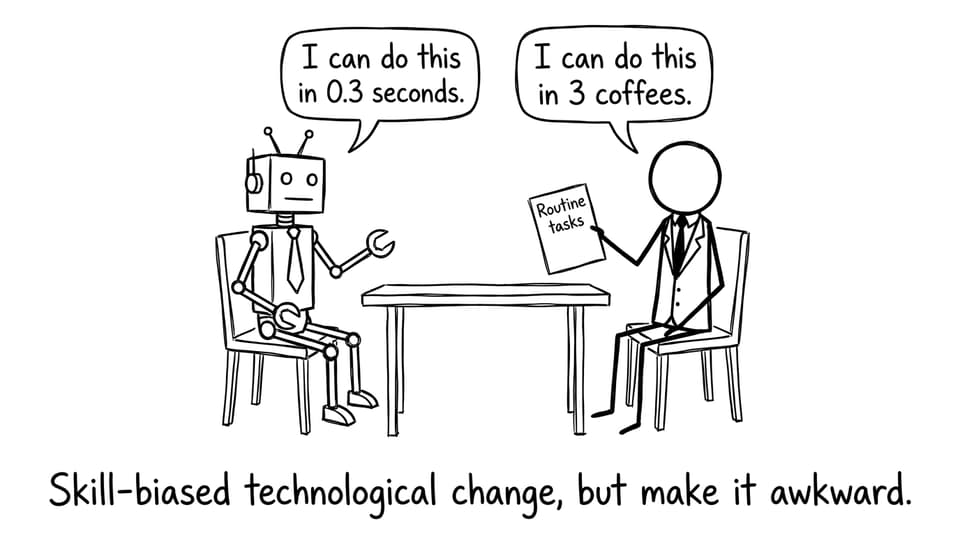
In IB Economics, a common explanation for modern inequality is skill-biased technological change. Automation replaces routine tasks, lowering demand (and wages) for some workers, while increasing demand for high-skill roles that design, manage, or complement technology.
That’s why inequality can rise even when GDP grows: the benefits are unevenly distributed across labour markets.
Turning understanding into marks (and calm)
For exams, anchor your evaluation in the syllabus sections on inequality and equity:
-
Use the 3.4 Inequality and poverty notes to cite causes and impacts precisely.
-
Practise explaining them under time pressure with the 3.4 Questionbank.
-
If you’re HL, pair it with 2.12 equity Questionbank.
RevisionDojo also helps you convert theory into exam performance: use Study Notes for definitions, Flashcards for recall, the Questionbank for timed practice, and AI Chat to stress-test your evaluation. When you want feedback that feels like an examiner, the Grading tools, Mock Exams, and Predicted Papers make your revision measurable. And if you’re working on applied examples or policy evaluation, the Coursework Library and Tutors can help you tighten your analysis.
Conclusion: the examiner wants the “why,” not just the “what”
Unequal outcomes aren’t a glitch in the market story--they’re often the predictable result of how markets price scarcity, reward productivity, and amplify power. For IB Economics, your edge is being able to explain those mechanisms clearly, then evaluate them with real-world context.
If you want to turn this topic into confident essays, build a quick loop on RevisionDojo: read the IB Economics notes, drill definitions with flashcards, practise with the Questionbank, and use AI Chat plus grading tools to polish your chains of reasoning. That’s how you study inequality without letting revision become one more unequal outcome.


