


Unemployment feels like a problem that should have an obvious solution. If people want to work, and societies need things done, why can’t an economy simply organise itself so everyone has a job?
In IB Economics, this question matters because it sits right at the intersection of theory and reality. It’s also a classic exam trap: students imagine “0% unemployment” as the goal, when the syllabus keeps hinting that some unemployment is normal in a changing economy.
The core idea in IB Economics: the natural rate
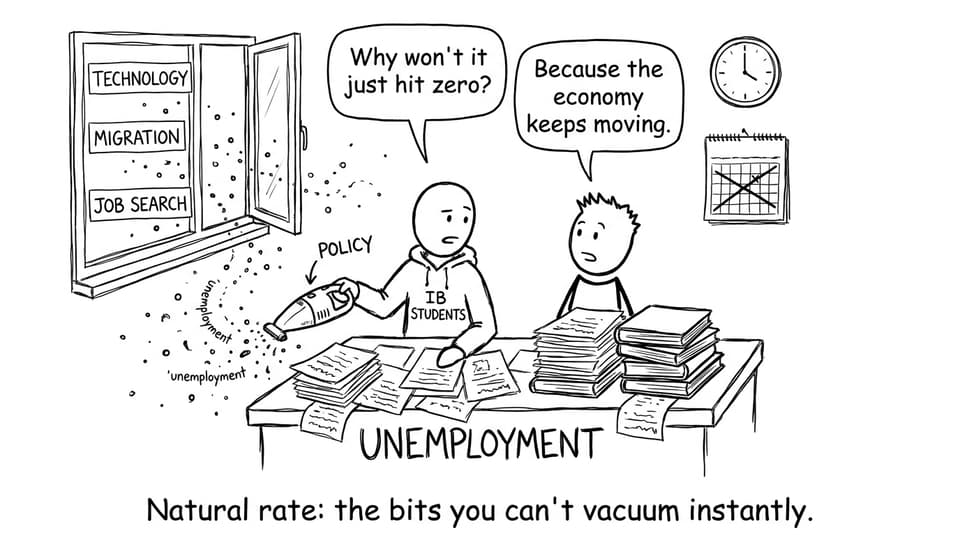
Even when the economy is “healthy,” unemployment rarely hits zero. In IB Economics, the key concept is the natural rate of unemployment (NRU): the unemployment that remains because the labour market is constantly adjusting.
If you need a syllabus-aligned refresher on definitions and categories, RevisionDojo’s hub on types and causes of unemployment is a good anchor.
Quick exam checklist (what to mention)
-
Define unemployment and distinguish frictional, structural, and cyclical unemployment
-
Explain why frictional + structural persist (NRU)
-
Add evaluation: time lags, imperfect information, and trade-offs with inflation
-
Link to policy limits (fiscal/monetary can’t “fine-tune” perfectly)
For short, targeted revision, you can also drill terminology using macroeconomics flashcards.
Why frictional unemployment won’t vanish
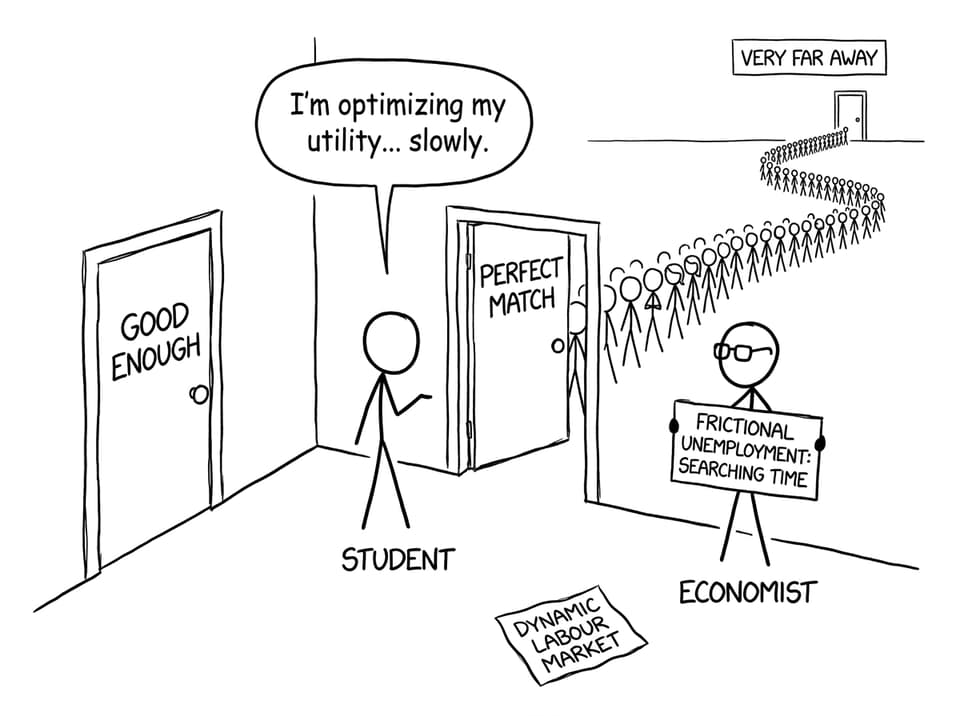
Frictional unemployment is the “in-between” time: leaving one job, searching, interviewing, relocating, waiting for contracts to start. In IB Economics, it’s often framed as a sign of a dynamic labour market, not automatically a failure.
The tricky part is that eliminating frictional unemployment would require something unrealistic: perfect information and instant matching between workers and firms. In real life, people shop for jobs the way they shop for shoes. Even when there’s a pair available, you still want the right fit.
Why structural unemployment is stubborn
Structural unemployment is more painful because it’s about mismatch, not waiting time. When industries shrink (automation, global competition, changing consumer demand), workers can’t always transfer skills immediately.
Retraining helps, but it takes time, funding, and motivation. Some workers face geographic immobility (jobs move cities; people don’t). Others face credential barriers. This is why IB Economics emphasises that structural unemployment can persist even when overall GDP is rising.
To connect this to the wider macro picture, review RevisionDojo’s notes on macroeconomics foundations and the blog explainer on what causes unemployment.
Why demand management can’t “perfectly” fix cyclical unemployment
Cyclical unemployment rises when aggregate demand falls: firms sell less, cut output, and reduce hiring. Governments respond with fiscal policy or central banks adjust interest rates. But policy has limits.
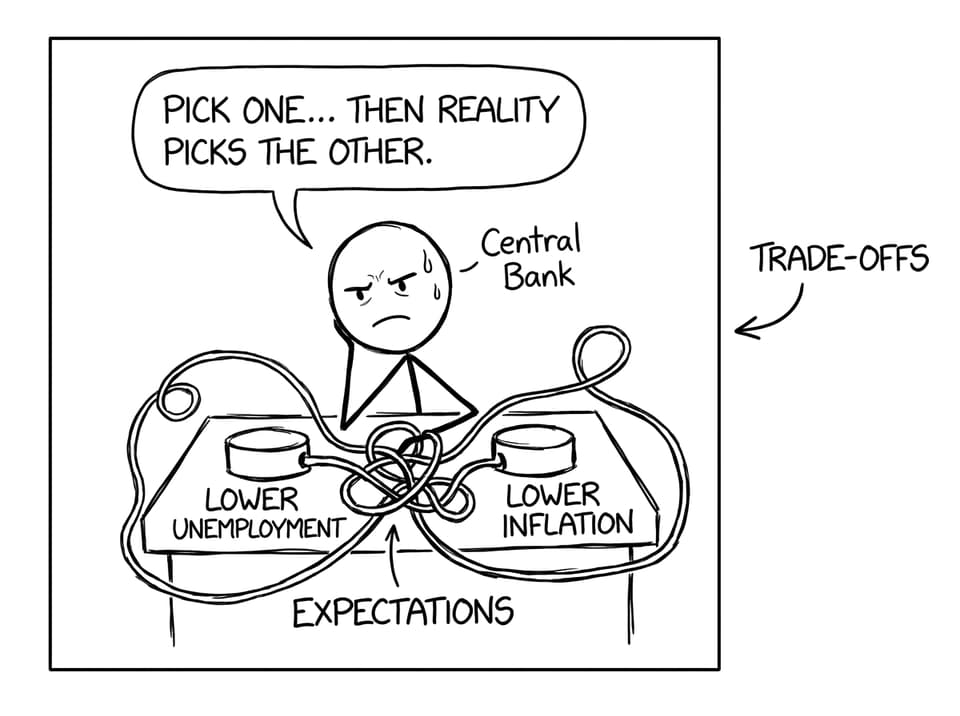
First, there are time lags (recognition lag, decision lag, implementation lag). Second, shocks are unpredictable. Third, if policymakers push unemployment too far below the NRU, inflationary pressure can build.
That trade-off is a high-value evaluation point in IB Economics. RevisionDojo’s notes on the relationship between unemployment and inflation help you phrase it in examiner-friendly language.
A practical way to write this in an exam
A strong IB Economics response usually follows this flow:
-
Start with NRU and define it clearly
-
Explain frictional vs structural (why they persist)
-
Add cyclical unemployment and the role of AD
-
Evaluate: policy constraints and inflation risk
If you want to add extra depth, link to welfare and output costs using consequences of unemployment, and the broader conflicts between goals in potential conflict between macroeconomic objectives.
Conclusion: use IB Economics theory, then practise it
Unemployment is difficult to eliminate because economies don’t stand still. People search, industries evolve, skills go out of date, and demand fluctuates. IB Economics doesn’t ask you to pretend there’s a simple fix; it asks you to explain the moving parts clearly and evaluate policy limits.
To turn this into marks, use RevisionDojo as your home base: revise with Study Notes, test yourself in the Questionbank, lock in definitions with Flashcards, and sharpen evaluation using AI Chat, Grading tools, Predicted Papers, Mock Exams, the Coursework Library, and Tutors. If you can explain why unemployment persists, you’re already thinking like an economist -- and writing like an examiner wants you to.
