
Elasticity is the quiet force behind almost every price you’ve ever complained about.
One day your favourite snack jumps 20% and you shrug. Another day your streaming subscription rises by the same amount and you instantly Google “cancel.” That difference in reaction is exactly what IB Economics means by elasticity. And in exams, it’s also a shortcut to smarter evaluation: firms don’t “guess” prices; they predict how buyers will respond.
What elasticity tells a firm (exam checklist)
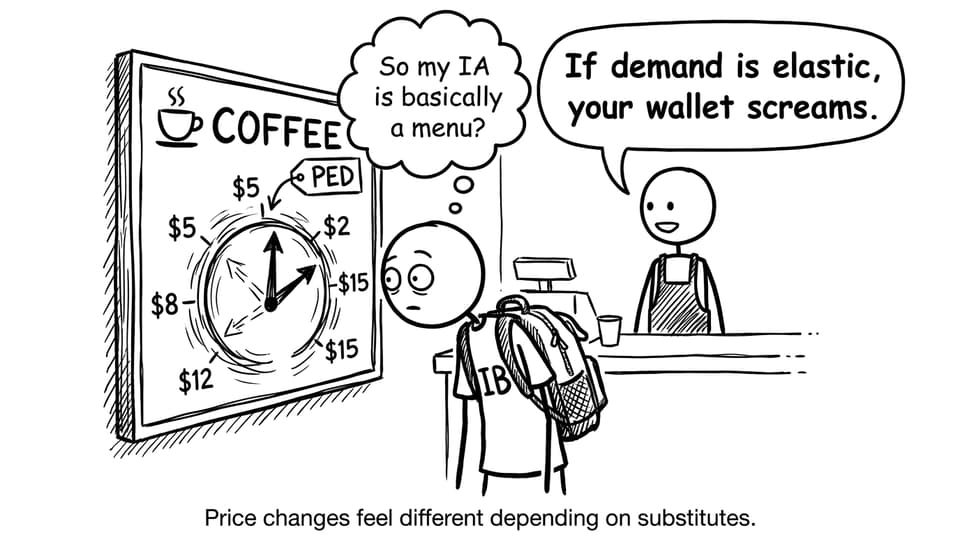
In IB Economics, price elasticity of demand (PED) measures how responsive quantity demanded is to a change in price.
Use this quick checklist before you write any pricing paragraph:
-
Is demand elastic (PED > 1) or inelastic (PED < 1)?
-
What happens to total revenue when price changes?
-
Are there close substitutes?
-
Is it a necessity or a luxury?
-
Does elasticity change over time?
If you need a fast refresher, RevisionDojo’s Concept of elasticity notes set up the definitions and determinants cleanly.
IB Economics and revenue: why one price rise boosts TR and another destroys it
The biggest reason elasticity matters for pricing is revenue prediction.
-
If demand is elastic, a price rise causes a more-than-proportional fall in quantity demanded, so total revenue falls.
-
If demand is inelastic, a price rise causes a smaller fall in quantity demanded, so total revenue rises.
That’s why firms selling essentials can often increase prices without losing many buyers, while firms in competitive markets can’t.
To lock this into exam accuracy, practise with RevisionDojo’s Price elasticity of demand (PED) notes and then apply it in the PED Questionbank to see how examiners phrase the task.
Substitutes, segmentation, and timing: pricing strategy lives here
Elasticity isn’t just a number; it’s a strategy guide.
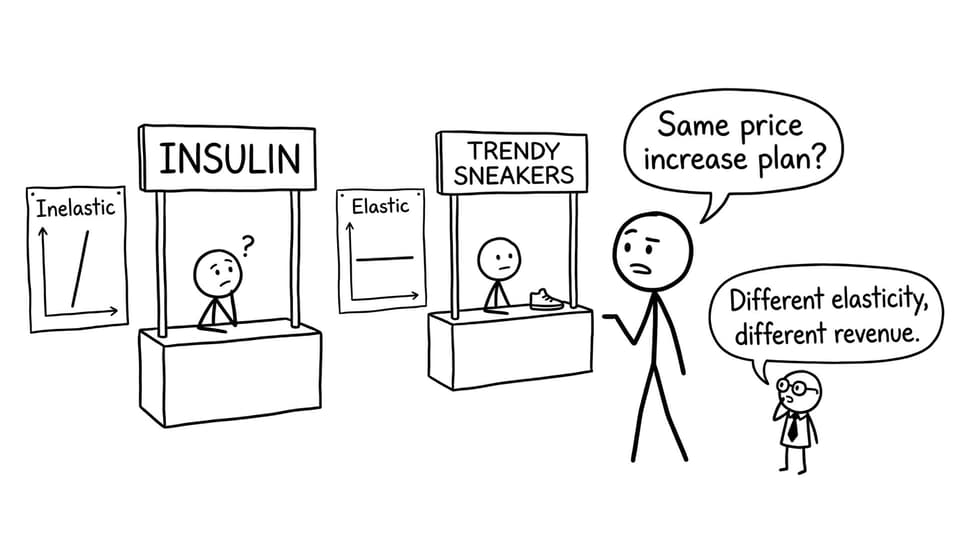
Substitutes make demand more elastic
In IB Economics, the more close substitutes a product has, the easier it is for consumers to switch, so demand becomes more elastic. That’s why branded goods in crowded markets often rely on promotions instead of simple price rises.
A useful extension is cross-price thinking; see RevisionDojo’s blog on cross-price elasticity of demand for a memorable way to discuss competition.
Market segmentation can reflect different elasticities
Different groups can have different sensitivity to price. Students, for example, often have more elastic demand. That’s why discounts exist, not as kindness, but as pricing logic.
Elasticity changes over time
Over time, consumers find alternatives and adjust habits, which often makes demand more elastic in the long run. This is a strong evaluation point in IB Economics essays: “short run vs long run” shows depth.
How to revise elasticity fast with RevisionDojo
If you want elasticity to feel automatic in Paper 1 and Paper 2, use a simple loop:
-
Learn the foundations in 2.1 Demand Notes
-
Drill the elasticity topic hub: 2.5 Elasticities of demand
-
Memorise key definitions with Elasticities flashcards
-
Test under pressure with the Elasticities Questionbank
That workflow is exactly where RevisionDojo stands out: Questionbank practice, Study Notes, Flashcards, and AI Chat for instant clarification. Add Grading tools, Mock Exams, Predicted Papers, and Tutors when you’re close to finals and want feedback that feels like an examiner.
Conclusion: elasticity is the pricing compass in IB Economics
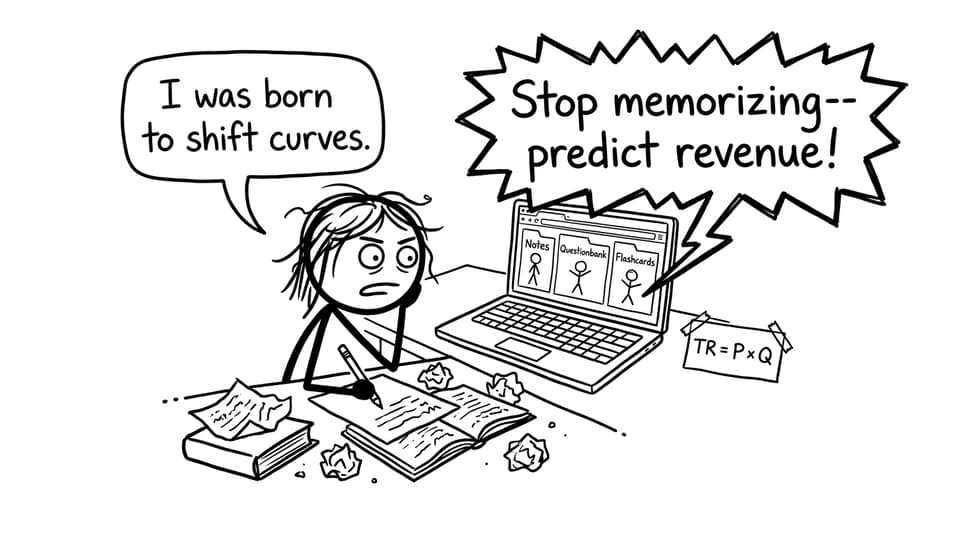
If you remember one sentence for IB Economics, make it this: elasticity turns price changes into predictable outcomes. It tells firms when a price rise will raise revenue, when it will backfire, and how substitutes and segmentation shape the decision. For exam prep, that means stronger diagrams, clearer chains of analysis, and better evaluation.
To make elasticity feel effortless, revise it with RevisionDojo’s Study Notes, drill with the Questionbank, and cement definitions with Flashcards, then use AI Chat and Grading tools to sharpen your exam technique before mocks.

