

A budget deficit isn’t a moral failure--it’s a policy choice
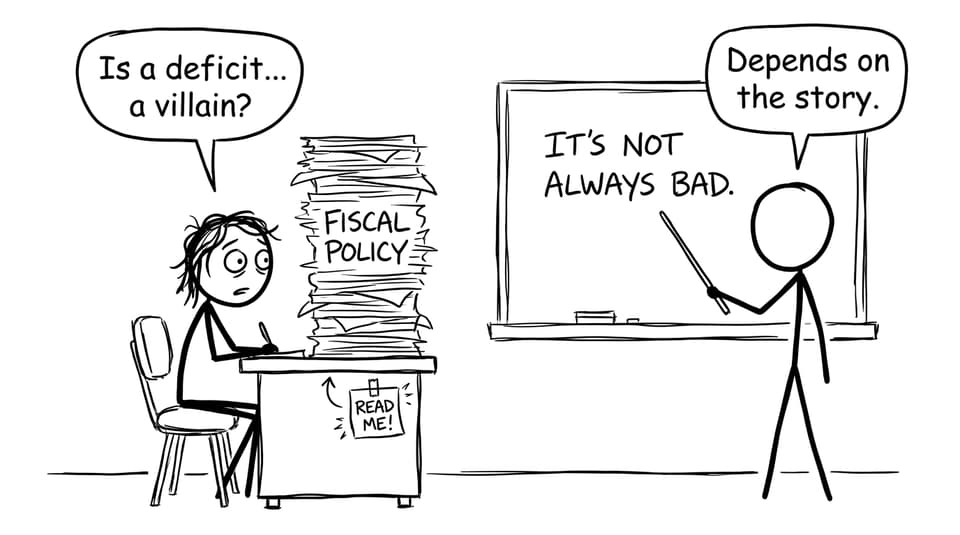
The first time many students meet the phrase budget deficit, it sounds like a red warning light: spending too much, not earning enough. But in IB Economics, a budget deficit is often closer to a fire extinguisher than a bad habit. Governments sometimes run deficits on purpose, because the alternative (doing nothing) can be more expensive in the long run.
When you can explain why a deficit happens, not just define it, you start writing the kind of analysis examiners reward.
Quick checklist: five exam-ready reasons deficits happen (IB Economics)
-
Stabilise aggregate demand during downturns (expansionary fiscal policy)
-
Invest in long-term growth (infrastructure, education, health)
-
Automatic stabilisers widen the deficit in recessions
-
Political choices create structural deficits
-
Shocks force emergency spending
If you want the definitions, diagrams, and evaluation points in one place, pair this with Revision Tips: Fiscal Policy Guide for IB Economics.
Stabilising the economy during recessions
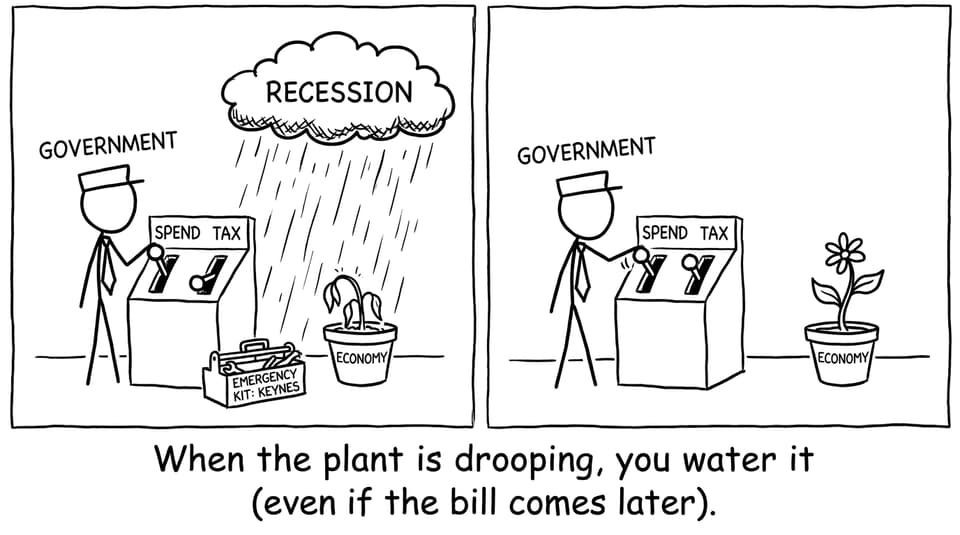
When households and firms cut spending, aggregate demand (AD) falls. In IB Economics, the classic response is expansionary fiscal policy: higher government spending and/or lower taxes. That often creates a larger budget deficit in the short run, but it can reduce unemployment and soften a recession.
In your exam, connect the story to the model: higher G shifts AD right, raising real output. Then evaluate: time lags, inflation risk near full employment, and possible crowding out. RevisionDojo’s evaluation of fiscal policy notes are a strong place to practise those trade-offs.
Investing today to grow tomorrow
Some deficits are strategic. Governments may borrow to fund infrastructure, education, healthcare, or technology that raises productivity and potential output. The idea is simple: spend now, expand productive capacity, and (eventually) raise future tax revenue.
This is especially relevant when you’re writing about growth and development. Try linking it to real goals like higher employment and higher living standards, then evaluate with opportunity cost and debt sustainability. For targeted practice, use the Economic growth and development questionbank.
Automatic stabilisers: deficits that rise without new laws
Not all deficits require a headline policy announcement. In a downturn, tax revenue tends to fall (lower incomes, lower profits), while spending on unemployment benefits and welfare rises. These are automatic stabilisers.
In IB Economics, the key point is that automatic stabilisers reduce the size of fluctuations in AD. They support households when the economy weakens, which can prevent deeper declines. The trade-off is a wider deficit during recessions, even if the government hasn’t “chosen” to change policy.
For the broader macro framework, see IB Economics Macroeconomics notes and the Macroeconomics course hub.
Politics and structural deficits
Sometimes the deficit is persistent because of politics, not the business cycle. Voters often want strong public services and low taxes at the same time. That tension can create a structural deficit: a deficit that remains even when the economy is performing well.
This is an excellent evaluation angle in IB Economics essays: policies are not chosen in a vacuum. Governments face incentives, election cycles, and pressure groups. The best answers explain economic effects and political constraints together.
Shocks and emergencies
Wars, pandemics, natural disasters, or financial crises can force sudden spending to protect households and stabilise markets. In those moments, speed matters. A temporary budget deficit may be the cost of preventing a bigger collapse.
That “temporary vs persistent” distinction is crucial for evaluation: short-term deficits for stabilisation are judged differently from long-term deficits that push debt onto an unsustainable path.
Bring it back to your exam strategy
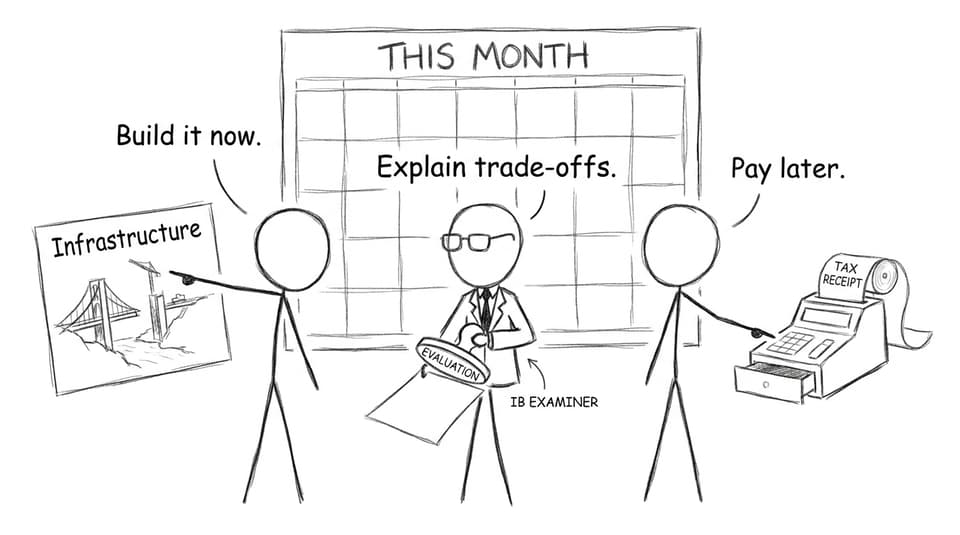
In IB Economics, budget deficits are rarely a one-line definition question. They’re a “tell me the mechanism, then evaluate” topic. To prepare, combine clear notes with exam-style practice: use RevisionDojo’s IB Economics home page, drill arguments in the IB Economics tag archive, and test yourself with the IB Economics questionbank.
And when you want to turn understanding into marks, RevisionDojo’s Questionbank, Study Notes, Flashcards, AI Chat, Grading tools, Predicted Papers, Mock Exams, Coursework Library, and Tutors help you practise the exact thinking that top IB Economics responses demand.