
Why reactivity feels “predictable” in IB Chemistry
In IB Chemistry, the periodic table isn’t a poster you memorize; it’s a map of predictable decisions atoms keep making. You’ve probably seen it in class: sodium reacts like it’s in a hurry, while neon refuses to react at all. That difference isn’t random. It comes from how strongly the nucleus can hold onto (or attract) electrons, and that strength changes in patterns we can explain.
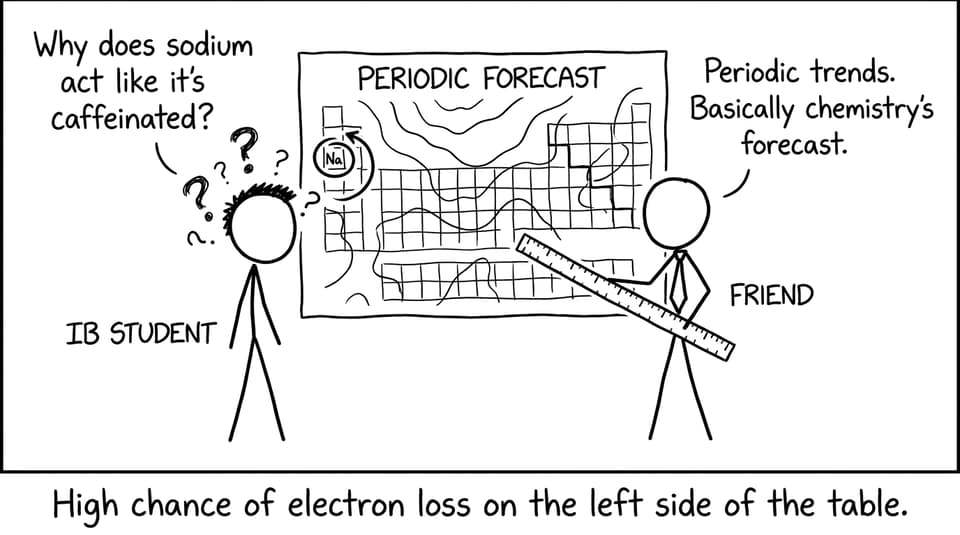
Once you link reactivity to electron movement, losing, gaining, or sharing valence electrons, reactivity trends become less about memory and more about cause and effect.
Quick exam checklist (reactivity trends)
Use this IB Chemistry checklist whenever a question asks you to “explain” or “justify” a reactivity trend:
-
Identify if the element is acting by losing electrons (metal) or gaining electrons (nonmetal).
-
State the relevant trend: atomic radius, ionization energy, and/or electronegativity.
-
Give the mechanism: effective nuclear charge, shielding, and distance from nucleus.
-
Finish with the consequence: “therefore electron loss/gain is easier/harder, so reactivity increases/decreases.”
If you want a syllabus-aligned home base for this, RevisionDojo’s topic page on Reactivity based on periodic trends is built for exactly these explanations.
Across a period: why metals calm down and nonmetals “wake up”
Across a period (left to right), the nucleus gains protons. Electrons are added to the same main energy level, so shielding doesn’t increase much. In IB Chemistry language, effective nuclear charge increases, pulling electrons closer and shrinking atomic radius.
-
Metals (left side): reactivity usually decreases across a period because losing electrons becomes harder. Ionization energy rises, so electron loss is less favorable.
-
Nonmetals (right side, before noble gases): reactivity generally increases because atoms attract electrons more strongly. Electronegativity rises, so gaining or sharing electrons becomes more favorable.
To sharpen the wording that earns marks, revise the logic behind electronegativity with Electronegativity trend across a period: IB Chemistry guide and keep the clean definition close via Electronegativity explained simply for IB Chemistry.
Down a group: shielding quietly changes everything
Down a group, atoms gain extra electron shells. Even though the nucleus also gets more protons, the valence electrons are further away and more shielded by inner electrons. The result is a weaker attraction between nucleus and valence electrons.
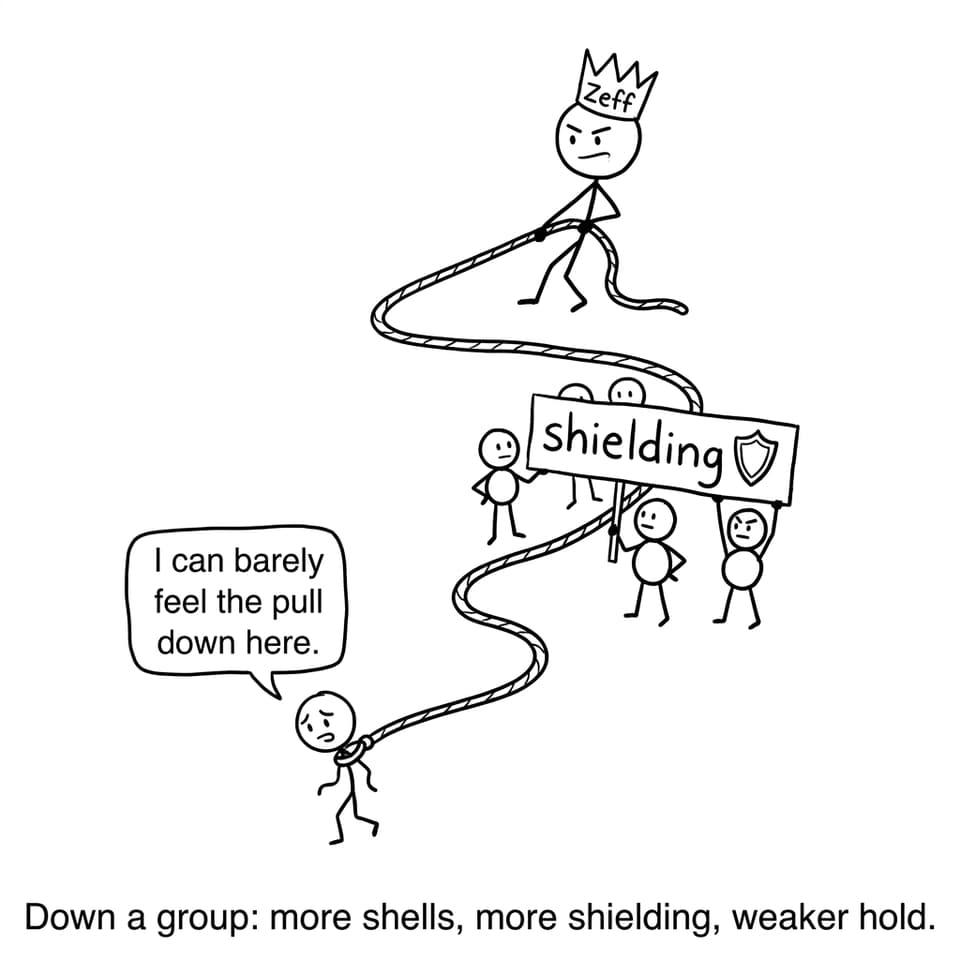
Two classic IB Chemistry trends fall out of this:
-
Group 1 (alkali metals): reactivity increases down the group because the outer electron is easier to remove (lower ionization energy).
-
Group 17 (halogens): reactivity decreases down the group because gaining an electron becomes less effective (lower electronegativity, more shielding, larger radius).
If your explanations feel fuzzy, build the chain from first principles using Effective nuclear charge explained and Ionization energy explained simply.
The “stability goal”: why full valence shells matter
A good IB Chemistry story to tell in answers is that atoms react to reach a more stable electron configuration (often a full valence shell). Metals usually take the shortest route by losing electrons; nonmetals often gain or share.
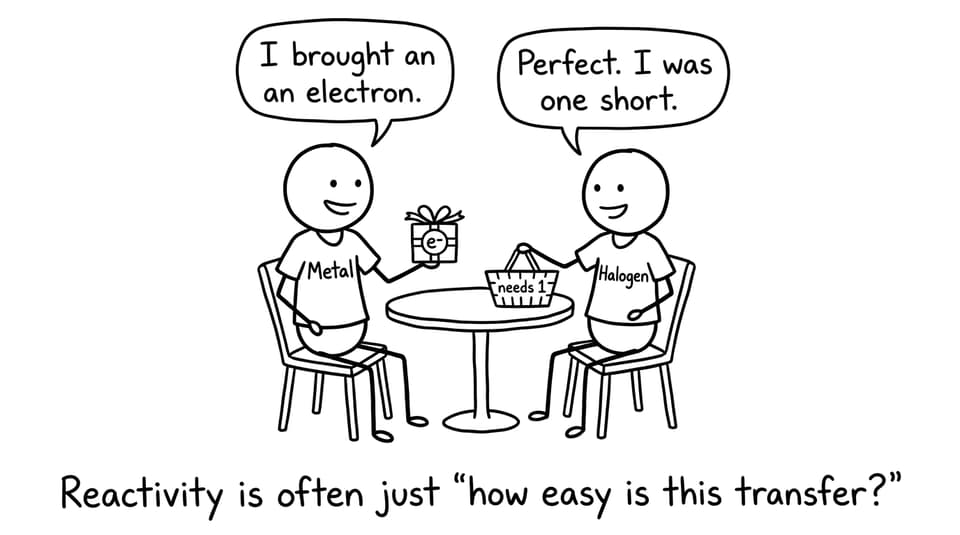
That’s also why elements in the same group behave similarly: they have the same number of valence electrons, so they tend to make the same “type” of move. For a clean, exam-friendly framing, see Why does electron configuration determine an element’s reactivity?
How to turn this into exam marks (fast)
-
Practice trend questions with time pressure in the IB Chemistry 3.2 Periodic Trends Questionbank.
-
Use the How to use the IB periodic table in exams and revision guide to stop “looking up” trends and start reasoning them.
-
When you miss a question, lock the concept with RevisionDojo Study Notes and Flashcards, then retest with the Questionbank.
Conclusion: memorize less, explain more (with RevisionDojo)
Reactivity changes predictably across the periodic table because atomic radius, ionization energy, and electronegativity shift in consistent ways, driven by nuclear charge, shielding, and electron configuration. In IB Chemistry, that predictability is your advantage: the best answers don’t just state a trend; they explain the mechanism.
If you want to make these explanations automatic, use RevisionDojo’s Questionbank, Study Notes, Flashcards, AI Chat, and Mock Exams to practice the exact kind of reasoning IB examiners reward, then tighten your phrasing until it feels inevitable.