IB Chemistry: the “flat line” that still costs energy
You heat a solid. The temperature rises. Everything feels logical.
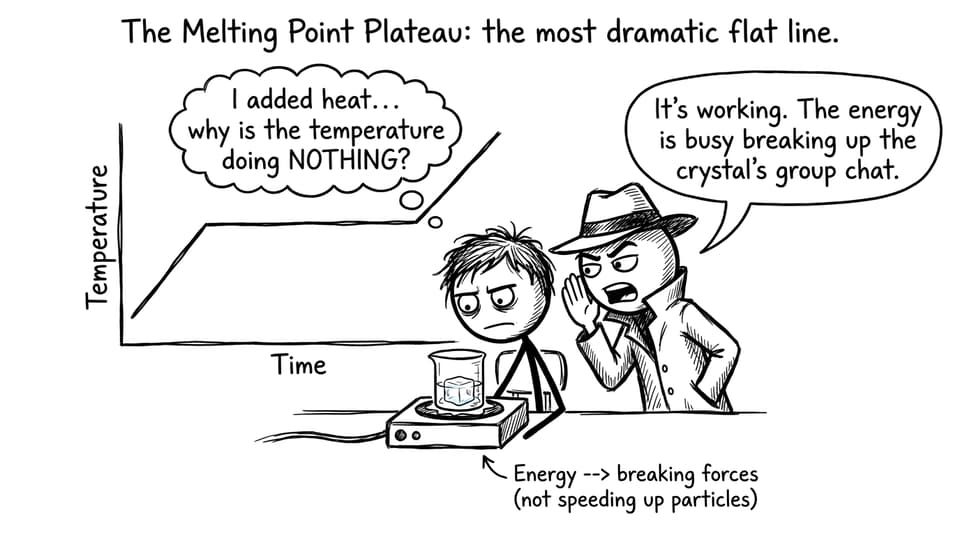
Then the graph flattens at the melting point, and it feels like the universe has stopped cooperating.
In IB Chemistry, that plateau is one of the most exam-tested clues in thermal and particle theory: melting requires energy even though temperature stays constant. The trick is realizing that temperature only tracks one kind of energy change.
Quick checklist (what examiners want you to say)
-
Temperature measures average kinetic energy of particles.
-
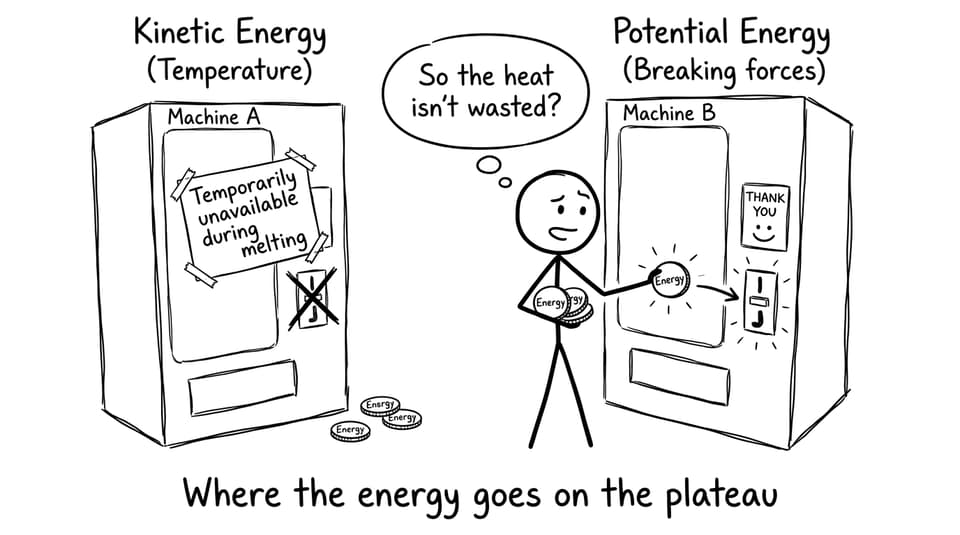
During melting, added energy mainly increases potential energy (separating particles).
-
The energy absorbed at constant temperature is the latent heat of fusion.
-
Melting is endothermic because the system absorbs heat to overcome attractions.
For syllabus-aligned refreshers, use the IB Chemistry Revision Notes (SL/HL) and the Study Notes feature to tighten your phrasing.
Why melting needs energy in IB Chemistry
In a solid, particles sit in a stable, orderly arrangement (a lattice or structured packing) because intermolecular forces (or ionic/metallic bonding in other solids) hold them close.
As you heat the solid, particles vibrate more. Up to the melting point, the heat you add mostly becomes kinetic energy, so temperature rises.
At the melting point, the story changes. The energy you add is now used to disrupt the attractions that keep the solid structure intact. Particles become less locked-in and more able to slide past one another as a liquid.
That “unlocking” costs energy. It is not wasted. It is simply not showing up as a higher temperature, because the average particle speed is not increasing much during the phase change.
To connect this to the wider energy language you use in IB Chemistry, compare it to enthalpy explanations in Enthalpy Change Explained for IB Chemistry.
The key term: latent heat of fusion
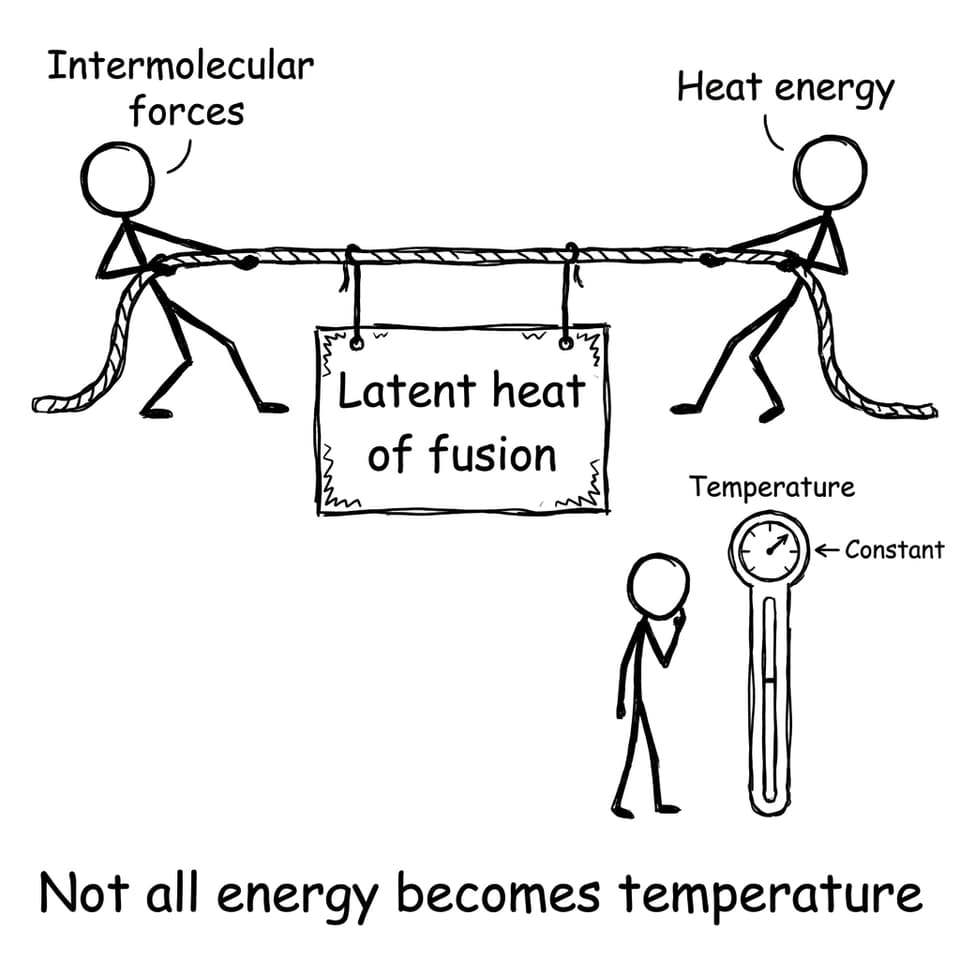
The energy absorbed during melting at constant temperature is called latent heat of fusion. In calculations, you may see it as:
- Q = mL (energy = mass × specific latent heat)
Even if your course sometimes uses different emphasis, the concept is the same: energy is required to change state without changing temperature.
If you want a closely related, crystal-clear explanation with a heating-curve focus, see Notes for S1.1.2 The Kinetic Molecular Theory and IB Chemistry Structure 1: Models of the particulate nature of matter (notes).
What to write in an exam (a strong 2-sentence model answer)
In IB Chemistry, you can say: During melting, energy is absorbed to overcome intermolecular attractions and increase particle separation (potential energy), not to increase average kinetic energy. Therefore the temperature remains constant at the melting point until all the solid has melted.
For targeted practice, drill explanations like this with the IB Chemistry Questionbank and the IB Chemistry Energetics and Thermochemistry Questionbank.
Closing: turn the plateau into marks
That flat line on a heating curve is not a failure of physics. In IB Chemistry, it is a signal that your energy is being spent on structure, not speed.
If you want this to feel automatic under time pressure, use RevisionDojo’s Study Notes and Flashcards to lock in definitions, the Questionbank and Mock Exams to practice plateau questions, and AI Chat plus Grading tools to sharpen your explanations. When exams get noisy, simple ideas stated clearly are the quiet advantage.



