


If you have ever warmed a reaction mixture and watched it suddenly “wake up,” you have seen one of the most exam-friendly ideas in IB Chemistry: temperature doesn’t just make particles move faster. It changes how many collisions count.
In kinetics questions, examiners are rarely satisfied with “higher temperature means higher rate.” They want the mechanism: kinetic energy, activation energy, and the Maxwell-Boltzmann story that connects them.
The IB Chemistry checklist (what to say in 2 marks)
When you explain temperature and rate in IB Chemistry, hit these points:
-
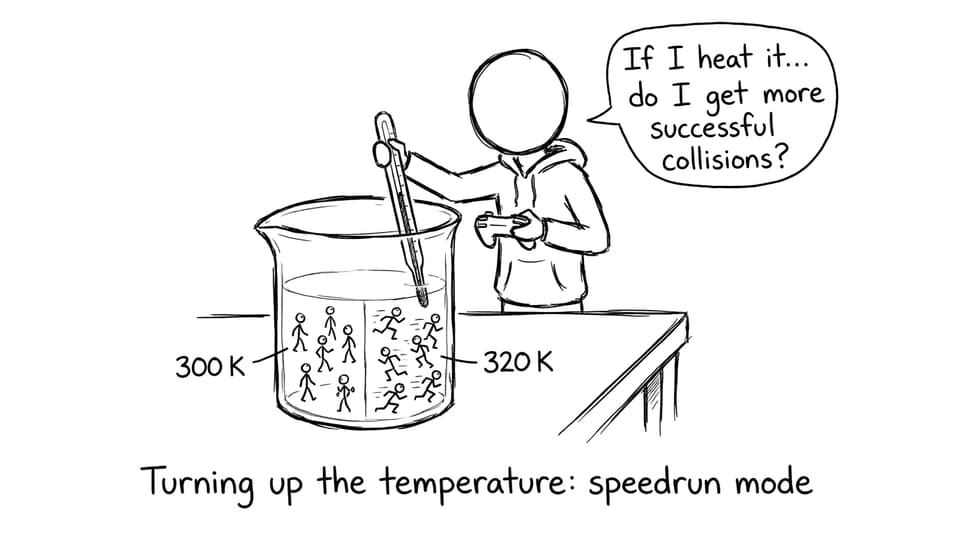
Temperature increase means particles gain kinetic energy
-
Particles move faster means collision frequency increases
-
More importantly: a greater fraction of particles have energy >= activation energy (Ea)
-
Therefore: more successful collisions per second means rate increases
If you want the wider framework first, pair this with Rate of Reaction Explained Simply and then zoom in on temperature.
IB Chemistry explanation: more energy, more meaningful collisions
Collision theory is the heart of this topic in IB Chemistry. A reaction only happens when particles collide successfully. “Successfully” means the collision has enough energy to overcome the activation energy barrier and (in many reactions) the particles meet with a workable orientation.
When temperature increases, the average kinetic energy increases. Practically, that creates two changes at once:
More collisions per second
Faster particles travel across the same volume in less time, so the time between collisions shrinks. That raises collision frequency and gives the reaction more “attempts” each second.
For a clean collision-theory recap, see IB Chemistry: Collision Theory Explained Simply or the syllabus-aligned notes on Collision theory and rates of reaction.
A much bigger fraction can pay the “Ea fee”
This is the part many students forget to say. Increasing temperature doesn’t lower Ea. It increases the number of particles with energy high enough to get over Ea.
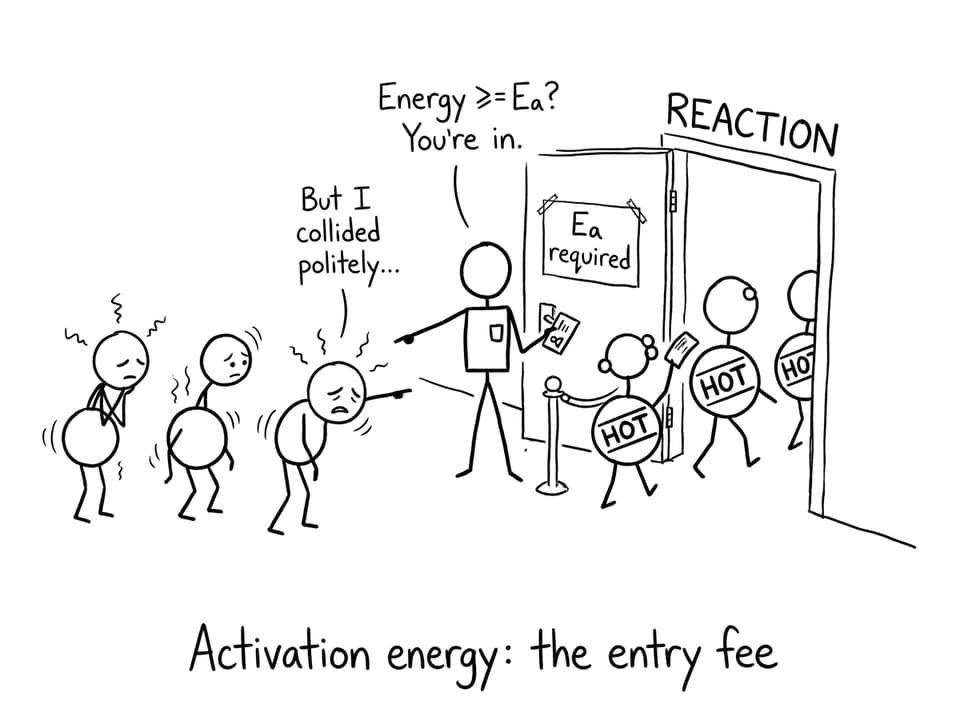
That single sentence (“greater proportion of particles have energy >= Ea”) is what turns a vague explanation into a top-mark IB Chemistry explanation. For a focused definition and common pitfalls, use Activation Energy Notes.
The Maxwell-Boltzmann reason the change is dramatic
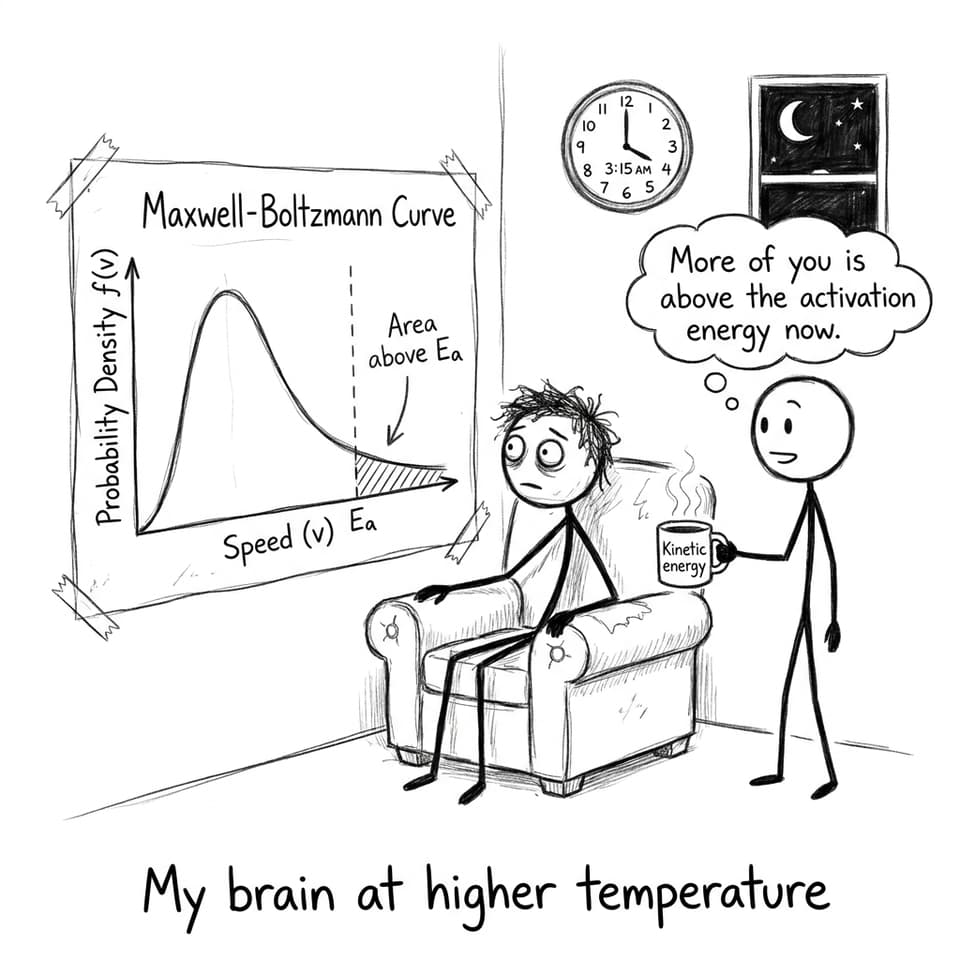
In IB Chemistry, the Maxwell-Boltzmann distribution explains why a small temperature increase can create a big rate increase.
At any temperature, particles have a range of energies. When temperature increases, the distribution flattens and shifts right. The area under the curve stays the same (same number of particles), but the area beyond Ea grows a lot. That means many more particles can take the reaction pathway.
If you are HL and want the “equation version” of the same idea, connect it to the Arrhenius relationship in Arrhenius Equation Explained for IB Chemistry. You do not need heavy math to explain temperature effects, but it helps you justify why rate changes are often more than proportional.
Where students lose marks in IB Chemistry (and how to fix it)
Most errors are not conceptual. They are wording errors:
-
Saying “temperature increases activation energy” (it doesn’t).
-
Only mentioning “more collisions” but not “more particles above Ea.”
-
Forgetting “successful collisions per second” as the final link to rate.
A good habit: after every sentence, ask “so what?” until you land on rate.
To practise this exactly as it appears in exams, use the Chemical Kinetics HL Questionbank and the topic hub for IB Chemistry Chemical Kinetics. RevisionDojo’s Questionbank explanations, Grading tools, and AI Chat are especially helpful when your answer is “almost right” but missing one key marking-point phrase.
Conclusion: the exam-ready takeaway for IB Chemistry
Increasing temperature increases rate in IB Chemistry because particles move faster (more collisions) and, crucially, many more particles have energy >= Ea (more successful collisions). That combination is why warming a system often feels like flipping a switch.
If you want this to become automatic under time pressure, RevisionDojo is built for it: use the Study Notes to lock in the wording, Flashcards for quick recall, the Questionbank for exam-style repetition, AI Chat for instant clarification, and Predicted Papers and Mock Exams to test whether you can write the explanation cleanly in seconds. Start at the IB Chemistry Resources hub and build momentum while it is still easy.


