


A streetlight that teaches you microeconomics
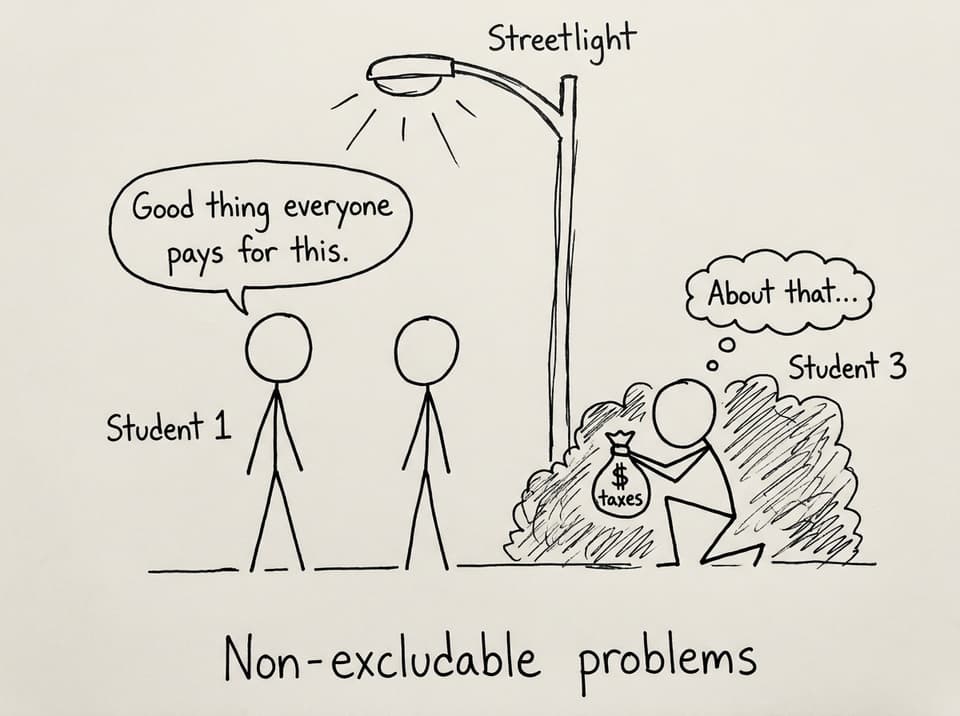
There’s a certain kind of confidence you feel walking home under a bright streetlight. You don’t wonder who paid for the bulb. You don’t swipe a card to “unlock” the light. You just benefit.
That quiet convenience is exactly why IB Economics treats public goods as a classic market failure. The same features that make public goods feel effortless to consume make them difficult to fund voluntarily. In exam terms, this is the free-rider problem: people can enjoy the benefit without contributing, so many choose to wait for someone else to pay.
If you’re revising this for Paper 1 or tackling short-response questions, pair this article with RevisionDojo’s What Are Public Goods? | IB Economics Market Failure Guide and the syllabus-aligned IB Economics Topic 2.9 Market Failure - Public Goods.
Quick checklist for IB Economics answers
When an exam asks why public goods create free-rider problems, hit these points fast:
-
Define public goods: non-excludable and non-rivalrous
-
Explain incentive: individuals can benefit without paying
-
Link to outcome: under-provision in the free market
-
Add evaluation: governments often fund via taxation (but policy has limits)
For definitions you can quote cleanly, use IB Economics Key Definitions.
Public goods in IB Economics: the two traits that cause free riding
In IB Economics, public goods sit at the center of the “market failure” story because they break the normal link between consumption and payment.
Non-excludability creates the “why should I pay?” moment
Non-excludable means once the good exists, you can’t realistically stop non-payers from using it. Street lighting, national defense, and clean air don’t come with a bouncer.
So each individual thinks: “If I pay, I get the benefit. If I don’t pay, I still get the benefit.” Rationally, many choose not to pay. Collectively, that decision drains funding.
Non-rivalry creates the “my contribution doesn’t change much” feeling
Non-rivalrous means one person’s use doesn’t reduce the amount available for others. If you enjoy the protection of national defense, it doesn’t meaningfully reduce anyone else’s protection.
That sounds nice, but it weakens personal responsibility. Your individual contribution feels small compared with the total cost, so it’s easy to convince yourself it won’t matter.
Why the free-rider problem leads to under-provision
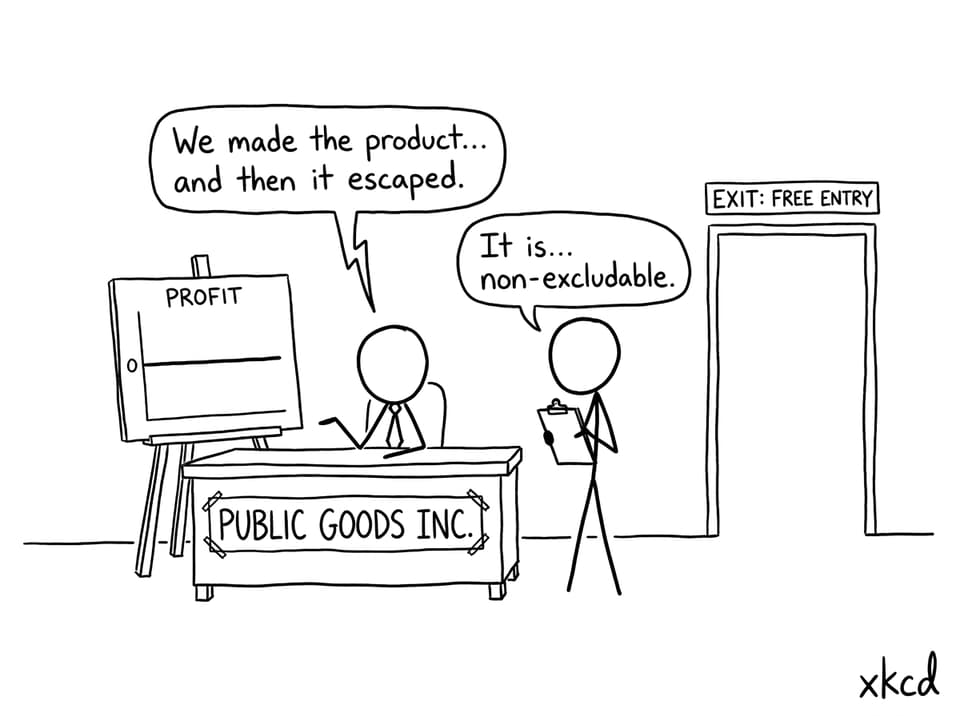
The free-rider problem matters in IB Economics because it explains why the free market may provide too little (or none) of a public good.
Private firms usually avoid producing public goods because they can’t charge enough people to cover costs. Even if some consumers pay, free riders can still consume, pulling demand away from the paying side. The result is weak revenue and a strong incentive not to supply.
To connect this to the wider unit, see Notes for 2.8 Market failure - externalities, common pool resources, public goods, asymmetric information and How Market Failures Interact in Real Economies | RevisionDojo.
Hidden preferences: why valuing public goods is so hard
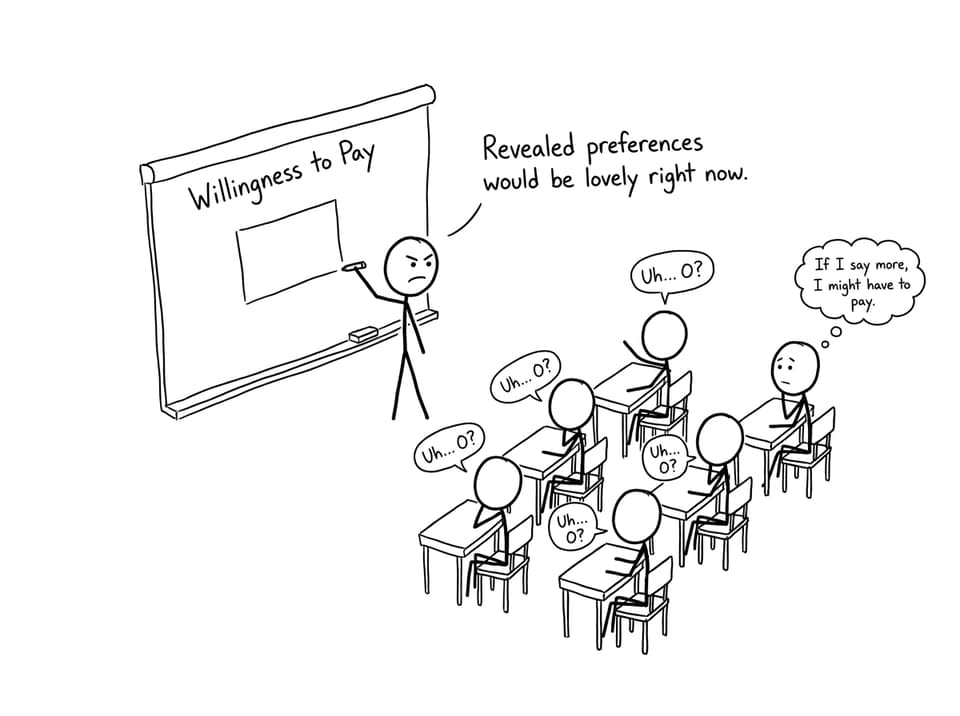
Another exam-ready angle in IB Economics is information: people often hide how much they value a public good.
If a city asks, “How much would you pay for cleaner air or better street lighting?” many people understate their willingness to pay because honesty can raise their tax bill. This makes it difficult to measure demand, so even governments can misjudge the socially optimal level.
To practice applying this in exam style, use RevisionDojo’s 2.9 Market failure - public goods Questionbank and the structured Lessons for 2.9 Market failure - public goods - IB.
Government intervention: the standard IB Economics solution
In IB Economics, the typical remedy is government funding through taxation. Taxation forces contribution, removing the option to free ride while still consuming.
You can link this to “role of government” evaluation using 2.7 Role of government in microeconomics - IB Questionbank. For broader navigation across the course, start with Economics - IB Resources.
Conclusion: turn the streetlight into an exam advantage
Public goods create free-rider problems because they are non-excludable and non-rivalrous, so people can benefit without paying. In IB Economics, that incentive leads to under-provision and explains why government funding through taxation is so common.
If you want this topic to feel automatic under timed conditions, revise it using RevisionDojo’s Study Notes, drill it with the Questionbank, and test yourself with Flashcards. Then use AI Chat to challenge your explanation, and sharpen your exam technique with Grading tools, Predicted Papers, and Mock Exams. When you’re ready to push from “I understand it” to “I can write it,” RevisionDojo is built for that last step.