


Trade is one of those ideas in IB Economics that feels obvious until you try to explain it in an exam. You know the vibe: “Countries trade because it’s good.” But Paper 1 doesn’t reward vibes. It rewards clean logic, accurate terms, and a calm chain of reasoning.
At the simplest level, countries trade because no economy can be brilliant at producing everything. Time, land, labour, capital, and know-how are limited. Trade is how nations turn limits into options.
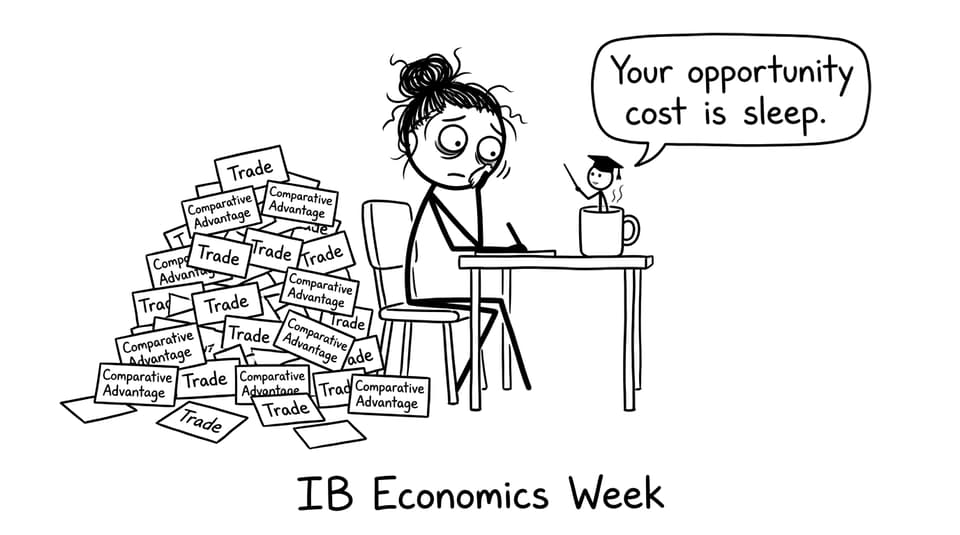
Quick checklist: the main reasons countries trade (IB Economics)
-
Comparative advantage: specialise where opportunity cost is lowest
-
Greater consumer choice: more variety, often better prices/quality
-
Competition and innovation: firms improve when challenged
-
Economies of scale: bigger markets reduce average costs
-
Technology transfer: new machinery, skills, and ideas spread across borders
If you want the syllabus-aligned version, anchor your notes to 4.1 Benefits of International Trade and the wider context in IB Economics 4. the Global Economy.
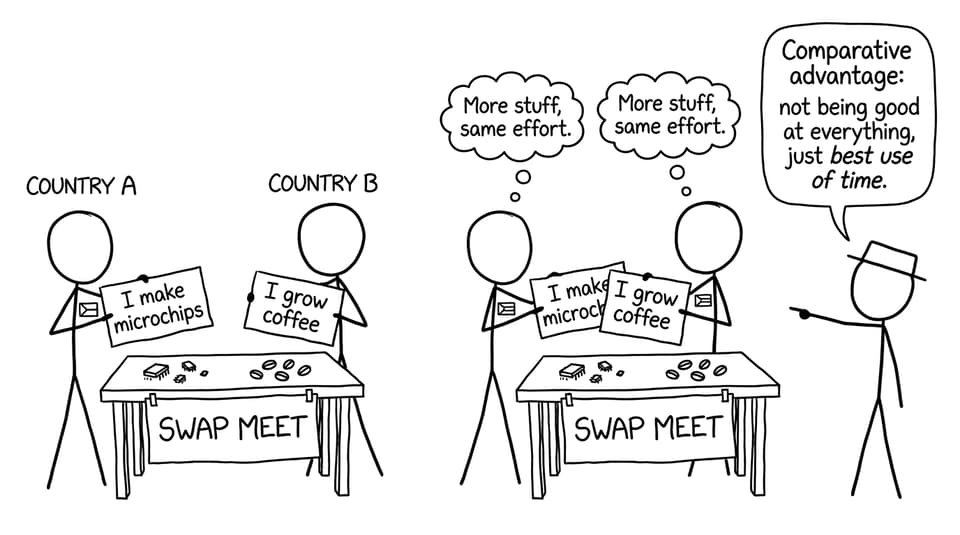
Comparative advantage: the quiet engine of global trade
In IB Economics, the most examinable reason for trade is comparative advantage. It’s not about who is “best” at producing something. It’s about who gives up the least to produce it.
When countries specialise according to comparative advantage, global output rises. And when global output rises, both trading partners can consume beyond what they could achieve alone.
To lock down definitions and the logic examiners love, use RevisionDojo’s:
Choice, pressure, and better outcomes for consumers
Trade expands consumer choice. A country can import goods that are out of season, too expensive to make domestically, or simply not feasible with local resources.
It also creates competitive pressure. Domestic firms can’t rely on being the only option, so they cut waste, improve quality, and innovate. In IB Economics terms, trade can push productive efficiency and dynamic efficiency upward over time.
Economies of scale: when the world becomes your customer
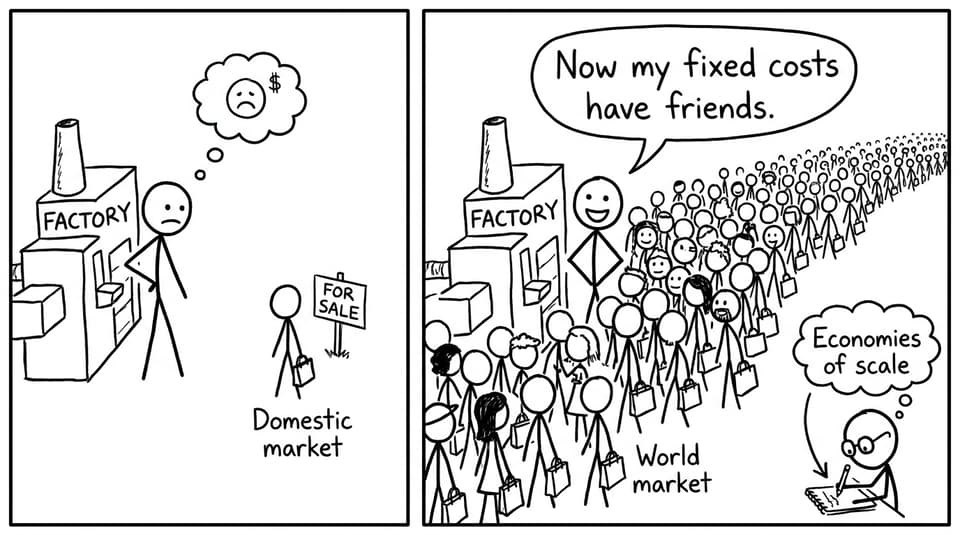
Some industries only become efficient at high output. If the domestic market is small, firms can get stuck with high average costs.
Exports solve that problem. Selling to global markets lets firms expand, spread fixed costs, and lower unit costs. This is a clean, high-scoring link in IB Economics essays because it connects trade to efficiency gains.
Technology transfer: importing ideas, not just products
Trade isn’t only about final goods. Imports often include capital goods (machines) and embedded knowledge (methods, design, management practices). Foreign direct investment and global supply chains can accelerate skills and productivity.
This matters in development discussions too: the long-run gains from trade can include learning-by-doing and faster productivity growth.
Bring it home with RevisionDojo
If trade feels slippery under time pressure, you don’t need more motivation; you need sharper reps. Use RevisionDojo’s Study Notes to build your explanation, then use the Questionbank and Grading tools to practise exam-style chains of reasoning. When you get stuck, AI Chat can help you test your understanding, and Flashcards keep key definitions automatic.
For broader revision structure, pair this topic with Methods for Effective IB Economics Revision and strengthen your context with What Are Trade Barriers? - IB Economics.
In IB Economics, trade is rarely a single-point answer. It’s a story about scarcity, specialisation, and the surprising power of doing fewer things better, then swapping. RevisionDojo helps you tell that story clearly when the exam clock is loud.