

In IB Chemistry, the atomic radius trend is one of those ideas that feels obvious only after you understand it. You look at Period 3 on the data booklet and wonder: Why does sodium feel “big” while chlorine feels “small,” even though both have electrons in the same outer shell? Under exam pressure, the difference between a memorized line and a real explanation is often the difference between 1 mark and full marks.
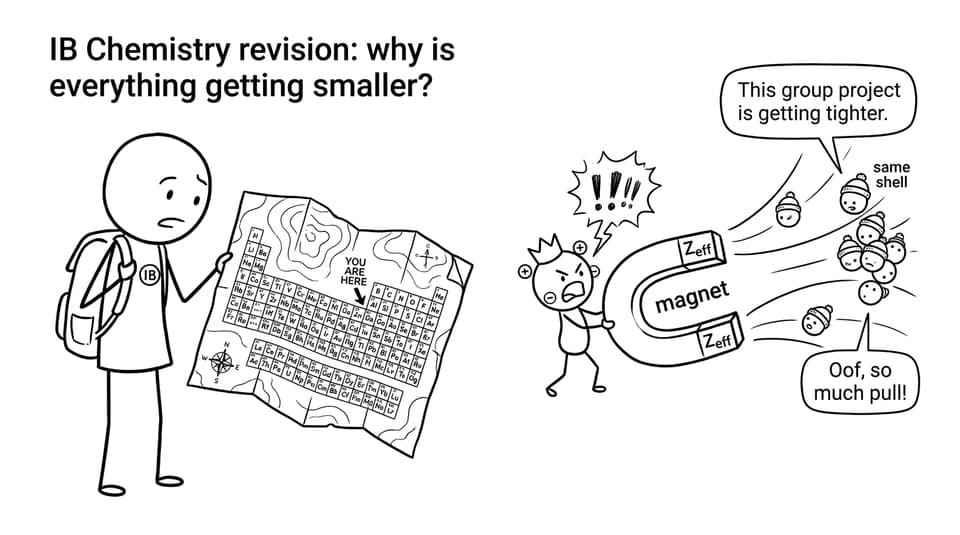
Atomic radius decreases across a period because the nucleus quietly becomes more persuasive, while the electrons don’t gain a new place to hide.
Quick IB Chemistry checklist (what to say in exams)
Use this mini-script in IB Chemistry responses:
-
Across a period, proton number increases.
-
Electrons are added to the same main energy level (no new shell).
-
Shielding is almost constant.
-
Effective nuclear charge (Zeff) increases.
-
Stronger attraction pulls valence electrons closer.
-
Therefore atomic radius decreases.
If you want a broader periodic-trends refresher, pair this with Periodicity Explained Simply.
The real reason atomic radius shrinks: Zeff rises
Across a period, each element adds one proton to the nucleus. In IB Chemistry, we describe the result using effective nuclear charge (Zeff): the net attractive pull the nucleus exerts on valence electrons after accounting for shielding.
Here’s the key: the extra electrons you add across a period go into the same shell, so the distance (energy level) doesn’t jump outward. Meanwhile, the nucleus gains positive charge every step. The pull increases, the electron cloud contracts, and atomic radius decreases.
For an exam-ready companion idea, see IB Chemistry: Nuclear Charge and Electron Arrangement.
Why shielding barely changes across a period
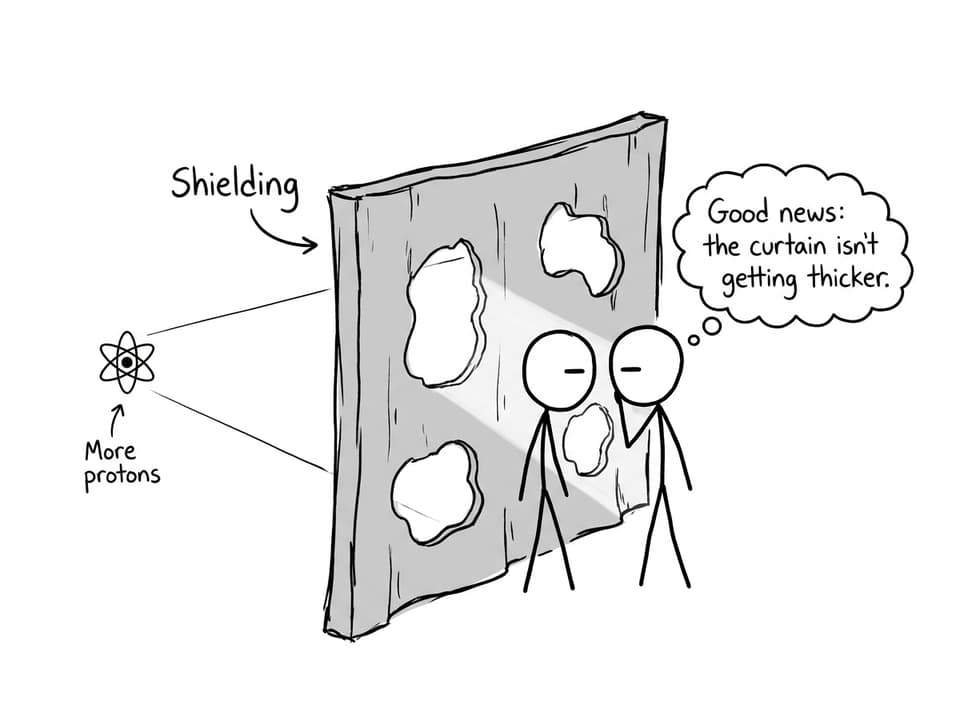
Students often say “more electrons means more shielding,” and in a loose sense that’s true. But in IB Chemistry, what matters is whether you add new inner shells.
Across a period, you don’t. The inner shells stay the same, so shielding increases only slightly. That means the rising nuclear charge isn’t balanced out. Net effect: higher Zeff, smaller atomic radius.
If shielding still feels fuzzy, revise it with IB Chemistry: Electron Shielding and Chemical Behavior.
What about electron-electron repulsion?
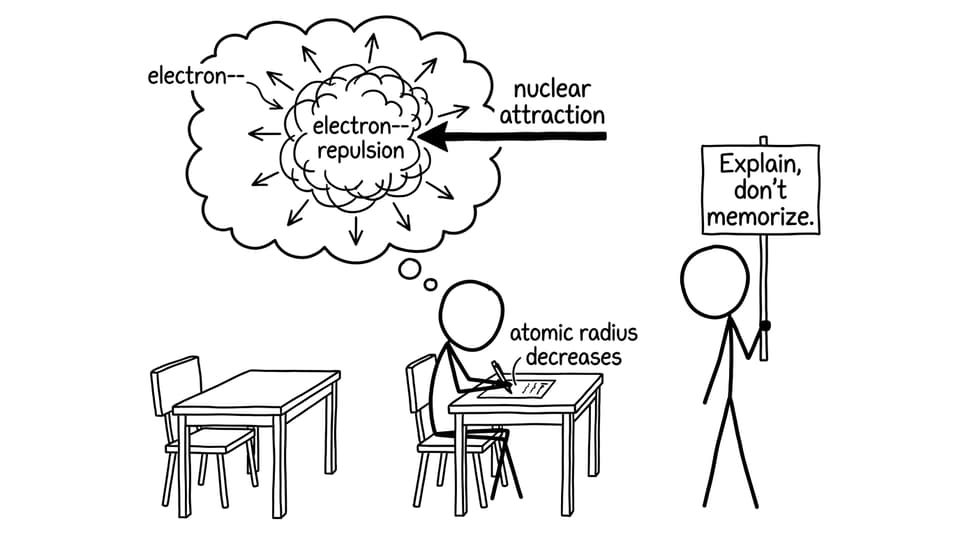
Yes, repulsion does increase as you add more electrons into the same shell. But in IB Chemistry, the markscheme logic is that the increase in nuclear attraction dominates across a period. Repulsion may slightly resist contraction, yet Zeff rises steadily and the overall atomic radius still decreases.
This is why the trend is so reliable in explanations and in quick predictions.
For a full atomic-size overview, keep Trends in Atomic Radius Explained bookmarked.
How to turn this into marks with RevisionDojo
Knowing the story is step one. Getting fast at writing it is step two. RevisionDojo helps you rehearse this IB Chemistry explanation in the exact formats you’ll see in exams:
-
Drill periodicity questions in the IB Chemistry Topic S3.1 the Periodic Table resources.
-
Use the IB Chemistry Questionbank to practice “explain the trend” prompts with instant feedback.
-
When you’re ready for timing, build pressure practice with Chemistry Predicted Papers (Free).
Along the way, mix in RevisionDojo’s Study Notes, Flashcards, AI Chat, Grading tools, Mock Exams, Coursework Library, and Tutors so your understanding becomes automatic, not fragile.
Bringing it home
In IB Chemistry, atomic radius decreases across a period for one main reason: effective nuclear charge increases while shielding stays almost constant, so electrons in the same shell are pulled closer to the nucleus. Learn the logic once, then practice the wording until it’s fast.
If you want this to stick under exam conditions, use RevisionDojo’s Questionbank and Study Notes to build understanding, then shift to Predicted Papers and Mock Exams to turn that understanding into marks.