

When you’re deep in IB exam season, it’s easy to believe your life can be summarized in three things: deadlines, caffeine, and mark schemes. Then a University interviewer asks, “What three words best describe you?” and suddenly the room feels smaller.
This question isn’t a personality quiz. It’s a test of judgment. The best answers are simple, honest, and backed by evidence, the same way top IB responses earn marks.
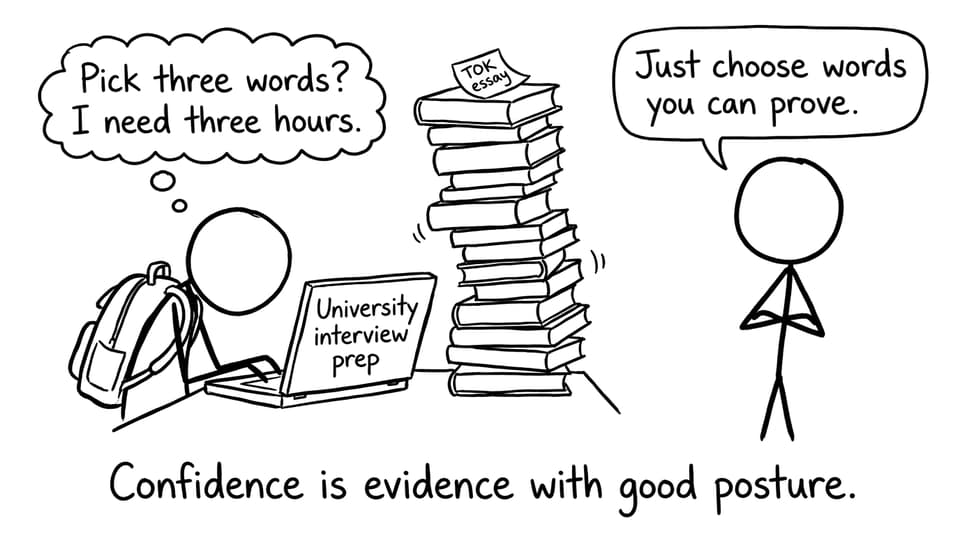
Why a University interviewer asks for three words
A University can read your grades. What it can’t see is how you operate when no one is scoring you.
Three words reveal whether you can:
-
Reflect on yourself without exaggerating
-
Choose what matters (signal over noise)
-
Prove a claim with real examples
That last point is the hidden curriculum. If you can defend three words clearly, you can probably defend an idea in a seminar, a lab meeting, or a tutorial.
If you want broader interview context, keep Common University Interview Questions (and How to Answer Them) open while you prepare.
A quick checklist for choosing your three words
Before you pick words, do this fast filter:
-
Pick one academic trait (how you learn)
-
Pick one stress trait (how you respond under pressure)
-
Pick one people trait (how you work with others)
Then pressure-test each word with one specific story.
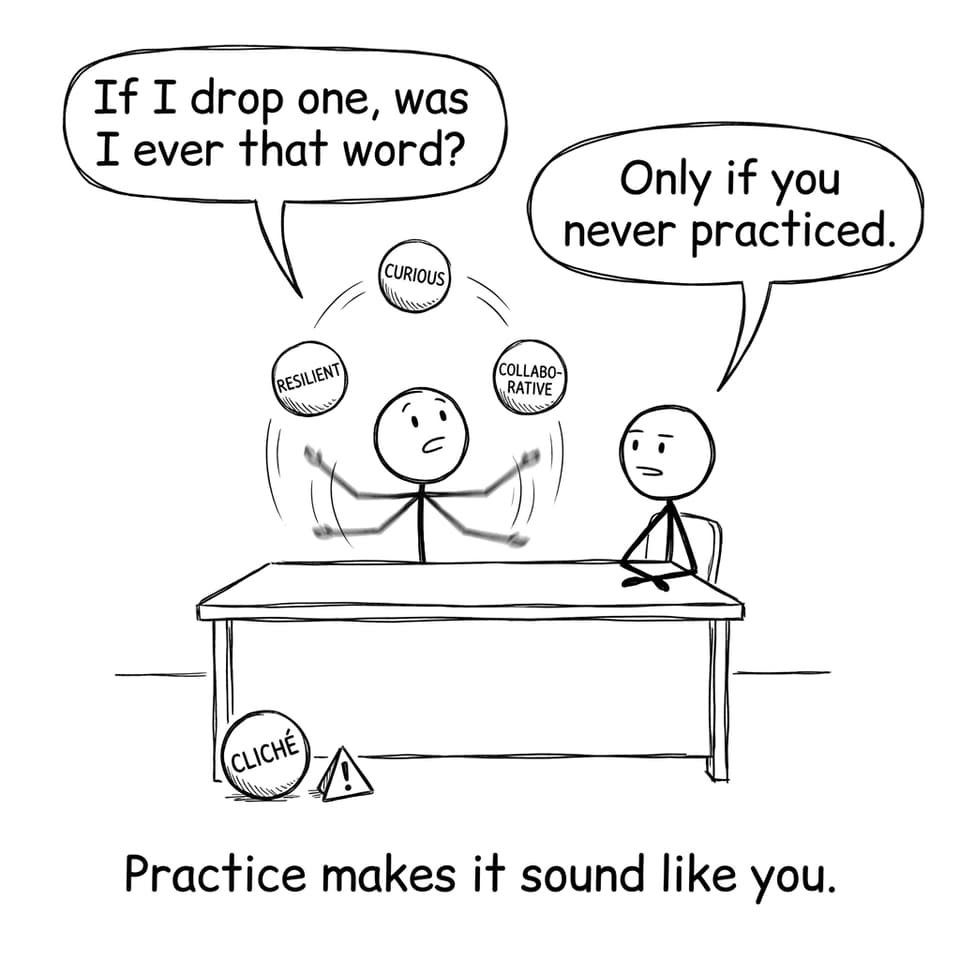
How to answer “three words” with University-level confidence
Choose words you can prove in 20 seconds
In a University interview, a word is only as good as the example attached to it. “Hardworking” can be true, but it’s hard to show quickly. “Methodical,” “curious,” or “steady under pressure” are easier to demonstrate.
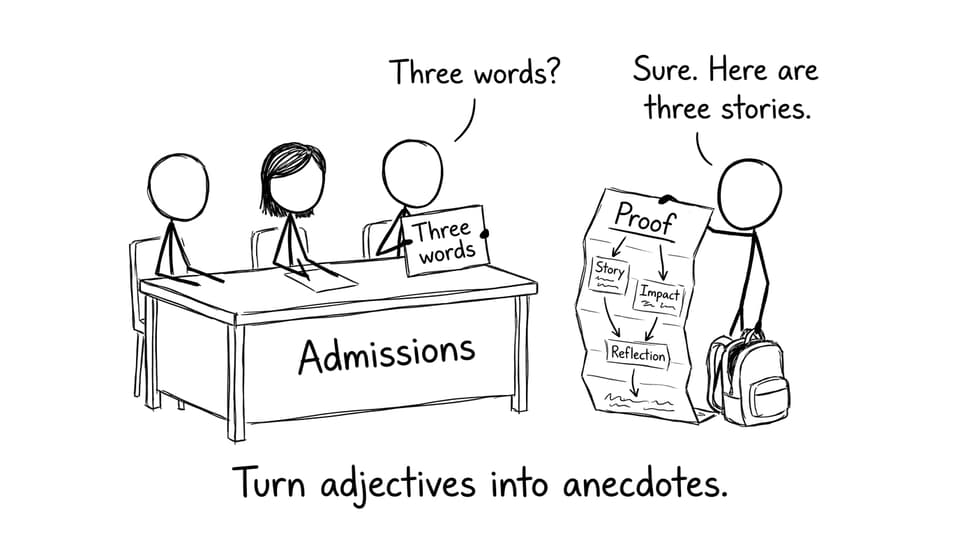
Try building each word as a mini IB paragraph:
-
Claim (the word)
-
Evidence (a moment)
-
Reflection (what you learned)
Use your IB life as your evidence bank
You already have stories. The IB is basically a factory for them.
Good sources:
-
A mistake you corrected after a tough mock
-
A group project that went sideways and got fixed
-
A question type you trained until it became predictable
This is where RevisionDojo can quietly help. When you practice in the Questionbank, you create a trail of effort: weak topics, improvements, and patterns. That trail becomes interview evidence, not just exam prep.
For a stronger revision system (that also creates better stories), borrow structure from How to Study for IB Exams: Step-by-Step Guide and How 45-Point IB Students Prepare for Exams.
Deliver it like you’re calm, not perfect
A University interviewer isn’t hunting for flawless adjectives. They’re looking for a person who can think clearly.
Use this simple script:
“Three words I’d use are X, Y, and Z. I’ll give a quick example for each.”
That sentence buys you structure and time. Then keep each example short: 1 situation, 1 action, 1 result.
Strong three-word combinations (with IB-friendly proof ideas)
-
Curious, Resilient, Collaborative (EE rabbit holes, comeback after a low score, better group routines)
-
Analytical, Consistent, Empathetic (error logs, spaced repetition habits, peer support)
-
Creative, Disciplined, Adaptable (finding new explanations, sticking to a plan, adjusting when school workload spikes)
If you want to build consistency fast, pair your answer prep with daily recall using IB Flashcards with Spaced Repetition and the Flashcards feature.
Closing: turn three words into a University-ready story
The best University answers don’t sound big. They sound supported. Pick three words you can defend, attach one short story to each, and deliver them with the quiet confidence of someone who has done the work.
If you want your preparation to fuel both IB exams and University interviews, use RevisionDojo as your home base: Study Notes for clarity, Flashcards for recall, Questionbank for exam technique, AI Chat for stuck moments, Grading tools for sharper responses, Predicted Papers and Mock Exams for timed realism, plus Coursework Library support and Tutors when you want human feedback.