


A small table that quietly tells a big story
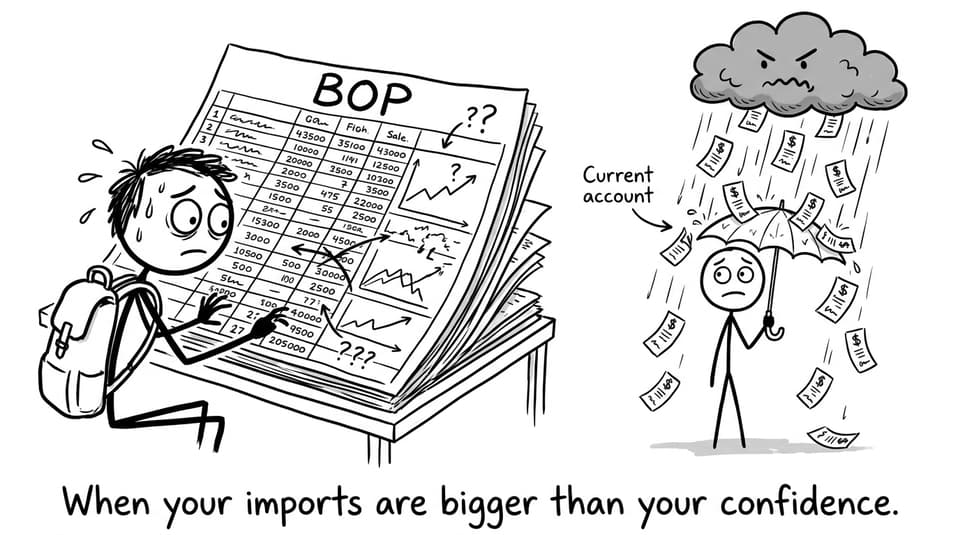
In IB Economics, the balance of payments can look like one of those topics that feels purely technical: columns, plus signs, minus signs, and a headache waiting to happen. But the best way to see it is simpler. Imagine a country checking its bank statement after a month of living a little too confidently. The numbers don’t just report what happened; they reveal habits, dependence, and resilience.
That’s what the balance of payments (BOP) does in IB Economics: it records a country’s transactions with the rest of the world, then quietly hints at whether the economy is competitive, vulnerable, or simply in a temporary phase of change.
The BOP checklist (what to look for fast)
When you see a BOP table or a data response in IB Economics, scan it in this order:
-
Current account: trade in goods/services, primary income (interest, dividends), and transfers (like remittances)
-
Financial account: direct investment, portfolio flows, and other investments
-
Capital account: typically small; capital transfers and non-produced assets
-
Ask: Is the country a net borrower or net lender?
-
Ask: Are the flows sustainable, or fragile?
If you want the syllabus-aligned breakdown, RevisionDojo’s topic hub on 4.6 Balance of Payments keeps the structure consistent with what examiners expect.
What the current account reveals in IB Economics
The current account is where a lot of exam questions start because it links everyday spending to international competitiveness. A surplus often suggests strong export performance, high foreign demand, or significant income earned from overseas assets. A deficit suggests the opposite: heavy import reliance, weak competitiveness, or strong domestic demand spilling into imports.
The deeper insight (and where IB Economics answers become sharper) is persistence. A one-off deficit can be normal. A persistent deficit can hint at structural issues and growing reliance on foreign funding. RevisionDojo expands on this logic in its notes on Balance of payments components and in Why current account deficits matter.
What the financial account reveals (confidence, risk, and funding)
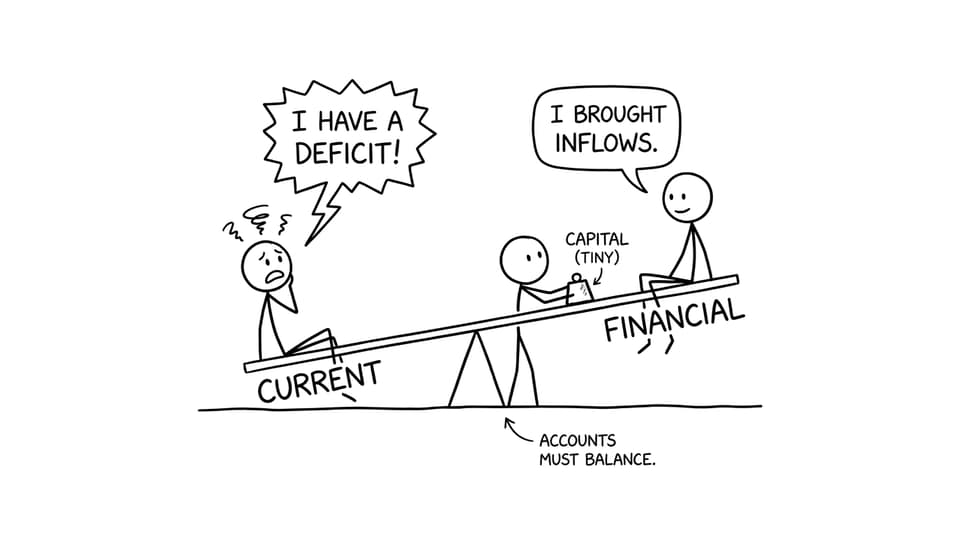
If the current account is the “shopping and earning” side, the financial account is how the country finances the gap. Large inflows can signal investor confidence: foreigners want to buy domestic assets, invest in firms, or hold domestic securities. Large outflows can signal uncertainty, better returns elsewhere, or domestic investors hedging risk.
In IB Economics, this is where you connect the story: a current account deficit is often matched by financial inflows. The key question is quality. Long-term foreign direct investment tends to be steadier than short-term portfolio flows.
RevisionDojo’s 4.6 Balance of Payments Learn lessons are useful here because they train you to write the “so what?” beyond definitions.
The capital account: small, but still part of the picture
The capital account is usually smaller in magnitude, which is why it’s often ignored in rushed revision. But it can still matter for completeness: it includes things like capital transfers and transactions in non-produced assets.
In exam responses, mentioning it briefly shows control of the full framework without wasting time. For definitions and clean examples, the 4.6.1 Balance of payments notes are a solid quick refresh.
Why the BOP matters for exchange rates and policy
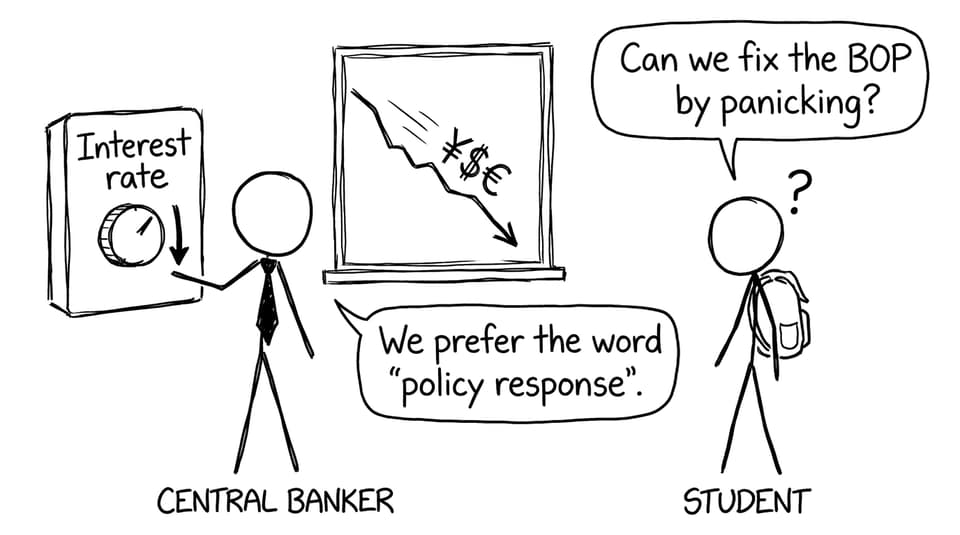
In IB Economics, you often earn the top marks when you connect the BOP to exchange rate pressure and policy responses. Large deficits can increase the supply of domestic currency on foreign exchange markets, contributing to depreciation pressure. That depreciation can change import prices, inflation, and competitiveness over time.
If you’re HL, this link becomes even more explicit. RevisionDojo’s notes on Consequences of exchange rate changes and the syllabus point on the current account and exchange rates (HL) help you practise those chains of reasoning.
Bring it back to your exam technique
The balance of payments is not just a table to memorise. In IB Economics, it’s a storyline about trade, confidence, borrowing, and risk. If you can describe what’s happening in the current account, explain how the financial account funds it, and connect both to exchange rates and policy, you’re already writing like an examiner wants.
To practise that skill quickly, use RevisionDojo’s Questionbank, Study Notes, and Flashcards for targeted recall, then test your explanations with AI Chat and the Grading tools. When you’re ready to simulate pressure, RevisionDojo’s Mock Exams and Predicted Papers help you turn understanding into calm, repeatable marks.