


Short-run aggregate supply can feel like the economy’s mood ring: the same factories and workers exist, yet output seems to change with the day’s headlines. One week, firms are hiring overtime. The next, they’re cutting shifts. In IB Economics, SRAS is your way of explaining that stop-start rhythm without panicking in the exam hall.
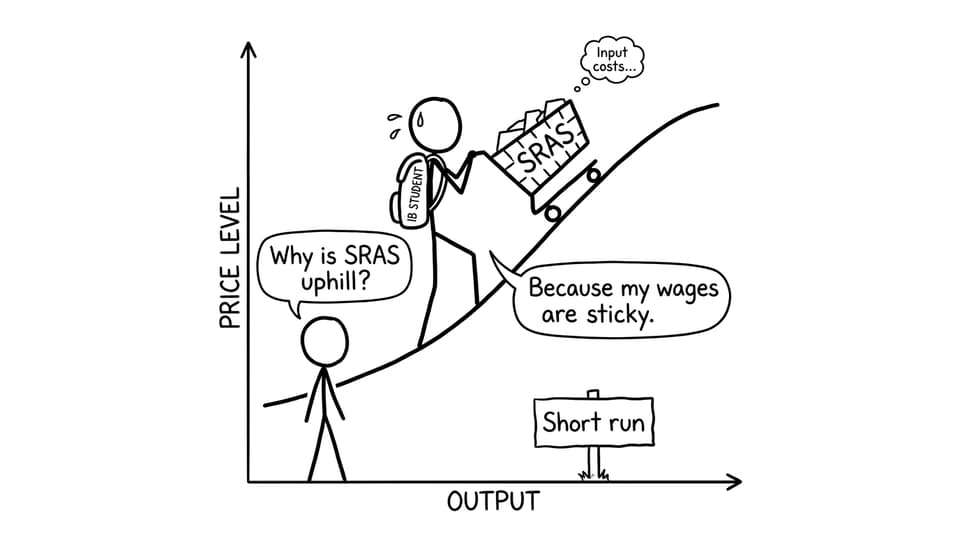
SRAS shows how much real output firms are willing to produce at different price levels in the short run, when some costs (especially wages) are slow to adjust. It slopes upward because higher prices can raise revenue faster than costs rise, making production more profitable.
Quick SRAS checklist for IB Economics exams
Before you write anything, run this mental checklist:
-
Is it a movement along SRAS (price level changes) or a shift of SRAS (cost conditions change)?
-
Are wages or other factor costs changing?
-
Are input prices (oil, energy, imported components) changing?
-
Is productivity improving or worsening?
-
Have expectations changed for firms?
If you can label the change correctly, you’re already halfway to a top-mark explanation.
For a syllabus-aligned refresher, use IB Economics 3.2 Variations in Economic Activity and then drill questions in the 3.2 questionbank.
The key determinants of SRAS in IB Economics
In IB Economics, SRAS shifts when firms’ production costs or efficiency changes at all price levels.
Wage levels (and wage rigidity)
Wages are often the biggest cost for firms. If wages rise, unit costs rise, profits shrink, and firms supply less output at every price level. That’s a leftward shift of SRAS.
If wages fall, or if wage growth slows while prices rise, firms’ profit margins improve in the short run, and SRAS shifts right. Wage rigidity matters because wages don’t instantly renegotiate every time the overall price level changes.
To tighten your diagram explanation, pair this with SRAS curve notes (3.2.5).
Input prices (energy, raw materials, imported components)
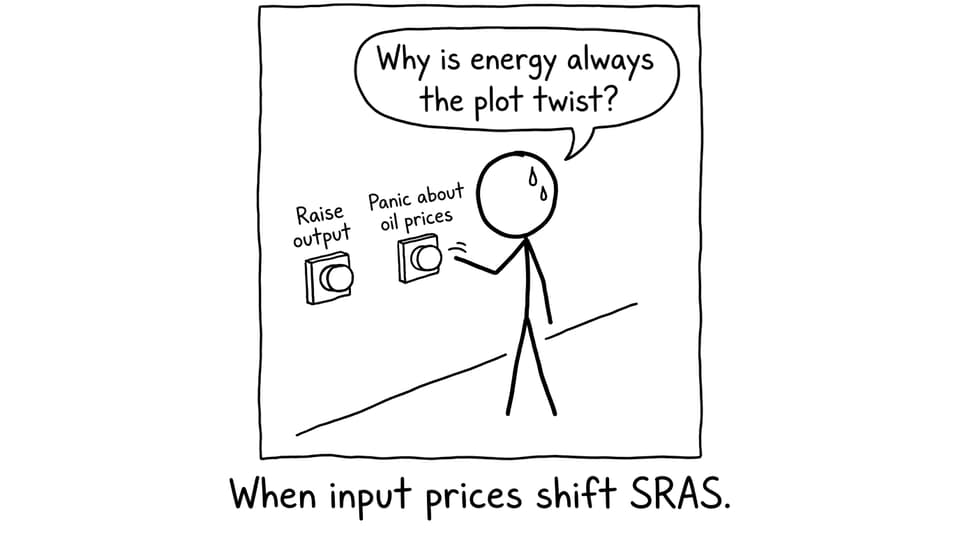
Input prices are the classic “sudden plot twist” in macro. When oil, gas, metals, or shipping costs rise, firms pay more to produce the same output. SRAS shifts left.
When input prices fall, costs drop and SRAS shifts right. This is why global commodity markets and supply chain disruptions can show up as inflationary pressure without any change in demand.
If you want a clean, examiner-friendly phrasing, revise Shifts of the SRAS curve notes (3.2.6).
Productivity changes (technology, training, organisation)
Productivity is output per unit input. If workers become more efficient (training, better management) or if technology improves, firms can produce more with the same resources. That reduces unit costs and shifts SRAS right.
If productivity falls due to labour shortages, poor infrastructure, or operational disruptions, unit costs rise and SRAS shifts left.

Expectations (confidence and pricing plans)
Expectations sound abstract, but they’re practical: they change what firms choose to do today.
If firms expect higher future prices and stronger demand, they may increase current production, shifting SRAS right. If they expect recession, weaker sales, or unstable conditions, they may reduce output plans, shifting SRAS left. In IB Economics, you can use expectations as an extra layer of evaluation, especially in longer responses.
How to use SRAS shifts in exam answers
Markers reward clarity more than complexity. A solid IB Economics SRAS paragraph usually does three things:
-
Name the determinant (wages, input costs, productivity, expectations).
-
Explain the cost/profit effect on firms.
-
State the direction of the SRAS shift and the likely impact on price level and real GDP when combined with AD.
To connect SRAS shifts to outcomes, revise Macroeconomic equilibrium notes (3.2.9) and the explainer How Macroeconomic Equilibrium Is Determined.
Bring it home with RevisionDojo
SRAS is one of those IB Economics concepts that looks simple until you’re asked to explain a real-world shock in 45 minutes. The fastest way to get confident is to combine clear notes with targeted practice: revise with IB Economics revision notes, then use RevisionDojo’s Questionbank, Flashcards, AI Chat, and Grading tools to turn definitions into exam-ready analysis. Add Predicted Papers and Mock Exams when you want timed pressure without guesswork, and use the Coursework Library and Tutors when you need personalised feedback.
If you can explain what determines short-run aggregate supply calmly, you can explain a huge slice of macro. And in IB Economics, that calm is a competitive advantage.