


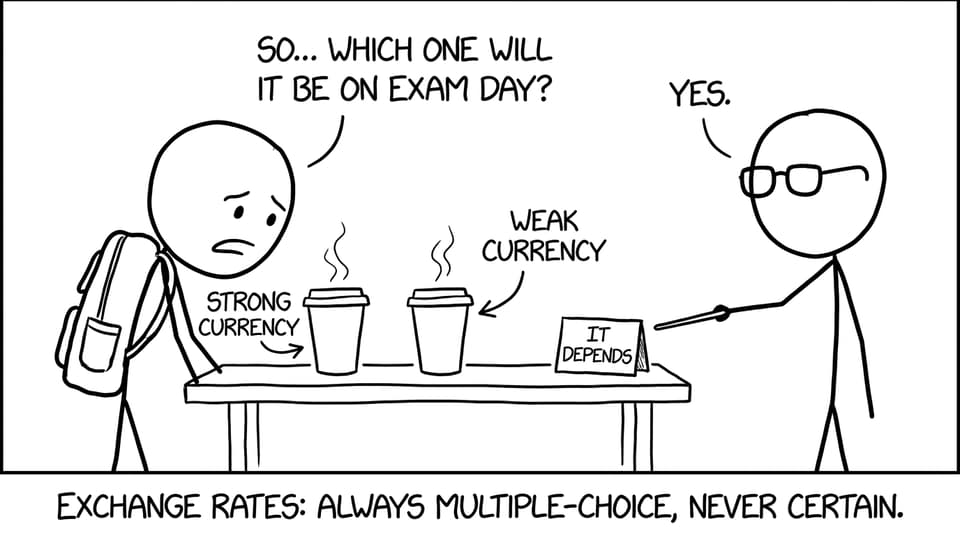
Exchange rates rarely move for one neat reason.
One day, a currency rises because investors like higher interest rates. The next, it falls because traders suddenly fear inflation, elections, or a global shock. For IB Economics students, that messiness is the point: exam questions reward you for explaining how different forces shift demand and supply in the foreign exchange market--and for evaluating which factor matters most in context.
To anchor your definitions and diagrams, keep the syllabus framing close: the 4.5 Exchange Rates hub and the Floating exchange rates notes are the cleanest starting places.
A quick IB Economics checklist: what moves exchange rates?
In IB Economics, you can usually trace exchange rate movements to shifts in:
-
Interest rate differentials (returns on financial assets)
-
Inflation differentials (purchasing power and competitiveness)
-
Trade flows (exports, imports, and currency conversion)
-
Speculation and expectations (what people think will happen next)
-
Confidence and risk (political stability, global risk sentiment)
If you can link each factor back to demand for currency or supply of currency, you can build a full-mark chain of reasoning.
Supply and demand: the mechanism behind every story
A floating exchange rate is fundamentally a price set by the market. When demand for a currency increases, it appreciates. When supply increases (or demand falls), it depreciates. This is why examiners love diagrams: they force you to show which curve shifts.
If you want a step-by-step refresher on diagram labeling and equilibrium, use IB Economics 4.5.1 Floating Exchange Rates Notes.
Interest rates: why money chases yield
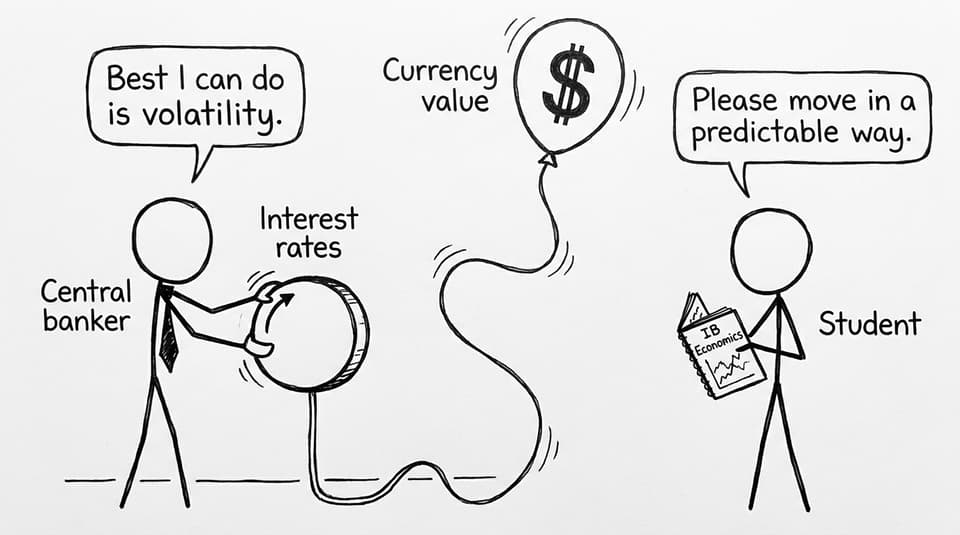
Interest rates matter because they change the return on holding financial assets in a currency. If a country’s central bank raises interest rates relative to others, foreign investors may move funds in to earn higher returns. To do that, they must buy the currency first. Demand rises, and the currency tends to appreciate.
In IB Economics, your evaluation comes from realism: higher interest rates can strengthen a currency, but only if investors believe inflation will stay controlled and the economy is stable.
For targeted practice, try the 4.5 Exchange Rates Questionbank to see how these chains are tested.
Inflation and competitiveness: the quiet pressure
Inflation shapes exchange rates through purchasing power and trade competitiveness. Lower inflation (relative to trading partners) can make domestic goods more competitive abroad, supporting export demand. It also signals stability, which can attract investment flows. Higher inflation does the opposite: it erodes real returns and can reduce confidence, weakening demand for the currency.
This links directly to the consequences exam questions ask about: imports get cheaper with appreciation, but exports can become less competitive. For that effects chain, see 4.5.3 Consequences of changes to the exchange rate and the explainer post How exchange rate changes impact the economy.
Trade flows and the balance of payments
Trade matters because someone has to convert currency to pay for exports and imports. If a country exports more, foreigners buy its currency to pay domestic firms--raising demand and tending toward appreciation. If it runs persistent trade deficits, more currency may be sold to buy imports--pushing toward depreciation.
In IB Economics, connect this to the balance of payments language. Credits (money inflows) support demand for a currency; debits (outflows) add to supply. A clear reference is 4.6.1 Balance of payments notes.
Expectations and speculation: tomorrow’s news, today’s price
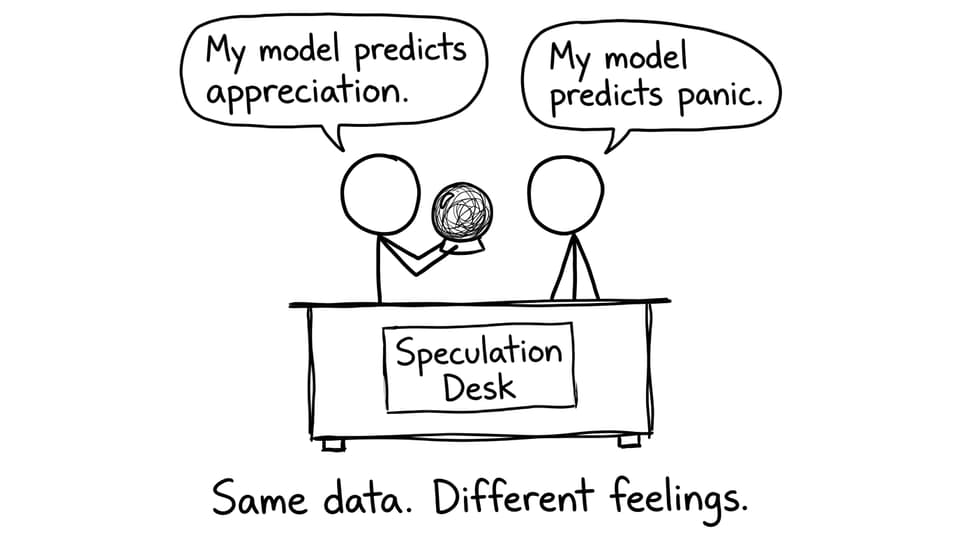
Currencies often move on beliefs about what will happen next. If investors expect appreciation (because of future interest rate rises, stronger growth, or political stability), they may buy now, causing immediate appreciation. If they expect weakness, they sell early, accelerating depreciation.
This is why exchange rates can look “irrational” in headlines but still be logical in a market sense: prices reflect expectations, not just current data.
Bringing it home: revise exchange rates like an economist
Exchange rate movements look chaotic until you train yourself to ask one calm question: what shifted demand or supply for the currency? That habit is pure IB Economics--and it’s exactly what earns marks.
If you want to turn understanding into exam performance, RevisionDojo is built for it: use the Questionbank for exam-style practice, Study Notes and Flashcards to lock in definitions, AI Chat to test your explanations, and Grading tools to refine evaluation. When you are ready to go further, the Lessons, Mock Exams, Predicted Papers, Coursework Library, and Tutors help you tighten every weak spot before exam day.