



Unemployment feels personal long before it feels like a data point.
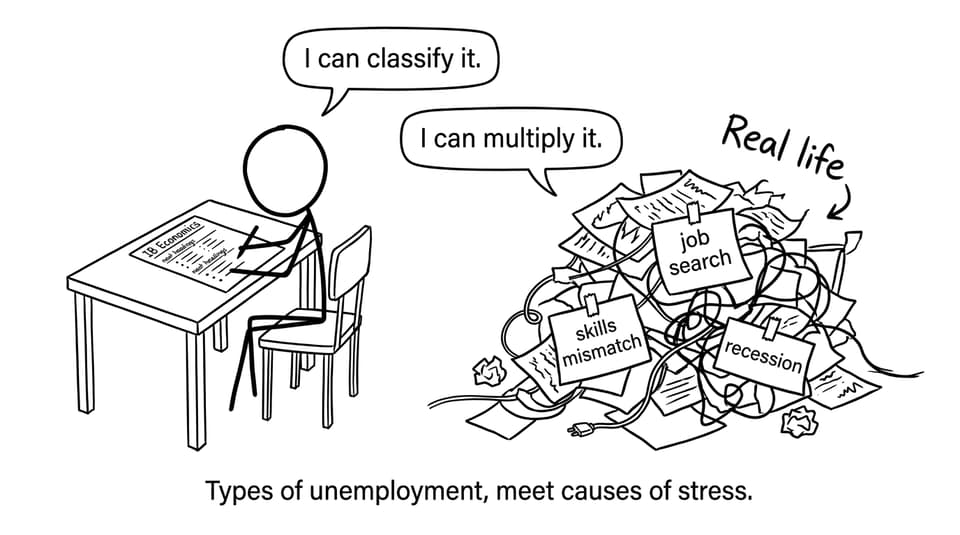
One day, a shop closes early. A family friend “takes a break” between jobs longer than expected. A headline says the economy is “cooling.” In IB Economics, those moments are exactly what you learn to translate into clear categories and clean chains of reasoning. And in exams, the students who score well are usually the ones who can explain why unemployment rises, not just name the types.
Unemployment in IB Economics: a quick checklist
In IB Economics, unemployment is typically defined as people who are willing and able to work but cannot find a job.
Use this fast checklist when you see unemployment in a question:
-
Identify the type: cyclical, structural, frictional, seasonal (and sometimes voluntary)
-
Link to a cause (AD fall, skills mismatch, search time, seasonal demand)
-
Mention an outcome (lost output, lower incomes, weaker confidence)
-
Add a policy direction (demand-side vs supply-side)
If you want syllabus-aligned support, start with Types and causes of unemployment (topic page) and then deepen with Types and causes of unemployment (notes).
Cyclical unemployment: when spending falls
Cyclical unemployment happens when the economy slows and aggregate demand drops. Firms sell less, so they produce less. When output falls, labour demand falls too, and layoffs become the simplest lever to pull.
In IB Economics, the clean chain is:
Lower AD leads to lower real output, which leads to lower derived demand for labour, resulting in higher unemployment.
To connect this to your diagrams, pair it with AD-AS logic using Why aggregate demand matters for stability or the exam-friendly framing in How macroeconomic equilibrium is determined.
Structural unemployment: when the economy changes shape
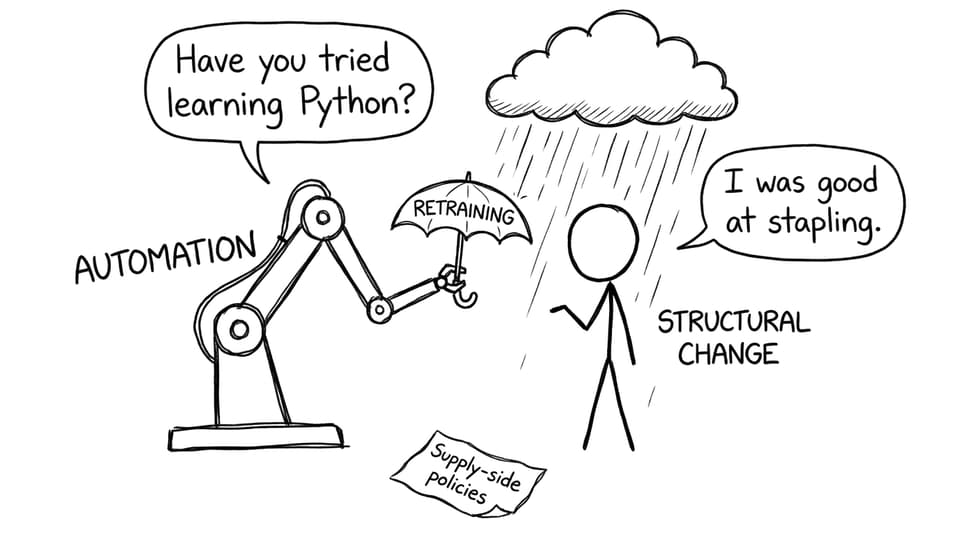
Structural unemployment is a mismatch problem: workers’ skills (or location) no longer match what employers need.
Common drivers include:
-
Technological change (automation replacing routine tasks)
-
Globalization shifting production across borders
-
Changing consumer preferences moving demand between industries
It’s often persistent because it requires adjustment time: retraining, relocation, and education. That’s why IB Economics often links structural unemployment to supply-side policies.
Frictional unemployment: the “normal” job search gap
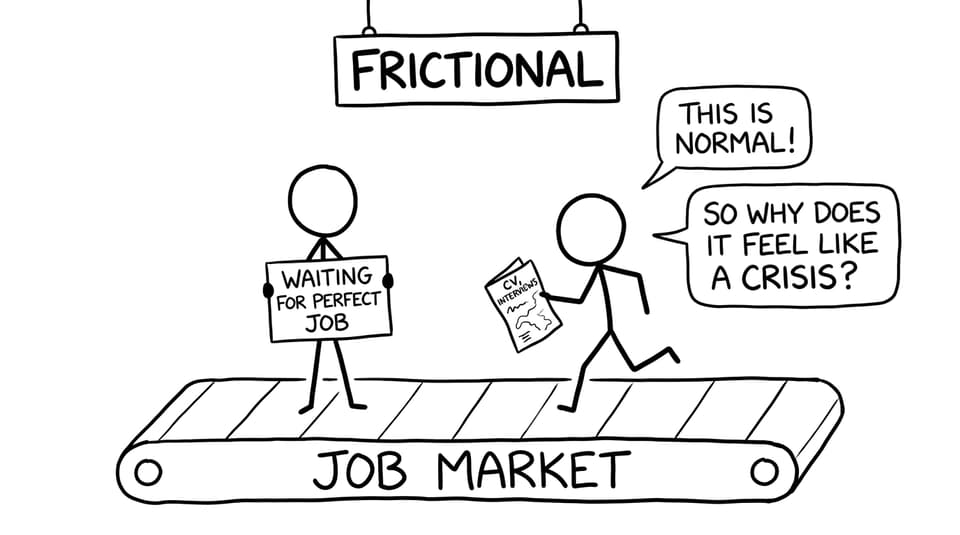
Frictional unemployment is the time delay between leaving one job and finding another. People move cities, switch careers, graduate, or hold out for a better match.
In IB Economics, this isn’t automatically “bad.” A dynamic labour market can have frictional unemployment because workers are searching and firms are screening. The key is duration: short spells are typical, long spells can begin to look structural.
Seasonal unemployment: predictable demand swings
Seasonal unemployment comes from regular, predictable changes in labour demand throughout the year.
Think tourism in the off-season, construction during harsh winters, or agriculture outside harvest periods. In IB Economics responses, the easiest way to score is to show you understand it’s not caused by a recession or a skills mismatch, but by recurring patterns in demand.
Institutional and policy-related factors: incentives and hiring costs
Labour market rules can also affect unemployment levels.
-
Higher minimum wages can raise labour costs for some firms (potentially reducing hiring in certain markets)
-
Generous unemployment benefits can reduce the urgency of job search for some workers
-
Strong employment protection can make firms cautious about hiring if firing is costly
These factors rarely operate alone. In IB Economics, examiners like answers that acknowledge interaction: a recession (cyclical) can trigger long-term unemployment that later becomes structural if skills erode.
Bringing it back to IB Economics exam performance
When you revise unemployment for IB Economics, aim for explanations that are simple but complete: define, classify, and link cause to outcome.
To practise the exact style of exam thinking, use RevisionDojo’s Questionbank for timed practice and markscheme-level feedback, then lock in definitions with Flashcards and Study Notes. If you get stuck explaining a chain like “AD fall leads to unemployment,” use AI Chat to refine your phrasing, and check your progress with Grading tools, Mock Exams, and Predicted Papers. For deeper application, the Coursework Library and Tutors can help you turn concepts into clear evaluation.
For your next step, connect causes to impact using IB Economics: why unemployment creates social and economic costs, and strengthen your macro foundations with Macroeconomics notes.
Understanding what causes unemployment in IB Economics is more than memorizing labels. It’s learning to explain why economies stumble, how workers get left behind, and what policies can realistically do about it. RevisionDojo is built to make that explanation feel automatic when the exam clock starts.