A price tag is a quiet promise: this is what it costs. Inflation is what happens when that promise keeps changing, week after week, until your usual snack feels like a luxury. For IB Economics students, inflation is also a gift--because once you can explain why prices rise, you can unlock strong AD-AS analysis, sharper evaluation, and calmer exam writing.
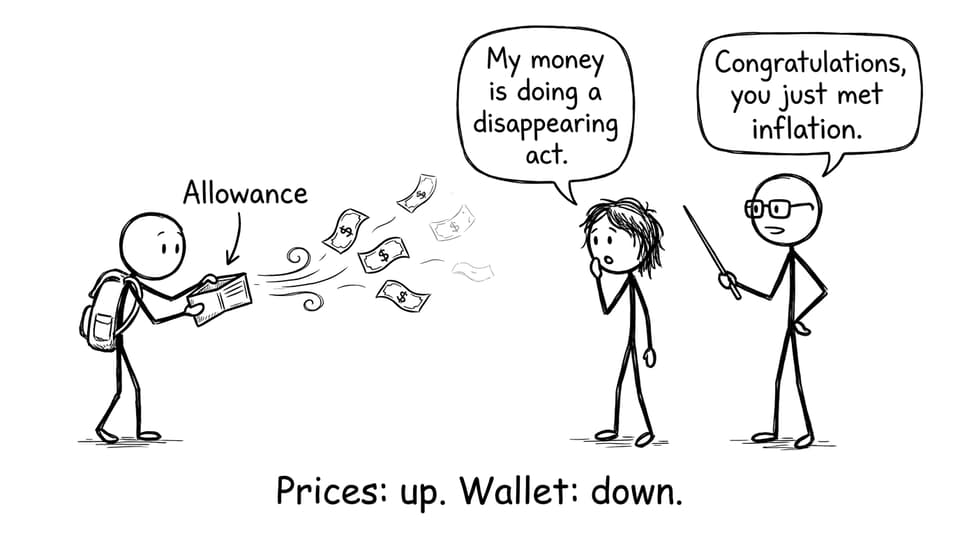
Inflation in IB Economics: the one-sentence definition
In IB Economics, inflation is a sustained increase in the general price level over time. It’s not “one thing got more expensive.” It’s “most things got more expensive,” usually measured with a price index like CPI (which you can revise alongside this inflation measurement guide).
Quick exam checklist: identify the source before the policy
When you see inflation in a question, ask:
-
Is aggregate demand rising faster than output? (demand-pull)
-
Are production costs rising and squeezing firms? (cost-push)
-
Are wages/prices rising because people expect inflation? (built-in)
-
Is money and credit expanding quickly? (monetary factors)
Demand-pull inflation: too much spending, too little output
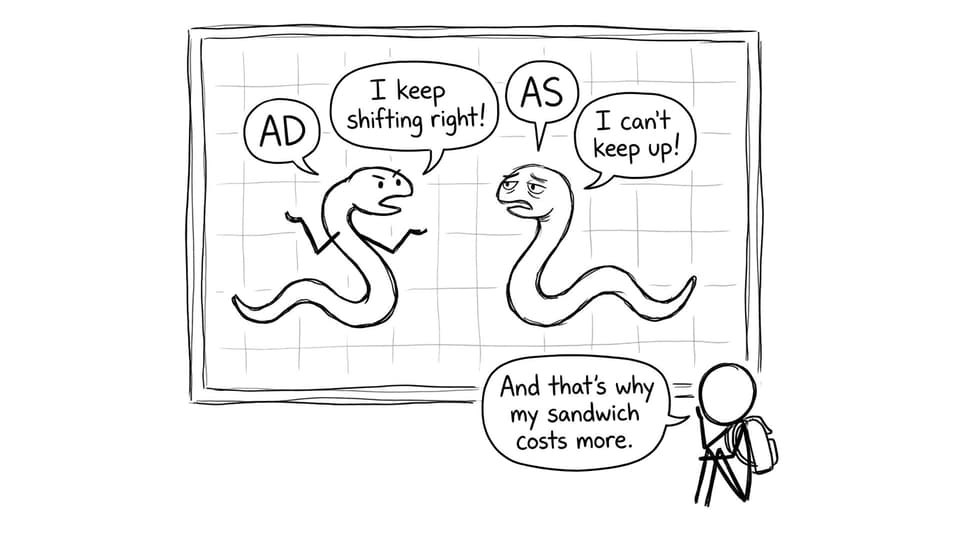
Demand-pull inflation happens when AD increases and the economy can’t expand output enough, so the equilibrium price level rises. In IB Economics, this is the classic “AD shifts right” story.
To revise the diagram logic, review how macroeconomic equilibrium is determined and the syllabus-aligned AD-AS topic hub.
Cost-push inflation: when the economy gets more expensive to run
Cost-push inflation starts on the supply side. If wages, energy, raw materials, or taxes on production rise, firms face higher costs and SRAS shifts left--raising the price level even if demand hasn’t grown.
A helpful way to write this in IB Economics: “higher costs reduce SRAS, causing inflation and lower real output.” For extra diagram confidence, revise what determines short-run aggregate supply and practise with exam-style prompts from the RevisionDojo Questionbank.
Built-in inflation: expectations and the wage-price spiral
Sometimes inflation persists because people plan for it. If workers expect higher prices, they negotiate higher wages. Firms then raise prices to protect profit margins. Those higher prices reinforce expectations. The spiral can keep turning even after the original shock fades.
In IB Economics, your evaluation point is credibility: when a central bank is trusted, expectations stay anchored; when trust breaks, inflation becomes harder to reverse.
Monetary factors: “too much money chasing too few goods”
If money and credit expand faster than real output, spending can rise faster than the economy’s capacity. That creates inflationary pressure, especially near full employment.
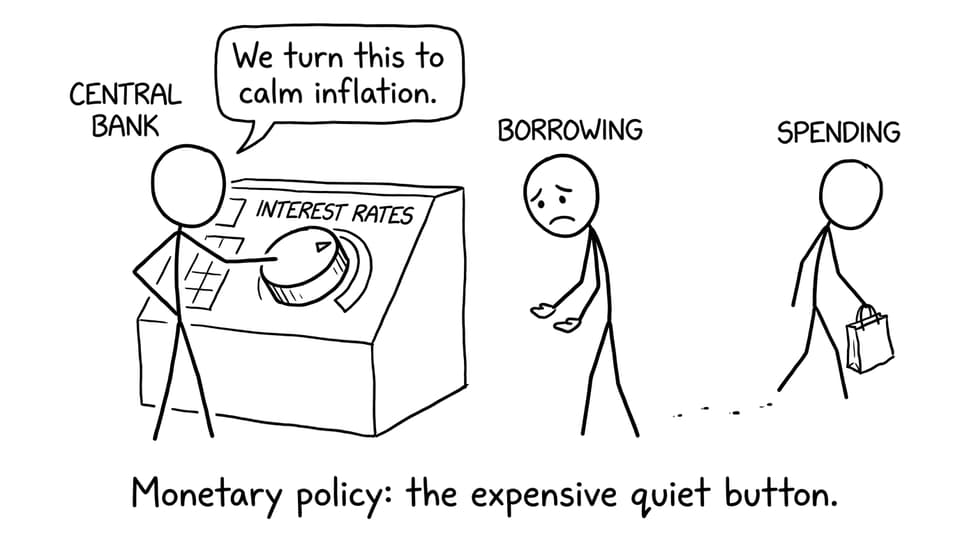
This is where IB Economics links theory to policy. Central banks use interest rates and monetary tools to influence borrowing and spending. See monetary policy notes and inflation targeting notes for the exam language.
Bring it together with RevisionDojo
Inflation is a core IB Economics storyline: AD shifts, SRAS shifts, expectations, and policy trade-offs. To turn that storyline into marks, use RevisionDojo’s Study Notes, Flashcards, and AI Chat to rehearse definitions and diagram chains, then use the Grading tools and Mock Exams to refine your timing and evaluation. When you’re ready to drill the skill, the Questionbank helps you practise inflation explanations under real exam pressure. Your goal isn’t just to know what causes inflation--it’s to explain it clearly, draw it accurately, and evaluate it calmly, every time.

