
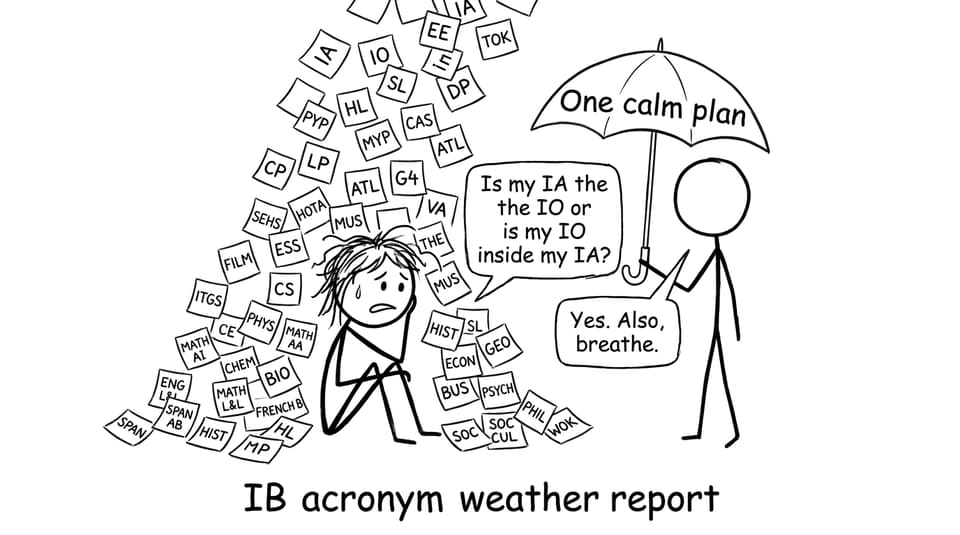
When people say “IA” in IB Language B, they often mean one specific moment: you, speaking under pressure, trying to sound natural while your brain scrolls through vocabulary like a buffering video. The confusion isn’t your fault. IB uses IA as a broad label across subjects, then Language B turns the IA into something very concrete: the Individual Oral (IO).
This guide makes IA and IO feel simple, practical, and trainable, so your prep becomes a routine, not a mystery.
IA vs IO in IB Language B: the clean definition
In IB terms, IA means Internal Assessment: work assessed by your teacher and then moderated by IB. In IB Language B, the IA is essentially the IO component (your course may include other class tasks, but the assessed internal component is the IO).
The key mindset shift: your IA is not a “one-day performance.” Your IA is the outcome of repeatable practice.
If you want the broader IB meaning of IA across subjects, keep this open: What Is an IA? Understanding the Internal Assessment in IB.
What happens in the Language B IA (the IO), step by step
Your Language B IA (the IO) is designed to test real communication. You respond to a stimulus connected to one of the five prescribed themes (identities, experiences, human ingenuity, social organization, sharing the planet), showing you can describe, interpret, and discuss in the target language.
A typical IO flow looks like this:
-
Stimulus given (often a visual prompt tied to a theme)
-
Preparation time (your short planning window)
-
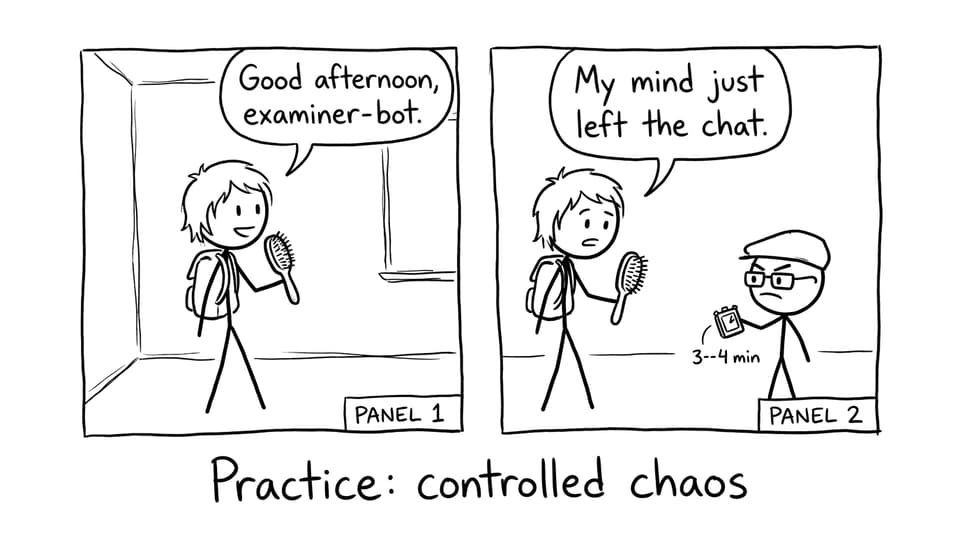
Short presentation (commonly 3-4 minutes)
-
Follow-up discussion (teacher questions, usually 5-7 minutes)
For a big-picture map of what else you’re balancing alongside the IA, see IB Language B Exams: Format, Timing, Strategy and IB Language B Paper Format: Complete Exam Guide.
A fast IA checklist you can actually use
Use this before every practice IO so your IA prep stays measurable:
-
Choose one theme and list 8-10 high-yield phrases you can control
-
Do a 1-minute description (what you literally see)
-
Do a 2-minute interpretation (what it suggests, values, tension)
-
Do a 1-minute connection (link to theme + cultural angle)
-
End with one opinion you can defend in Q&A
Then repeat with a new stimulus tomorrow. That repetition is how the IA stops feeling scary.
How to prepare for the IA without memorising a script
The best Language B IA performances sound “natural,” but they’re built on structure.
Train the IO like a skill, not a speech
If you only practise “full runs,” you improve slowly. Instead, isolate the parts of the IA:
-
Fluency reps: 90 seconds speaking without stopping
-
Repair phrases: practise how you recover when you blank
-
Follow-up answers: practise extending your response by adding example, contrast, consequence
For speaking drills that fit real student schedules, use How to Improve Your Language B Speaking Skills and Mastering Language B Oral Practice.
Use RevisionDojo to turn IA practice into a loop
RevisionDojo is most useful when you treat your IA like training:
-
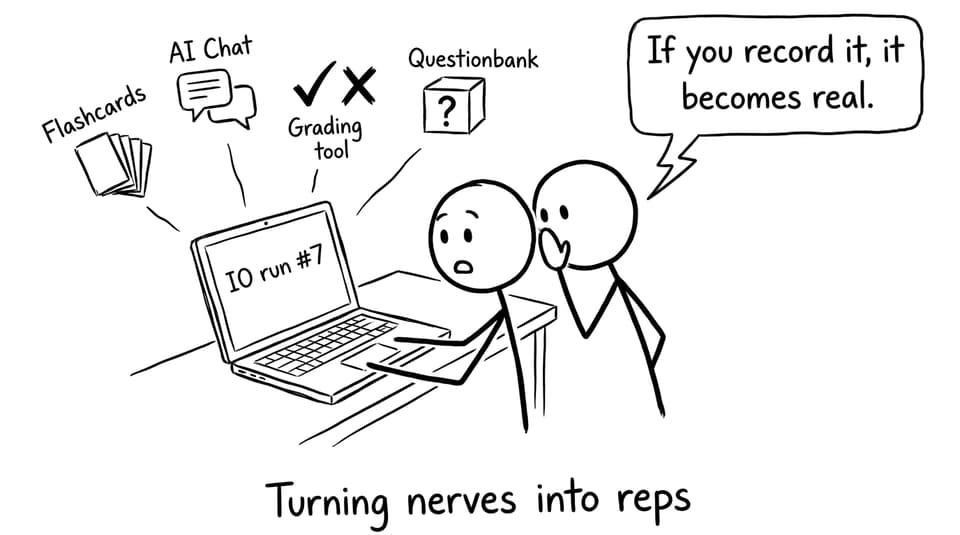
Build theme vocabulary with Flashcards (phrases, not single words)
-
Use AI Chat to simulate unpredictable teacher follow-ups
-
Use Grading tools to check what “good” sounds like against criteria
-
Use Study Notes to clarify theme links and structure
-
Add Tutors when you want human feedback on clarity and register
If you like exploring resources by topic, browse All IB Language B Posts and the broader IA hub at All #IA Posts.
Closing: make the IA feel smaller by making it repeatable
The IA in IB Language B isn’t a trick. It’s the IO, a short, structured conversation that rewards clarity, control, and connection to themes. When you practise it as a loop (stimulus, structure, feedback, repeat), the IA becomes familiar, and familiar is powerful.
Build that loop with RevisionDojo’s Flashcards, AI Chat, Grading tools, Study Notes, Questionbank, Predicted Papers, Mock Exams, Coursework Library, and Tutors, then walk into your IA knowing you’ve already done it many times before.