


Microeconomics feels simple right up until exam week, when every diagram suddenly needs one more label and every explanation needs one more link back to “because incentives.” That panic is normal. But in IB Economics, the students who improve fastest aren’t the ones who memorize more; they’re the ones who master a few microeconomic ideas first, then reuse them everywhere.
Below is the tight foundation that makes the rest of IB Economics (elasticities, market failure, welfare, policy evaluation) feel less like separate chapters and more like one connected story.
A quick IB Economics micro checklist
If you’re revising micro, keep returning to these five:
-
Scarcity and choice
-
Opportunity cost
-
Marginal thinking (marginal benefit vs marginal cost)
-
Supply, demand, and equilibrium
-
Market structures (and what they do to efficiency)
For the syllabus overview, use the IB Economics Resources hub and the IB Economics 2. Microeconomics page as your “map.”
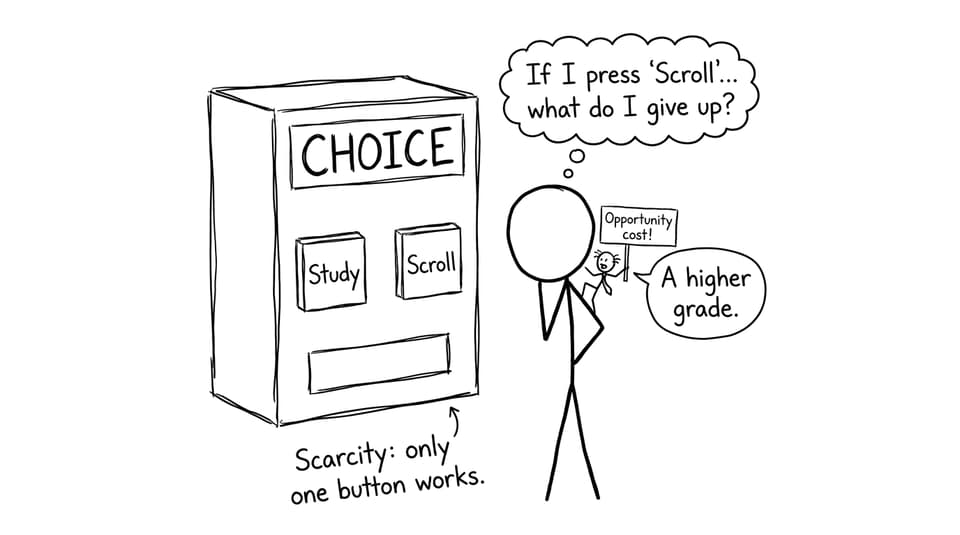
Scarcity and opportunity cost: the beginning of IB Economics
Everything in IB Economics starts with scarcity: limited resources, unlimited wants. Scarcity forces choice, and choice creates cost, not always money cost, but opportunity cost (the next best alternative you give up).
A strong exam habit: whenever you make a claim, quietly ask, “What was sacrificed to get this outcome?” You’ll sound more analytical immediately. If you want targeted practice, the Microeconomics Questionbank is ideal for turning opportunity cost into a reflex.
Marginal thinking: why “one more unit” changes everything
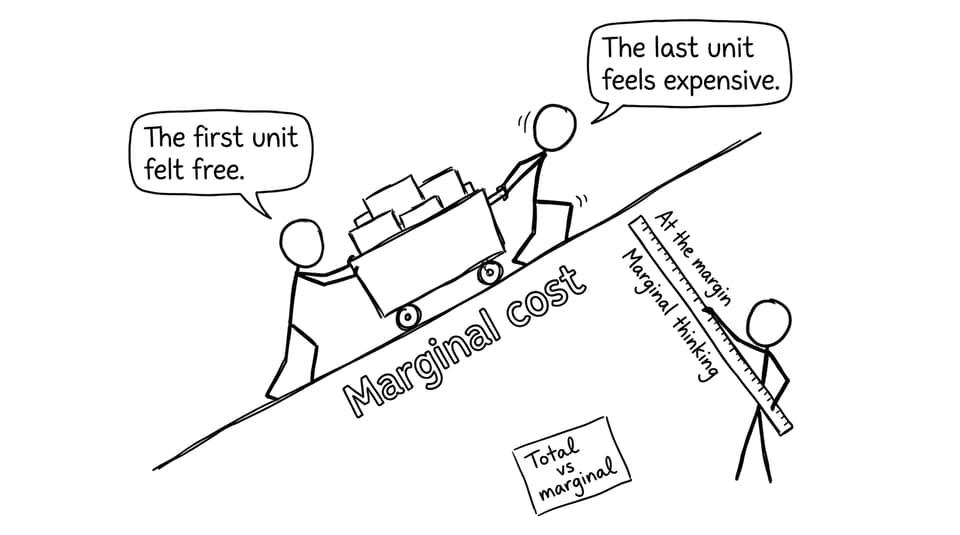
Micro questions often hide the key logic in a single word: marginal. Firms don’t ask, “Should we produce?” They ask, “Should we produce one more?” Consumers don’t ask, “Should I buy?” They ask, “Should I buy one more at this price?”
In IB Economics, marginal thinking helps you explain:
-
why supply curves slope upward (rising marginal costs)
-
why demand curves slope downward (diminishing marginal utility)
-
why policies change behaviour through incentives
Supply and demand: the core diagram language of IB Economics
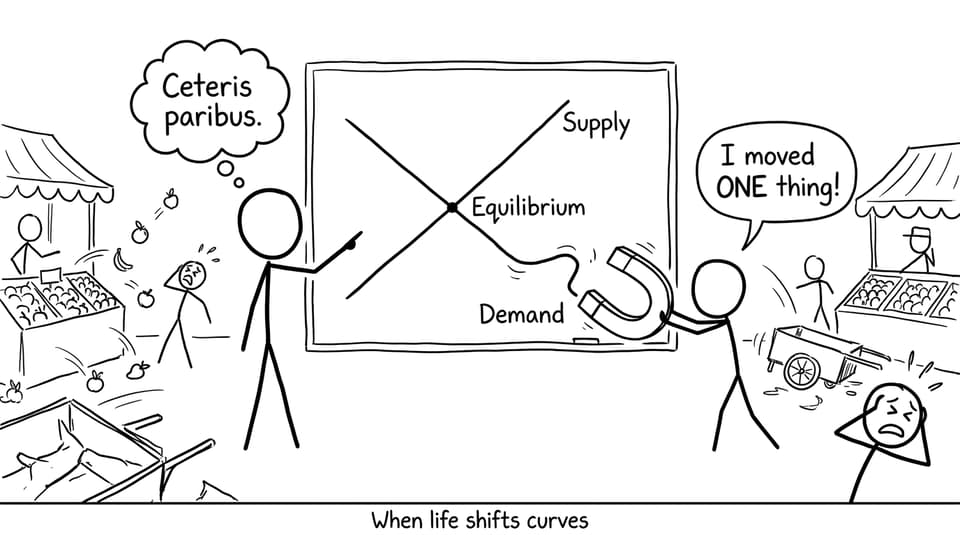
Supply and demand is the grammar of IB Economics. Once you can shift curves cleanly and explain the chain reaction, you can handle shocks, policies, and welfare effects.
Focus on three exam skills:
-
Identify what changes (non-price determinant) and which curve shifts
-
State the new equilibrium price and quantity clearly
-
Explain the mechanism (incentives, costs, preferences)
A fast refresher is Define Supply and Demand: IB Economics. And if you want a topic-level landing page to practise diagram logic, use Demand and supply curves forming a market equilibrium.
Market structures: same goal, different outcomes
Market structures matter because they change incentives and therefore outcomes. In IB Economics, you’re often comparing efficiency, prices, and consumer welfare across different structures.
At a minimum, be able to explain how each structure affects:
-
price and output
-
ability to earn supernormal profit
-
allocative and productive efficiency
When you start talking about efficiency, connect your analysis to the definition and diagram logic from Allocative efficiency at the competitive market equilibrium.
How to revise these ideas without wasting time
The quiet trick in IB Economics revision is repetition with variation. Don’t reread. Rotate formats:
-
Use 2. Microeconomics Flashcards for definitions (scarcity, opportunity cost, equilibrium)
-
Use the Questionbank plus RevisionDojo’s grading tools for exam-style answers and diagram accuracy
-
Use Study Notes and Study Notes-style summaries from RevisionDojo to tighten your chains of reasoning
-
Use AI Chat to test whether your explanation actually answers the command term
For a broader routine that fits the whole course, borrow ideas from Methods for Effective IB Economics Revision and keep your structure consistent.
Conclusion: make micro feel small again
If IB Economics feels overwhelming, it’s usually because the foundations aren’t automatic yet. Start with scarcity and opportunity cost, train marginal thinking, speak fluent supply and demand, then use market structures to evaluate real-world outcomes. RevisionDojo brings those pieces together with a full Questionbank, Study Notes, Flashcards, AI Chat, grading tools, Predicted Papers, Mock Exams, a Coursework Library, and Tutors, so your revision becomes consistent, not chaotic. Master these microeconomic ideas first, and the rest of IB Economics starts to click.