
If you’re aiming for medicine, your subject choices can feel like a public commitment: this is the version of me who is serious. And then someone says, “You should take IB Psychology. It’s useful for doctors.”
They’re not wrong. But they’re not fully right either.
IB Psychology is one of those subjects that quietly changes how you look at people. Not in a dramatic, movie-plot way. More like this: you start noticing the small forces that shape decisions, stress, memory, and health. For an aspiring med student, that matters. You’re not just learning the body; you’re learning the human.
Quick checklist: Is IB Psychology a good fit for medicine?
Use this simple filter before committing to IB Psychology:
-
You’re already taking (or willing to take) core sciences like Biology and Chemistry
-
You’re interested in mental health, patient communication, or research
-
You like reading studies and writing structured evaluations
-
You want a Group 3 subject that still feels “science-adjacent”
If you’re hoping IB Psychology can replace science prerequisites for medicine, pause. That’s where students get surprised later.
What you actually study in IB Psychology (and why it matters)
At its core, IB Psychology explains behaviour through three big lenses: biological, cognitive, and sociocultural. You learn how neurotransmitters can influence behaviour, how memory can distort truth without anyone “lying,” and how identity can shift based on group norms.
A huge part of IB Psychology is also about research: how studies are designed, what counts as evidence, and how to judge a claim without being impressed by complicated statistics. That skill carries directly into medicine, where papers and protocols shape real decisions.
To revise efficiently, it helps to keep your resources organised. RevisionDojo’s main IB Psychology hub is a clean starting point, and the Psychology Cheatsheets are ideal when you need fast recall before an exam.
How IB Psychology helps aspiring med students
You build a “patient lens,” not just a diagnosis lens
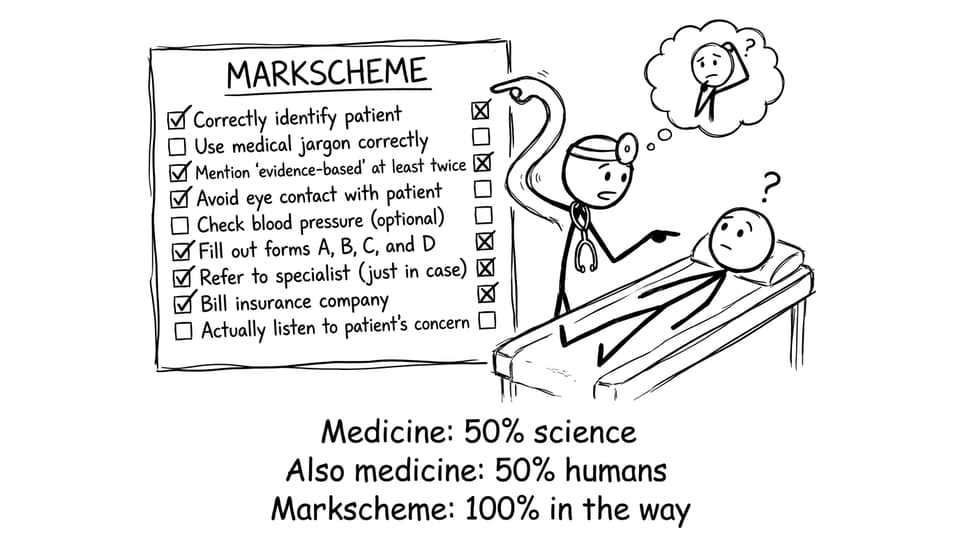
Medicine is full of technically correct answers that fail in real life because humans are messy. IB Psychology trains you to expect that messiness.
You meet concepts that show up in clinics every day: stress responses, biases in judgement, and why behaviour change is difficult even when people understand the risks. Those ideas don’t replace medical knowledge, but they make it usable.
You develop research literacy earlier than most students
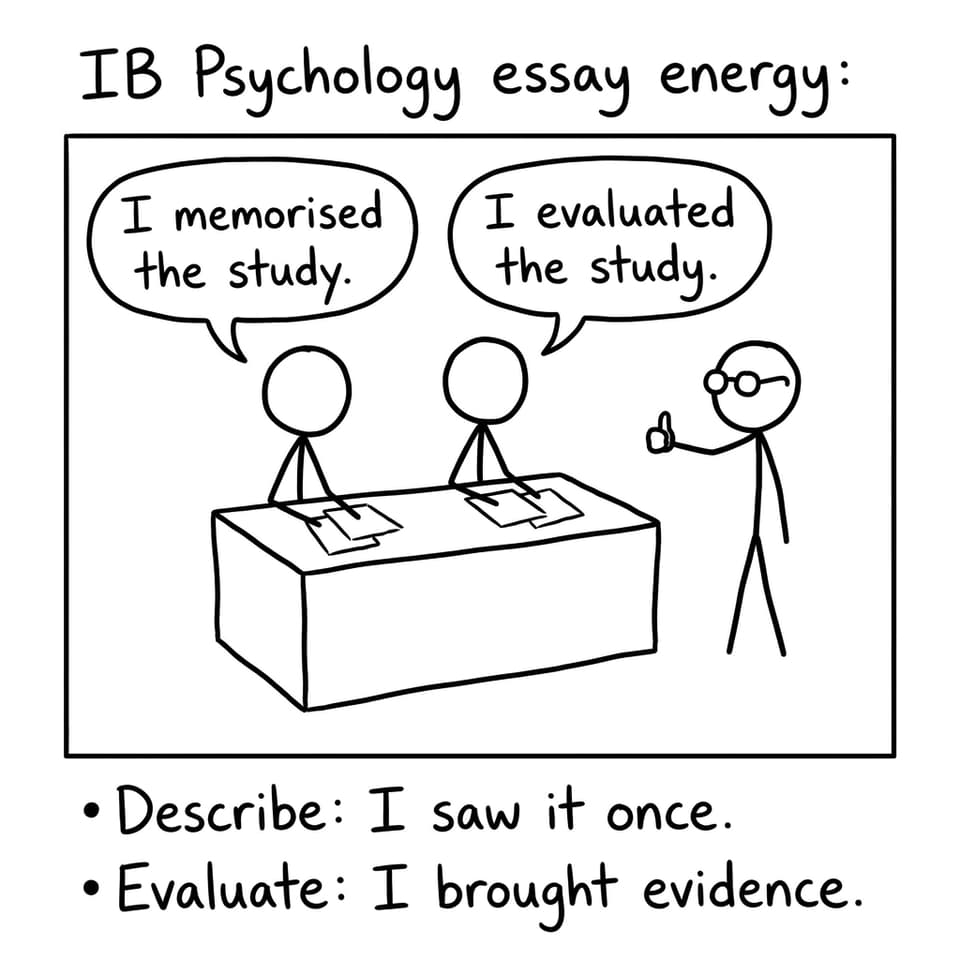
A strong IB Psychology student learns to do more than quote a study. You learn to evaluate it: sample size, ethics, methods, strengths, limitations, and how confidently the conclusions can be applied.
That habit is basically pre-med training in disguise.
If you want to sharpen this skill, practice with exam-style prompts. RevisionDojo’s Sociocultural Approach Questionbank is perfect for targeted drilling, and the Paper 3 hub is especially useful if you’re aiming for HL and want structure.
The important warning: IB Psychology should not replace core sciences
Here’s the honest part: IB Psychology is usually not a medical school requirement. Biology and Chemistry are the typical foundations universities expect. Psychology sits in Group 3, which means it’s rarely treated as a science prerequisite.
So the strategic move is to treat IB Psychology as a complement.
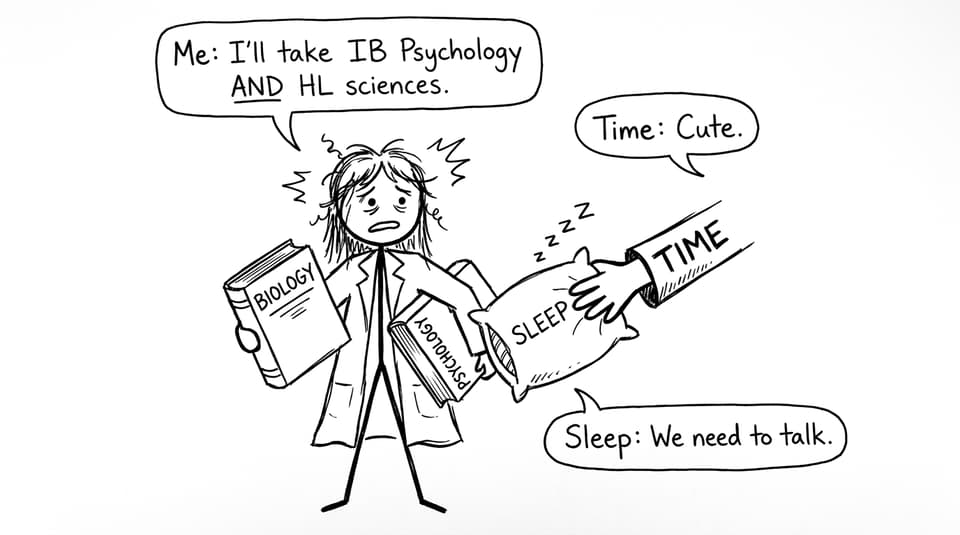
If your schedule is already heavy (HL Bio + HL Chem can be a lot), it helps to make revision more efficient rather than more intense. Use RevisionDojo’s IB Biology resources to keep your science workload structured, then let IB Psychology add depth without stealing your time.
How to revise IB Psychology efficiently (without burning out)
A calm plan for IB Psychology looks like this:
-
Study Notes to learn the core explanation once
-
Flashcards for daily definitions and study summaries
-
Questionbank to practise command terms and essay structure
-
AI Chat when a concept won’t click in your own words
-
Grading tools to fix evaluation and ERQ structure
-
Predicted Papers and Mock Exams to build timing and stamina
You can start with the IB Flashcards page to build daily recall, then add realism with IB Psychology Predicted Papers and the broader Predicted Papers library.
Final verdict: Is IB Psychology a good subject for aspiring med students?
IB Psychology is a good subject for aspiring med students when it’s chosen as an addition, not a replacement. It gives you a way to understand patients as decision-makers, not just symptom lists, and it trains research skills that medicine quietly demands.
If you want to take IB Psychology and still protect your grades, build a simple system: revise with RevisionDojo’s Questionbank, Study Notes, Flashcards, AI Chat, Grading tools, Predicted Papers, Mock Exams, and Coursework Library, and ask Tutors for human feedback when you need it most.
Start at the IB Psychology resources hub, and make IB Psychology work for your medical goals, without letting it take over your life.