



Government debt sounds like the kind of thing adults argue about while you quietly revise diagrams. But in IB Economics, it’s a high-scoring topic because it forces you to do what examiners love most: hold two ideas at once.
A government running a deficit isn’t automatically reckless. Sometimes it’s the only reason a recession doesn’t turn into a lost decade. Other times, debt quietly grows into a budget problem that eats tomorrow’s choices. The trick for IB Economics is to stop asking “Is debt bad?” and start asking “When is debt useful, and when does it become dangerous?”
The quick IB Economics checklist for evaluating debt
Before you write a single paragraph, run this mental checklist:
-
What is the borrowing for? Investment (infrastructure, education) or day-to-day spending?
-
Where is the economy in the cycle? Recessionary gap or inflationary gap?
-
What’s happening to interest rates? Low rates make debt easier to service.
-
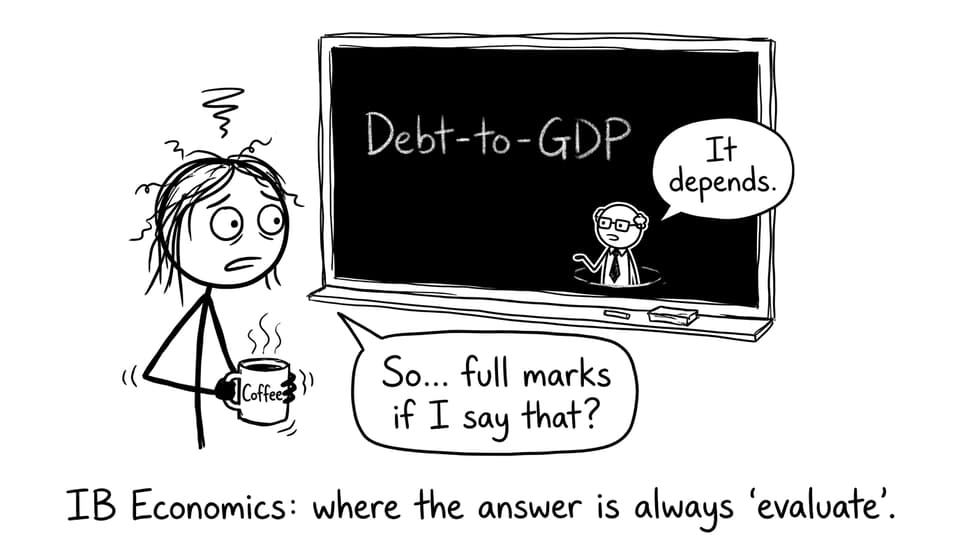
Is debt rising faster than GDP? Debt-to-GDP matters more than the raw number.
-
Does the government have credibility? If investors trust the state, borrowing costs stay lower.
For syllabus-aligned support, keep the RevisionDojo hub for IB Economics resources open while you revise.
When government debt is not a problem
In IB Economics, debt is often defensible when it protects long-run potential output.
First, debt can fund productive public investment: transport, digital infrastructure, healthcare, education. These can raise productivity, shift LRAS right over time, and increase future tax revenues. In other words, borrowing can pay for itself if it expands the economy’s capacity.
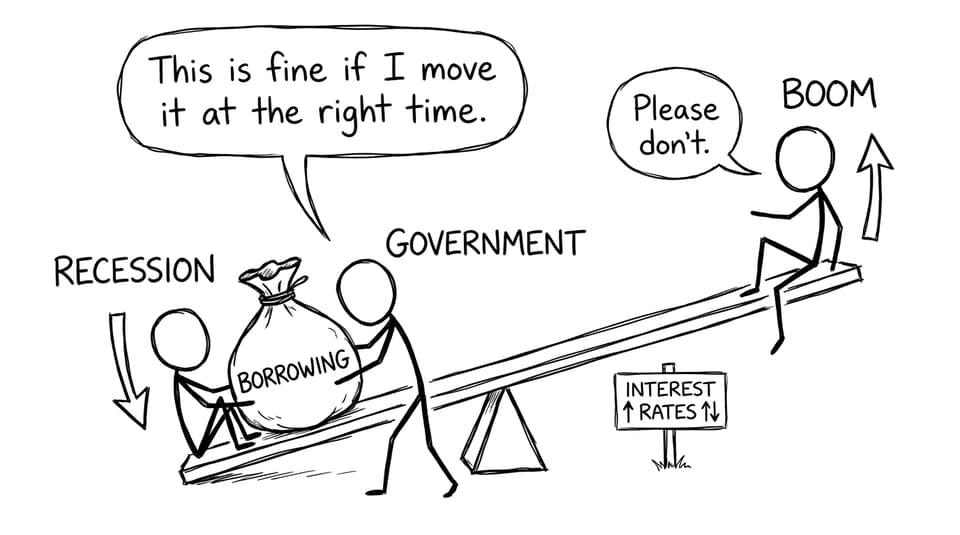
Second, debt is especially useful in recessions. When private consumption and investment fall, expansionary fiscal policy (higher G or lower taxes) can increase aggregate demand. That can reduce cyclical unemployment and limit the “scarring” that comes from long downturns. If you need a clear policy refresher, use Revision Tips: Fiscal Policy Guide for IB Economics.
When government debt becomes a problem
Debt turns costly when it reduces future flexibility.
A major channel is interest payments. As debt accumulates, a larger share of government revenue goes to servicing debt rather than spending on public services or investment. In exam evaluation, this is where you link to opportunity cost and potential impacts on equity and growth.
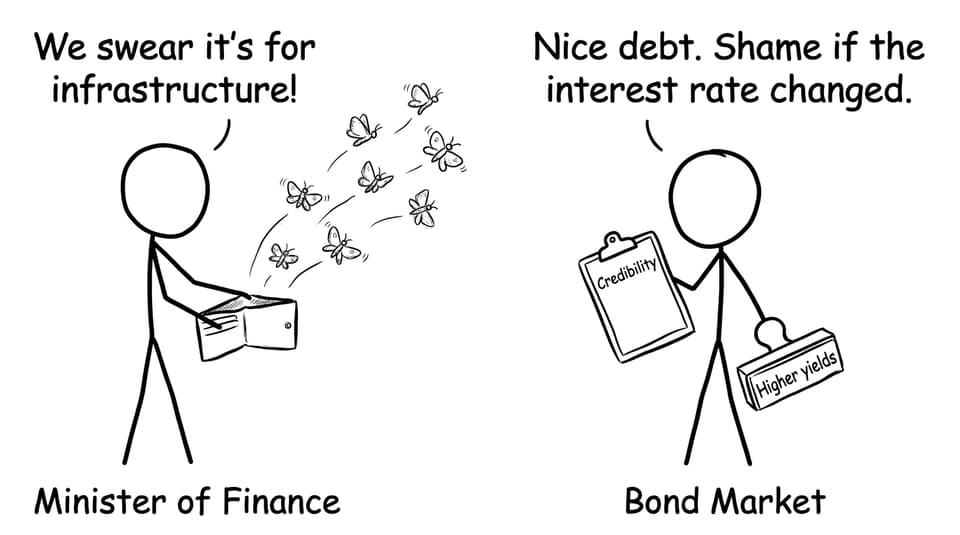
Another risk is a loss of confidence. If investors doubt repayment capacity, bond yields rise, making refinancing more expensive and sometimes creating a self-reinforcing spiral. This is why “credibility” and institutions matter so much in IB Economics.
Finally, debt can constrain policy. A highly indebted government may struggle to use fiscal stimulus in a future downturn, or may face political pressure for austerity. This connects neatly to the wider evaluation of fiscal policy limitations in Strengths of fiscal policy (notes) and fiscal-policy evaluation practice in Evaluation of fiscal policy (notes).
The most exam-friendly way to say it in IB Economics
Try this structure:
-
Define government (national) debt and connect it to budget deficits.
-
Explain benefits in recession + productive investment.
-
Explain risks: debt-to-GDP, interest payments, confidence, crowding out.
-
Evaluate with conditions: interest rates, growth, credibility, and what the spending funds.
If you want the most direct syllabus match for HL, revise Sustainable level of government (national) debt alongside your macro notes.
Conclusion: debt is a tool, and IB Economics rewards conditional thinking
Government debt isn’t automatically a warning sign. It’s a policy tool that can protect output in recessions and fund long-run growth, but it can also become a drain when interest costs rise and credibility falls. That “it depends” is not a dodge in IB Economics; it’s the highest-scoring mindset.
To turn this into marks, practise evaluation-heavy responses in RevisionDojo’s Questionbank, lock in definitions with Flashcards, and test your explanation clarity with AI Chat and grading tools. Add predicted papers, mock exams, and the coursework library when you want full exam readiness, and use Tutors when you need fast feedback on essay structure. IB Economics gets simpler when you train the right habits, and RevisionDojo is built to make those habits stick.