
A week before results day, most IB Economics students don’t panic about theory. They panic about thresholds.
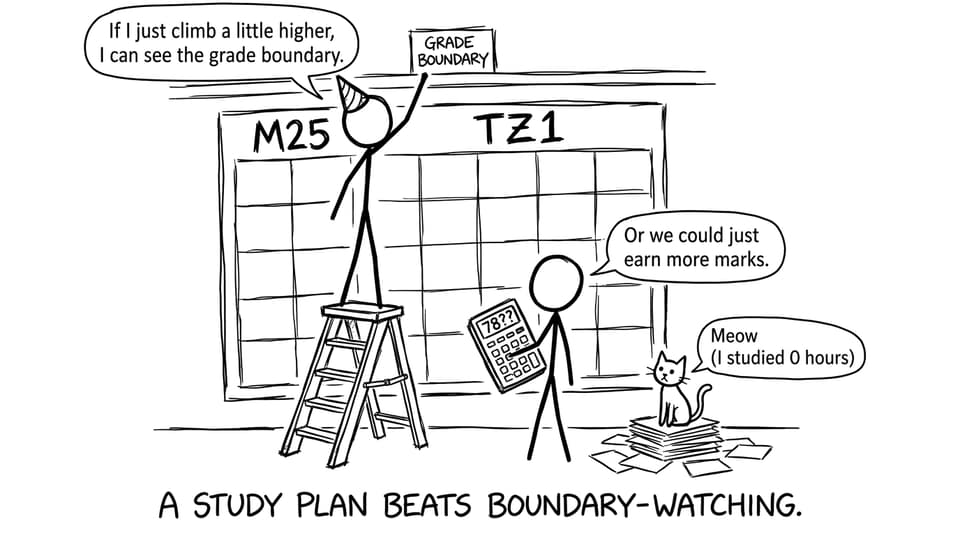
It’s a strangely human habit: when something matters, we look for a number that will tell us if we’re safe. Grade boundaries feel like that number. But the calmest way to use IB Economics grade boundaries is simple: treat them as a map, not a prophecy.
Below is the IB Economics HL 2025 grade boundary breakdown for Timezone 1, plus a practical way to turn each boundary into a plan.
Quick checklist (before you even look at boundaries)
-
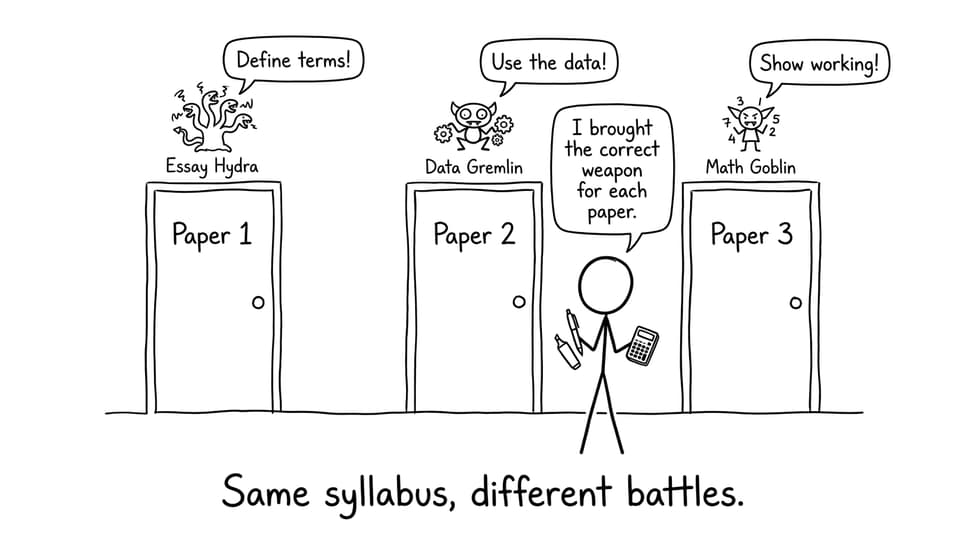
Know which paper rewards which skill (essays vs data vs calculations).
-
Convert boundaries into target raw marks per component.
-
Practise with feedback loops: questions, grading, fixes, repeat.
-
Use a single hub for content + drills (so revision stays consistent).
For a structured starting point, use the IB Economics hub and then drill weaknesses using the IB Economics Questionbank.
IB Economics HL grade boundaries 2025 (Timezone 1)
These are the component boundaries for IB Economics HL (TZ1) in 2025.
Internal Assessment (out of 45)
-
7: 37-45
-
6: 32-36
-
5: 26-31
-
4: 21-25
-
3: 13-20
-
2: 7-12
-
1: 0-6
Paper 1 (out of 25)
-
7: 19-25
-
6: 15-18
-
5: 12-14
-
4: 8-11
-
3: 5-7
-
2: 3-4
-
1: 0-2
Paper 2 (out of 40)
-
7: 33-40
-
6: 27-32
-
5: 22-26
-
4: 16-21
-
3: 12-15
-
2: 6-11
-
1: 0-5
Paper 3 (out of 60)
-
7: 46-60
-
6: 38-45
-
5: 30-37
-
4: 22-29
-
3: 15-21
-
2: 8-14
-
1: 0-7
Final IB Economics HL grade boundaries (out of 100)
-
7: 78-100
-
6: 64-77
-
5: 51-63
-
4: 37-50
-
3: 25-36
-
2: 13-24
-
1: 0-12
To compare subjects or double-check your session, bookmark the IB Grade Boundaries page and the IB Grade Calculator.
How to use IB Economics boundaries without spiraling
Grade boundaries don’t tell you what will happen. They tell you what matters.
Paper 1: buy marks with structure
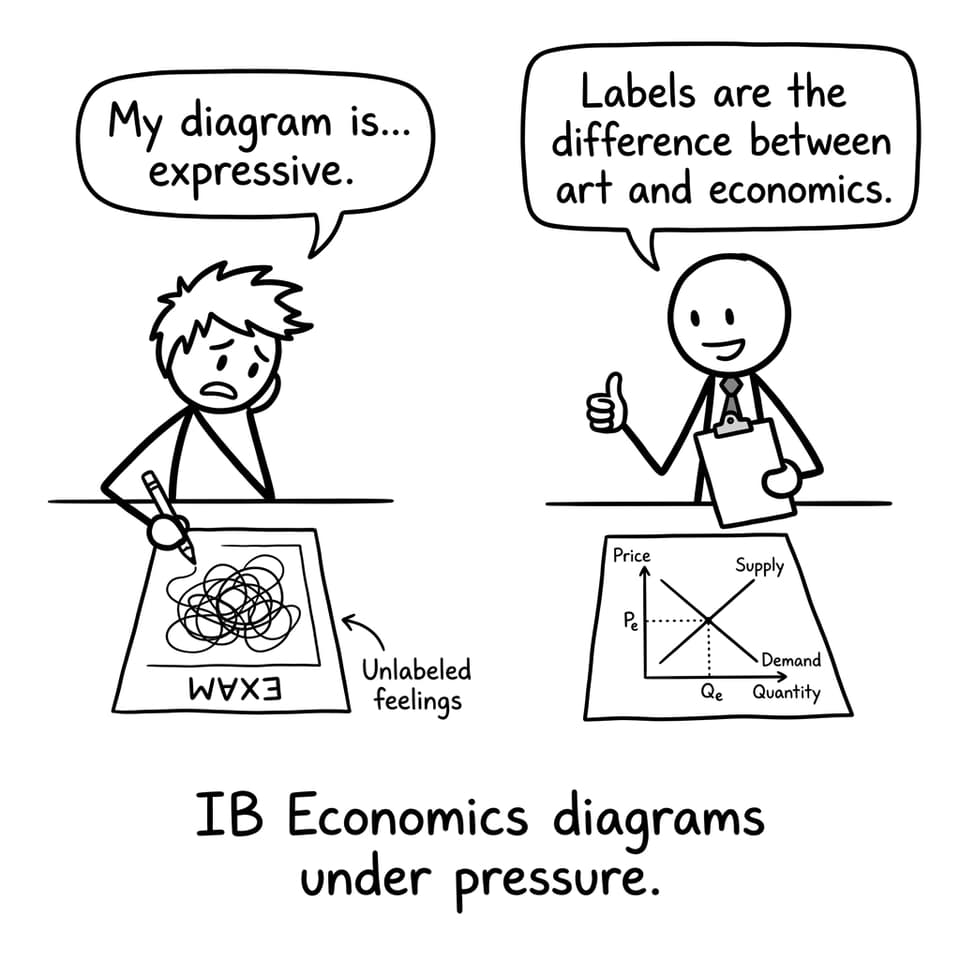
In IB Economics, Paper 1 is where a reliable paragraph structure and clean diagrams quietly compound. If your evaluation drifts, you leak marks. If your definitions arrive late, you leak marks. A great routine is: define early, diagram correctly, explain the shift, then evaluate the trade-off.
If Paper 1 is your weak point, start with IB Economics HL: Top 7 Mistakes to Avoid (2025) and do timed drills in the Questionbank.
Paper 2: turn data into arguments
Paper 2 rewards students who actually use the numbers, trends, and extracts (not just theory). Train yourself to quote the data, link it to a concept, then evaluate with a realistic limitation.
Paper 3: show working like you’re being paid per line
Paper 3 feels brutal because it punishes skipping steps. In IB Economics, method marks can save an answer even when the final value goes wrong. Practise quantitative questions by topic (for example, balance of payments) using targeted sets like IB Economics 4.6 Balance of Payments Questionbank.
IA: small clarity beats big ambition
Your IA doesn’t need to be “genius.” It needs to be precise, diagram-supported, and criterion-aware. If you’re unsure what top work looks like, study high-quality samples in the IB Economics Coursework Exemplars.
Mini RevisionDojo game plan for IB Economics (HL)
-
Learn content fast with Study Notes and topic pages like 3.3.1 Economic growth.
-
Lock recall with Flashcards (short daily sessions).
-
Convert knowledge into marks with the Questionbank.
-
Build exam stamina using Mock Exams and examiner-written Predicted Papers via Economics Predicted Papers.
-
Use AI Chat to clarify sticking points and Grading tools to spot what examiners reward.
-
If you’re stuck, RevisionDojo Tutors can help you fix one skill at a time.
FAQ: IB Economics HL grade boundaries 2025 (Timezone 1)
Why do IB Economics grade boundaries differ by paper?
Each component in IB Economics measures a different skill under different constraints. Paper 1 rewards structured evaluation and diagram accuracy, Paper 2 rewards data handling and application, and Paper 3 rewards quantitative precision and clear method. Because those skills vary in difficulty and in how students perform, the boundaries need to reflect the marking evidence from that session. Another quiet reason is that tiny changes in question style can shift how many students access the top bands. In practice, this is why it’s smarter to prepare for the markscheme than to obsess over a single boundary number. You’re building repeatable performance, not gambling on difficulty.
How is the final IB Economics HL grade calculated out of 100?
Your final IB Economics HL grade is based on your combined performance across IA and the exam papers, converted into a total mark out of 100. The IB uses weightings for each component, so a strong paper can offset a weaker one, but only to a point. This is also why “I’ll just ace Paper 1” is risky if Paper 3 is consistently losing method marks. The best strategy is balanced reliability: be hard to fail on any component. If you want to sanity-check totals quickly, use the IB Grade Calculator alongside the official boundary table. Treat it like a dashboard, not a verdict.
What’s the most efficient way to improve in IB Economics right now?
Start by diagnosing where marks leak. Many students revise content they already understand because it feels productive, but IB Economics rewards performance under constraints: timing, command terms, and precision. So pick one weakness (for example, evaluation, diagram labeling, or calculations) and run a tight cycle: practise questions, get feedback, fix one habit, repeat. On RevisionDojo, that usually looks like Questionbank drills, then checking solutions, then using AI Chat to rewrite one answer at a higher band. Add Flashcards for definitions and key diagrams so recall becomes automatic. Do that for two weeks and boundaries stop feeling scary because your raw marks move.
Closing: use IB Economics boundaries as a compass
The healthiest relationship with IB Economics grade boundaries is to let them narrow your focus, not raise your anxiety. They show you the territory. Your job is to earn marks in it.
If you want a single place to do that, RevisionDojo brings it together: Study Notes, Flashcards, Questionbank, AI Chat, Grading tools, Predicted Papers, Mock Exams, a Coursework Library, and Tutors: built to help you turn IB Economics knowledge into exam-day points.