




Jazz is the kind of music that can make a simple melody feel like a conversation. One note speaks, another answers, and suddenly you are not just playing a piece; you are negotiating meaning in real time. That is exactly why IB Music students love jazz. It offers freedom, personality, and a deep toolkit for creating something that feels alive.
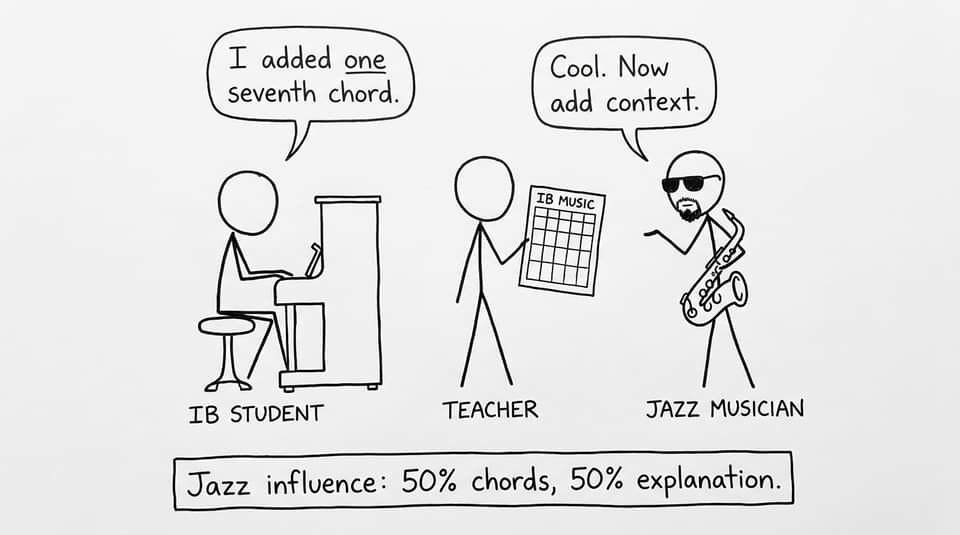
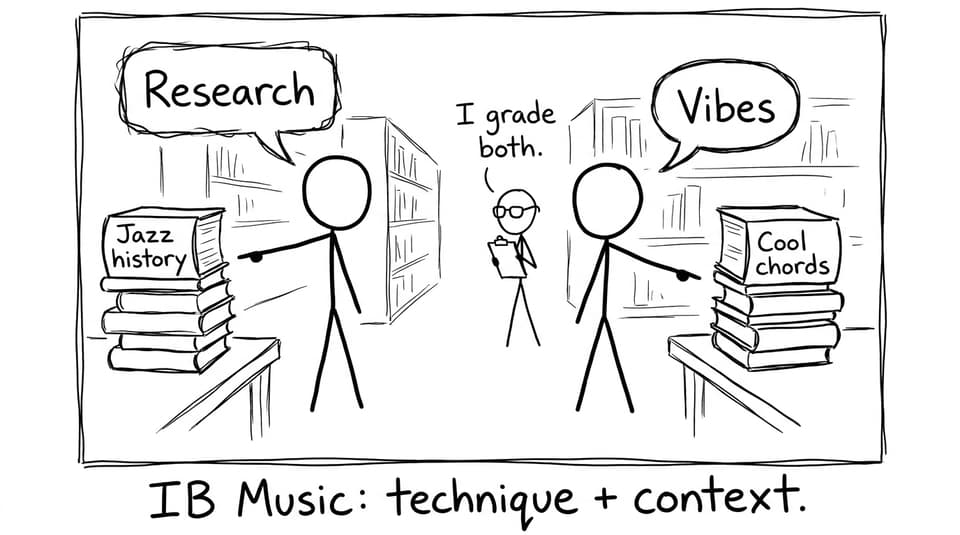
But the same freedom can become vague fast. In IB Music, “jazz-inspired” is not a vibe. It is evidence: specific musical decisions, linked to a tradition, explained with clarity. If you can do that, jazz becomes one of the most examiner-friendly influences you can choose.
Quick checklist: jazz influence that scores in IB Music
Use this mini-plan before you write a bar of music or a paragraph of reflection:
-
Pick one jazz “anchor”: improvisation, harmony, rhythm, or timbre.
-
Name two specific techniques (not general traits).
-
Find two listening references (artists, tracks, performances) and take timestamped notes.
-
Add context: cultural roots, purpose, and performance practice.
-
Write a short reflection that connects choices to the IB Music criteria.
If you want your overall workflow to feel calmer, pair this with Best Study Routines for IB Music Coursework Deadlines.
Improvisation: make it intentional, not random
Improvisation sits at the center of jazz, but in IB Music you need to show it is structured.
Try this approach:
-
Start with a small motif (2-4 notes).
-
Develop it through repetition, sequence, and rhythmic variation.
-
Practice with a limited palette: blues scale, Dorian, Mixolydian.
-
Use call-and-response: record yourself, then answer your own phrase.
The reflection is where marks appear. Explain what you were aiming for, what constraints you used, and what changed after listening back. For stronger listening vocabulary, use How to Analyze Music for the IB Listening Exam as a language bank.
Harmony: extended chords with a purpose
Jazz harmony is one of the fastest ways to signal “jazz influence,” but it only works in IB Music if the harmony supports an idea.
Options that usually translate well into student compositions and arrangements:
-
Seventh chords (maj7, min7, dom7) as your default color
-
9ths, 11ths, 13ths for brightness and tension
-
Chromatic substitutions for surprise (use sparingly)
-
Modal interchange to shift mood without changing tempo
Then write program notes that explain the “why.” If you need a clean structure for that writing, follow How to Write Program Notes for IB Music Compositions.
Rhythm: swing, syncopation, and the human feel
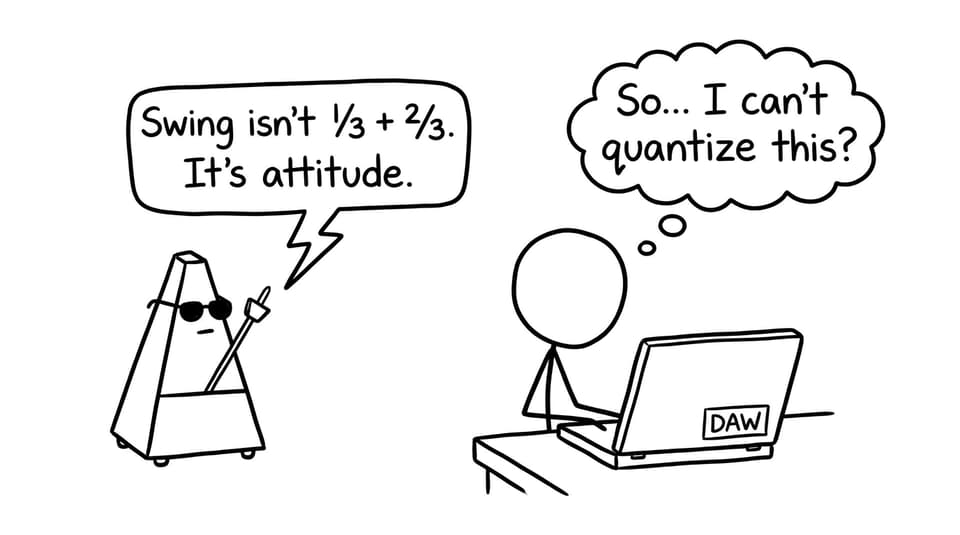
Rhythm is where jazz can either sound convincing or like a quantized imitation. In IB Music, that difference is also analytical: can you identify what creates groove?
Experiment with:
-
Swing feel (and listen closely to how different bands interpret it)
-
Syncopation that pushes against the beat
-
Polyrhythmic layering influenced by African musical heritage
Record yourself often. A 20-second clip can reveal more than an hour of “I think it’s fine.” If you are producing, reflect on how technology supported your process using How to Use Technology (GarageBand, Logic, Sibelius, etc.) in IB Music.
Timbre and instrumentation: let sound tell the story
Jazz timbre is not just “use saxophone.” It is articulation, texture, and the way instruments behave.
Ideas you can adapt even without a full jazz ensemble:
-
Walking bass patterns (real or synthesized)
-
Piano comping with rhythmic stabs
-
Drum kit ride pattern and brush textures
-
Muted brass colors (or sampled equivalents)
This is also a great place to connect components in IB Music: you can explore timbre in analysis, then apply it in creating or performing.
Context and integrity: the part students skip (and examiners notice)
The most common jazz mistake in IB Music is treating jazz like a set of chord symbols rather than a cultural tradition.
Your reflections should acknowledge:
-
Jazz’s roots in African American history
-
Its role in identity, resistance, innovation, and community
-
The difference between influence, fusion, and imitation
If you want a clear checklist for ethical originality, read Integrity in IB Music: Original Composition and Ethical Performance.
Use RevisionDojo to make jazz influence examiner-ready
When deadlines tighten, creativity needs structure. RevisionDojo is built for that.
-
Use the Questionbank to practice music terminology and exam-style thinking.
-
Clarify concepts fast with Study Notes.
-
Build daily recall with Flashcards (and keep your jazz vocabulary active).
-
Use AI Chat to get unstuck when your reflection sounds vague.
-
Calibrate your standards with What Examiners Look for in IB Music Portfolios and What Examiners Look for in IB Music Performances.
For more IB Music support in one place, browse All IB Music Posts.
Closing: make jazz influence a claim you can prove
Jazz can make your IB Music work feel brave: harmonies that glow, rhythms that lean forward, and performances that sound like a person, not a template. But the highest marks come when you treat jazz influence as a claim you can prove. Show the technique. Show the listening. Show the context. Then reflect like a musician who knows why each choice exists.
If you want that process to be simpler, build your portfolio with RevisionDojo: targeted IB Music guidance, Questionbank practice, Study Notes, Flashcards, AI Chat, Grading tools, Predicted Papers, Mock Exams, Coursework Library support, and Tutors when you need a second set of expert ears.