
Your University decision rarely arrives as one clean yes-or-no.
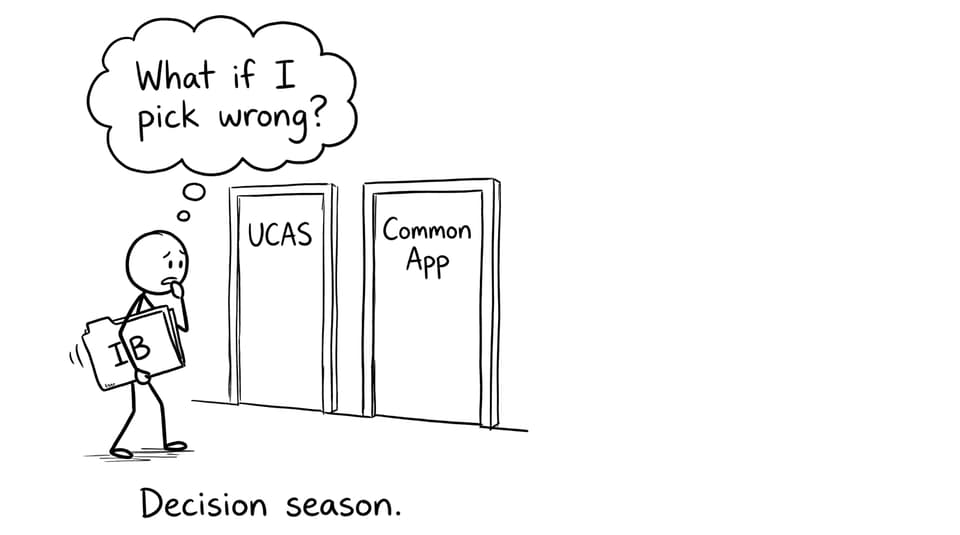
It shows up in your inbox between mock exams, IA deadlines, and the quiet panic of realizing that two good futures can still compete with each other. One offer sits inside UCAS, tidy and conditional. Another arrives through the Common App, fuller of possibility but harder to measure. And suddenly, the question isn’t “Can I get into a University?” It’s “Which University life am I actually choosing?”
A quick checklist to choose the right University offer
Use this as a one-page filter before you spiral into rankings and group chats:
-
Does the University structure reward depth (UK) or exploration (US)?
-
Which teaching style fits how you learn under pressure?
-
What will you actually pay after aid, scholarships, and living costs?
-
Which campus culture will energize you rather than drain you?
-
Where do you want career options to feel easiest in 3-5 years?
If you’re juggling conditional requirements, keep IB Offer Conditional? What Happens Next (And What to Do) open in another tab.
UCAS vs Common App: how the University experience is built
The biggest difference is not prestige. It’s design.
UCAS (UK): commitment first, flexibility later
In the UK system, you apply to a specific course. Your University identity is shaped early: “I study Economics,” not “I’m figuring it out.” That focus can feel calming if you already know what you want.
This is why predicted grades matter so much for a UK University offer. If you want the admissions mechanics, read The Role of Predicted Grades in University Admissions and UCAS Application Structure Explained.
Common App (US): exploration first, specialization later
In many US schools, you enter a college, not a locked-in subject. Your first year or two can be academic sampling: classes across disciplines, room to change direction, and time to discover what you’re unusually good at.
If your interests are still in motion (or you’re choosing between two majors), this flexibility can be the most practical kind of freedom.
Teaching and assessment: choose the University system that matches your habits
Here’s the uncomfortable truth: the best University for you is often the one whose assessment style matches how you behave when you’re stressed.
-
UK: more independent learning, heavier weight on major exams and final assessments.
-
US: more continuous assessment (papers, projects, participation), with grades built over time.
If you learn best by intense bursts of deep focus, the UK model may feel straightforward. If you do better with steady feedback loops, the US model can reward consistency.
To build that consistency while you finish the IB, use a study system that doesn’t depend on motivation. RevisionDojo’s RevisionDojo App: The Smarter Way to Prep for IB Exams explains the loop: Study Notes for clarity, Flashcards for recall, and the Questionbank for exam skill.
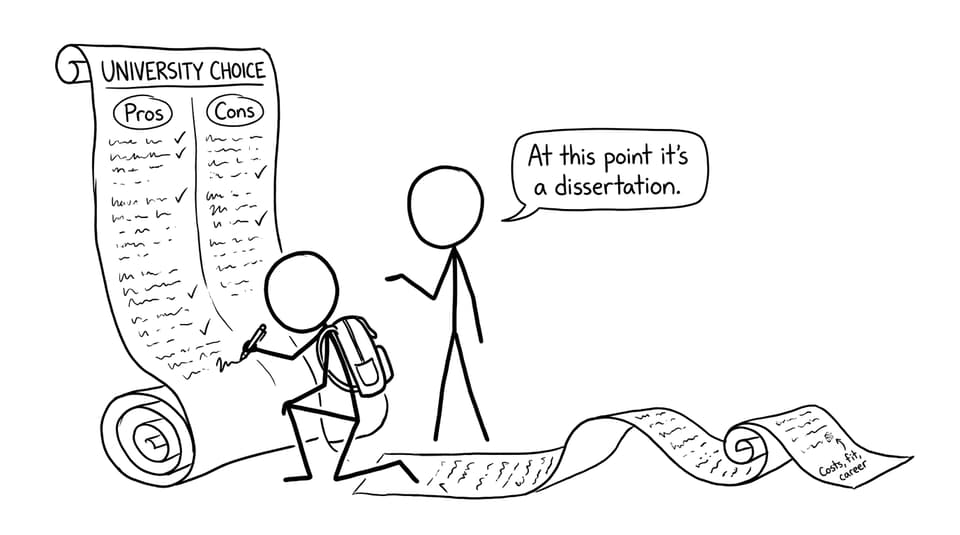
Costs: compare real numbers, not sticker price University marketing
A University decision can be emotionally expensive, but it’s also financially literal.
-
UK: typically a 3-year undergraduate timeline, often lower overall cost than a 4-year route (but scholarships for international students can be limited).
-
US: higher sticker prices, but sometimes substantial financial aid that changes the total dramatically.
Your job is to compare net cost and risk. Risk means: what happens if your IB results land slightly below predicted? What happens if currency shifts? What happens if housing costs spike?
Results-day logistics help too: Do Universities See IB Results Before You Do? keeps expectations realistic.
Lifestyle and culture: the part of University you can’t spreadsheet
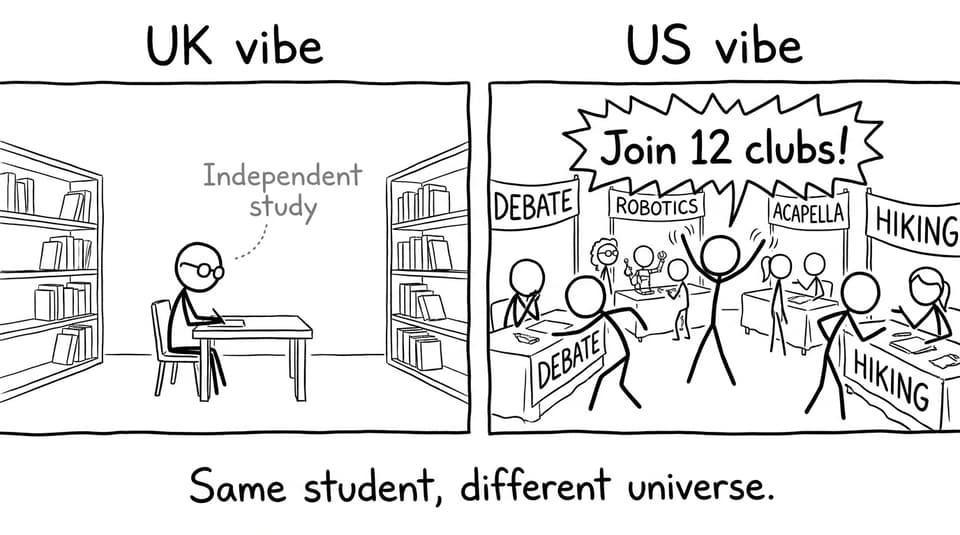
People pretend lifestyle is “secondary.” Then they arrive at their University and realize it shapes everything: your friends, your energy, your confidence, and how you spend weekends when coursework gets heavy.
-
UK vibe: more independent living, less centrality of campus life.
-
US vibe: stronger campus identity, clubs, sports culture, community events.
Ask yourself a practical question: when you’re tired, do you want your environment to be quieter or louder?
Career goals and geography: where you want your University to “work” for you
A University degree travels differently depending on where you want to build your life.
-
If you see yourself working in Europe, a UK route can feel more directly aligned.
-
If you want broad global mobility and a longer runway to explore internships, a US route may offer more structured opportunities.
Try a simple exercise: write a “three-sentence future” for each offer. Not a fantasy. A calendar.
“I’m at this University. My week looks like ___. The first job I’d aim for is ___ in ___.”
Common mistakes IB students make when picking a University offer
-
Choosing a University because someone else is impressed, not because you’ll thrive there.
-
Ignoring conditional requirements until it becomes a results-day emergency.
-
Over-weighting rankings and under-weighting teaching style.
-
Deciding while burnt out, without a clear comparison method.
If you’re in peak IB overload, steal time back with Best Time Management Techniques for IB Students in 2025 and What to Do the Night Before IB Exams. Better decisions come from calmer brains.
How RevisionDojo helps you choose with confidence
A strange benefit of exam preparation is that it clarifies your values. When you use RevisionDojo’s Mock Exams and Predicted Papers, you learn your stress patterns. When you drill the Questionbank, you see whether you prefer deep specialization or broader exploration. When you use AI Chat to untangle concepts quickly, you notice how much you value accessible academic support.
And when you’re comparing offers, those details matter as much as the University name.
If you need a structured IB plan while admissions choices pile up, start with How to Apply to University as an IB Student: Step-by-Step Guide.
Conclusion: pick the University that matches your next chapter
Choosing between UCAS and Common App offers is really choosing between two structures for becoming yourself. The right University is the one that fits your learning habits, your financial reality, your desired culture, and the geography of your future.
If you want to make that decision with less stress, build your exam confidence first. RevisionDojo gives IB students a single place for Study Notes, Flashcards, Questionbank, AI Chat, Grading tools, Predicted Papers, Mock Exams, Coursework Library, and Tutors, so your results support the University path you choose.