


Balancing IB Music with the rest of the Diploma can feel like trying to rehearse in a library: you want focus, but the world keeps shushing you with deadlines. One week it’s a Maths test. The next it’s a science lab write-up. Meanwhile, IB Music doesn’t pause just because your calendar is full. It wants your hands, your ears, your ideas, and then it asks you to explain them clearly.
The good news is that you don’t need more hours. You need a better rhythm. This guide shows how to keep IB Music strong without letting your other IB subjects drift.
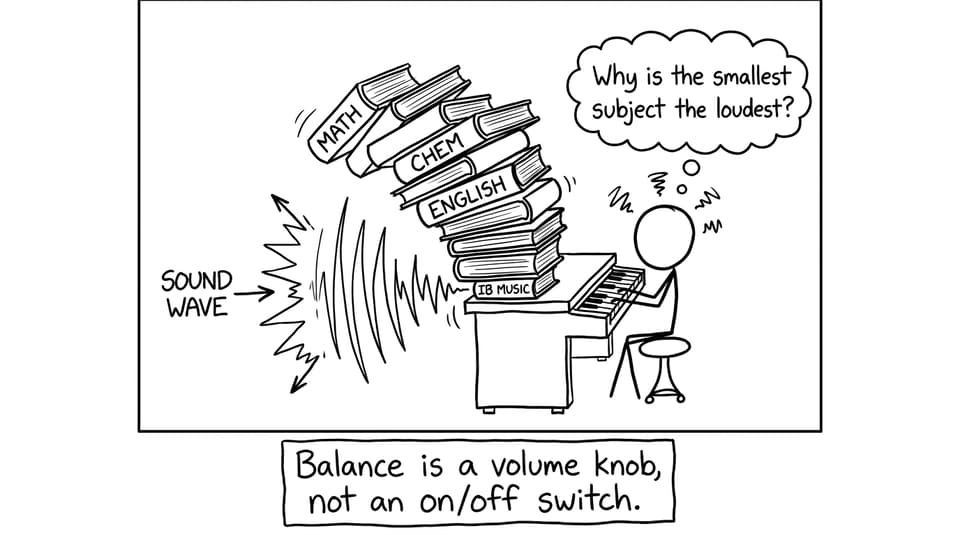
A quick balance checklist (save this)
-
Put every deadline for every subject into one calendar.
-
Keep IB Music moving weekly (even when it’s not the top priority).
-
Use short, finished sessions (practice one passage, draft eight bars, write 150 words).
-
Create overlap between IB Music and other subjects when it’s genuinely useful.
-
Protect sleep like it’s a subject.
-
Review the plan every Sunday and adjust.
If you want a simple structure to copy, start with How to Create a Balanced IB Study Schedule and adapt it to your rehearsal and recording reality.
Why IB Music feels harder to “cram” than other subjects
Many IB subjects reward last-minute intensity. IB Music rarely does. Performance skills compound slowly. Compositions improve through iteration. Listening and analysis sharpen when you’ve practiced describing sound with precision over time.
That’s why balance starts with one mindset shift: treat IB Music like fitness, not homework. You’re maintaining a baseline every week so you don’t rebuild from zero every time another subject spikes.
When you’re unsure what “baseline” should look like, borrow the weekly routine idea from Best Study Routines for IB Music Coursework Deadlines. It’s designed for the real bottleneck: consistent progress, not heroic effort.
Plan around deadline collisions (without guilt)
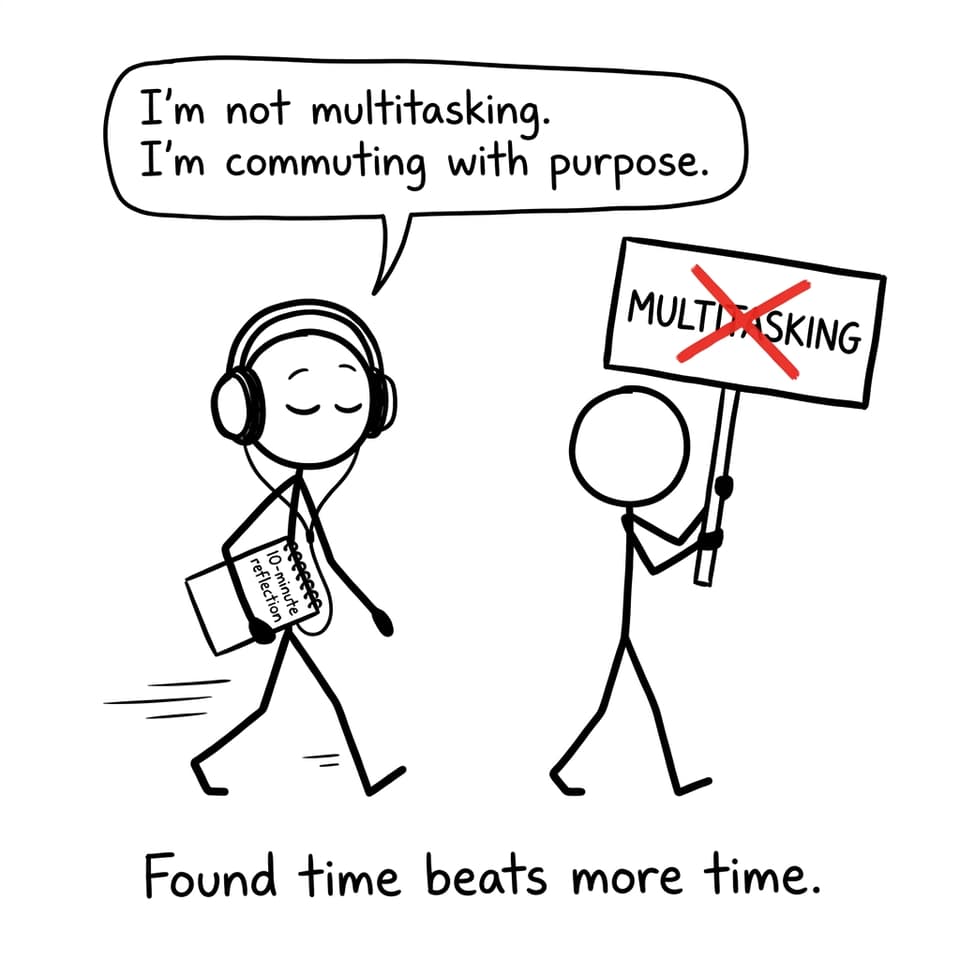
The cleanest way to balance IB Music is to accept that your weeks won’t be equal. Some weeks are “Maths-heavy.” Some are “music-heavy.” The win is avoiding the disaster week where everything is due and nothing is ready.
Build a two-lane week
Think in two lanes:
-
Lane A (non-negotiable maintenance): 3 sessions of 20-30 minutes for IB Music (practice, listening notes, or small composition edits).
-
Lane B (flex blocks): 2-4 longer blocks that move depending on tests, mocks, and coursework deadlines.
If you’re near exams, anchor your whole plan using the broader framework from How to Study for IB Exams: Step-by-Step Guide. Then slot IB Music into the maintenance lane so it never disappears.
Use cross-subject overlap (the honest kind)
Some overlap is real. Some is just procrastination with a fancy label. The useful overlap is when one task strengthens two courses at once.
Examples that often work:
-
History or Global Politics: explore how music expresses identity, nationalism, resistance, or migration (great fuel for contextual writing in IB Music).
-
Physics: acoustics and sound production can clarify timbre, resonance, and recording choices.
-
Language A: practice concise, evidence-based commentary (exactly what musical analysis asks for).
To deepen the analysis side efficiently, rotate in short practice using How to Analyze Music for the IB Listening Exam and How to Revise Effectively for IB Music Listening Exams. These build the vocabulary that saves time later when you write.
Make IB Music sessions short, specific, and finishable
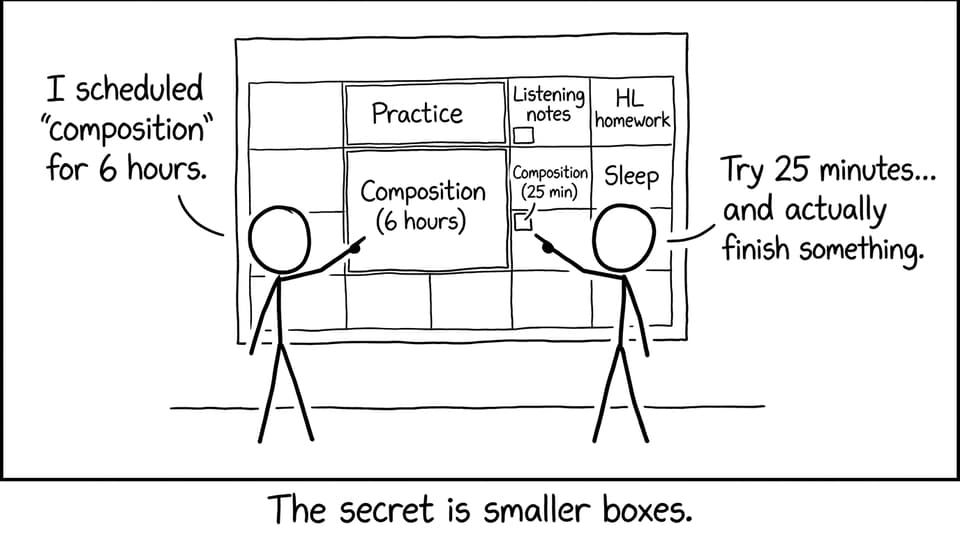
A common trap is planning “music” as one giant block. It’s too vague, so it expands, or you avoid it. IB Music becomes manageable when each session has a finished output.
Try these session templates:
-
Performing (25 minutes): warm-up (5) + isolate 8 bars (15) + record one take (5).
-
Creating (30 minutes): draft 8-16 bars with one motif + annotate what you changed.
-
Exploring (20 minutes): listen once for structure + once for texture + write 120-180 words.
Then use RevisionDojo as your “one-tab workflow”:
-
Study Notes to clarify the concept you’re applying
-
Flashcards to retain musical vocabulary and definitions
-
AI Chat when you’re stuck on how to describe what you hear
-
Questionbank practice for your other subjects so they don’t steal time later
If you haven’t built that workflow yet, RevisionDojo App: The Smarter Way to Prep for IB Exams shows how students keep everything consistent across subjects.
Use examiner expectations to decide what matters
When you’re balancing IB Music, you need clarity on what actually earns marks. That reduces perfectionism, which is the biggest time thief.
Use these two references when prioritizing:
Then, when you produce a draft, get fast rubric-aligned feedback using the IB Music: Presenting music Grader. It’s easier to balance subjects when you can improve in fewer iterations.
Closing: balance is a system, not a mood
Balancing IB Music with other IB subjects isn’t about being endlessly motivated. It’s about building a small, repeatable system that keeps music moving while your other courses surge and settle. Keep the maintenance lane. Plan for collisions. Make sessions finishable. Use examiner expectations to prioritize what matters.
When you want one place to run the whole loop, RevisionDojo is built for it: Questionbank practice to keep other subjects efficient, Study Notes and Flashcards to reduce relearning, AI Chat to unblock you fast, Grading tools and the Coursework Library to speed up feedback, plus Predicted Papers, Mock Exams, and Tutors when exam pressure climbs. Keep IB Music steady, and the rest of the Diploma starts to feel steadier too.