


A quiet decision that moves millions (IB Economics)
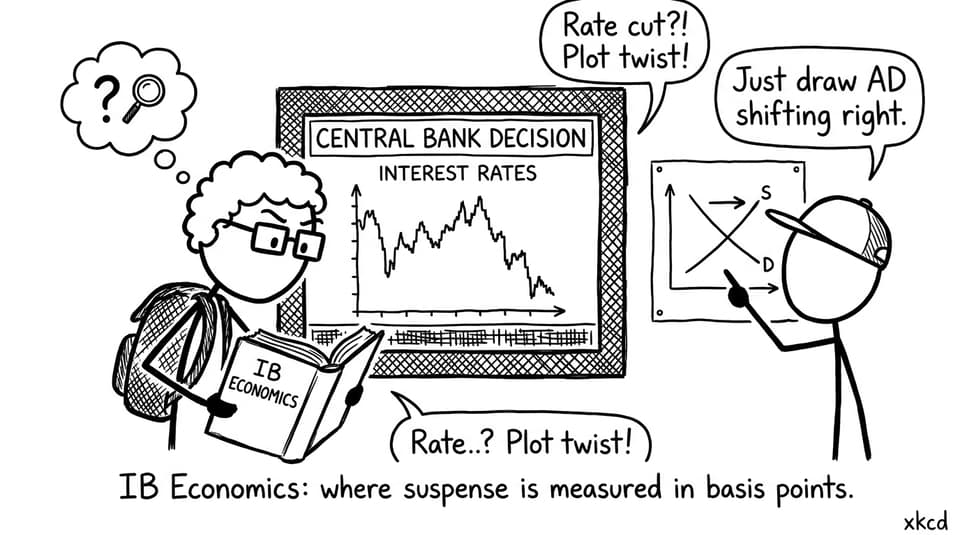
At 7:00 a.m., a central bank posts a single number. No fireworks. No speeches you’ll remember. Yet that number can change how much a family pays on a mortgage, whether a firm hires, and how confident everyone feels about next year.
That’s why monetary policy is one of the most testable ideas in IB Economics: it’s simple in structure, powerful in impact, and full of evaluation.
If you want the syllabus-aligned version first, start with RevisionDojo’s Monetary policy topic hub and then return here for the exam narrative.
Quick checklist: what to say in exams
When a question asks how monetary policy stabilises the economy in IB Economics, hit these points fast:
-
Define monetary policy (central bank changes interest rates and/or money supply)
-
Link to macro goals: inflation, employment, growth
-
Explain the transmission mechanism: interest rates → C and I → AD
-
Add expectations/forward guidance
-
Mention limits (time lags, low rates, weak banking sector)
For definitions you can memorise quickly, use the 3.5.1 monetary policy notes.
How monetary policy stabilises the economy (the core mechanism)
In IB Economics, stabilisation is mostly about smoothing the business cycle by steering aggregate demand (AD).
When the economy slows: expansionary monetary policy
If output is below potential and unemployment rises, the central bank typically cuts interest rates or increases liquidity. Cheaper borrowing encourages:
-
Consumption (C): households are more willing to finance big purchases.
-
Investment (I): firms find more projects profitable, so capital spending rises.
As C and I increase, AD shifts right, supporting output and jobs.
If you need the diagram story, connect this to AD stability using Why aggregate demand matters for stability.

When inflation surges: contractionary monetary policy
When demand overheats and inflation accelerates, the central bank raises interest rates. Higher rates discourage borrowing, reduce investment, and cool consumption. AD shifts left, easing pressure on the general price level.
To frame this properly in IB Economics, tie it to inflation causes and pressures. RevisionDojo’s What causes inflation? is a clean companion link.
Expectations management: the hidden stabiliser (IB Economics gold for evaluation)
Stability isn’t only about today’s spending. It’s also about what people think will happen.
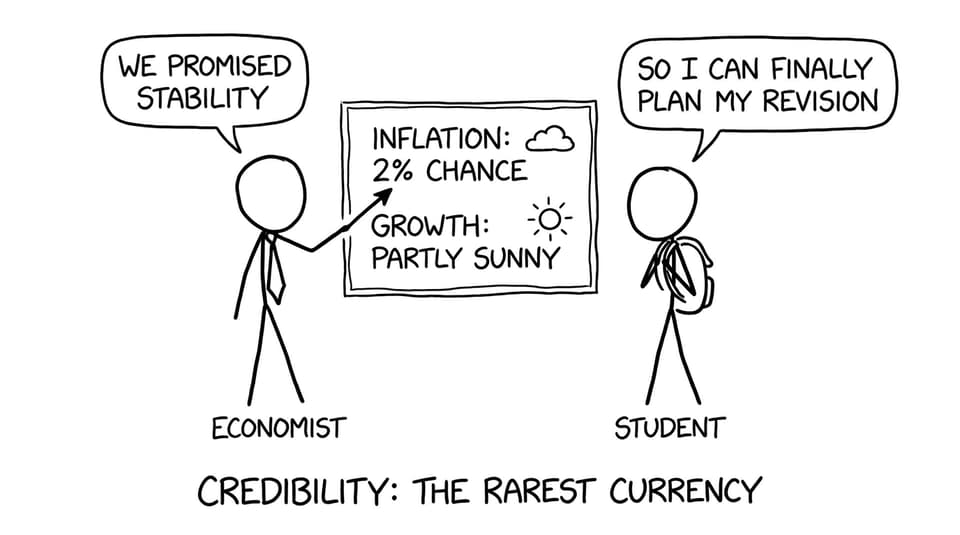
If households and firms trust the central bank to keep inflation low and predictable, wage demands and price-setting become calmer. That reduces the risk of persistent inflation driven by expectations (a classic evaluation angle).
For the syllabus language on central bank roles and goals, see 3.5.2 goals of monetary policy.
What if interest rates are already very low?
When rates approach zero, conventional policy loses force. In IB Economics (especially HL), you can mention unconventional tools like quantitative easing and asset purchases to support lending and confidence.
RevisionDojo’s HL-friendly coverage is in Tools of monetary policy (HL).
Exam practice path with RevisionDojo
To turn this into marks, you need quick definitions, diagrams, and evaluation paragraphs. RevisionDojo helps you do that without wasting time:
-
Drill exam-style questions in the Monetary policy Questionbank
-
Lock in key terms with Macroeconomics flashcards
-
Reinforce the chain with Monetary policy and inflation targeting notes
(And when you’re stuck on a diagram or evaluation point, RevisionDojo’s AI Chat and Grading tools are built for that exact moment.)
Bringing it home
Monetary policy stabilises the economy by steering interest rates, influencing borrowing and spending, and anchoring expectations so inflation stays predictable. That’s the story examiners want in IB Economics: a clear chain, a diagram-ready explanation, and a calm evaluation of limits.
If you want to convert understanding into marks, use RevisionDojo’s Questionbank, Study Notes, Flashcards, Predicted Papers, Mock Exams, AI Chat, and Grading tools to practise the exact wording and diagrams that show up in exams. Your future self will thank you when that “central bank decision” question appears and you already know the ending.