Microeconomics rarely announces itself in your life. It just quietly shows up at 11:47 p.m., when you’re choosing between one more diagram practice and “one quick scroll.” That tiny moment is exactly why IB Economics matters. Microeconomics is the part of IB Economics that trains you to make decisions under scarcity: limited time, limited energy, limited attention. And once you see the logic, it’s hard to unsee it.
In exams, microeconomics is also your edge. It turns messy choices into structured reasoning: trade-offs, marginal gains, incentives. That’s not just theory; it’s a decision-making toolkit you can use tonight.
A quick IB Economics micro toolkit (use this today)
Keep this checklist in mind whenever you feel stuck:
-
Opportunity cost: what am I giving up?
-
Marginal thinking: is “one more unit” worth it?
-
Incentives: what reward or penalty is shaping behavior?
-
Constraints: what limits are real (time, money, info)?
For the syllabus side of this, start with RevisionDojo’s IB Economics 2. Microeconomics hub and keep the IB Economics resources page open as your base camp.
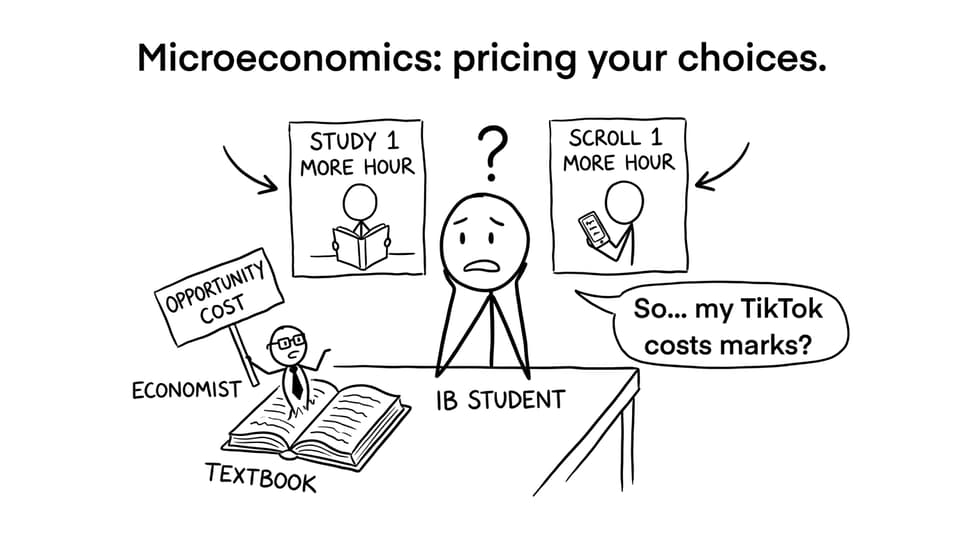
Opportunity cost: the decision you don’t see (but pay anyway)
The most common student mistake isn’t choosing the “wrong” option. It’s acting like there wasn’t a trade-off.
In IB Economics, opportunity cost is the value of the next best alternative. That definition sounds calm. In real life, it’s brutal and clarifying. An hour spent rewriting notes has an opportunity cost: you could have practiced a data response, reviewed definitions, or slept.
This is why exam prep improves when you stop asking, “What should I do?” and start asking, “What am I willing to give up?” If you want a fast refresher on core micro foundations, pair this with Key microeconomic ideas students must master first.
Marginal thinking: the secret to efficient revision
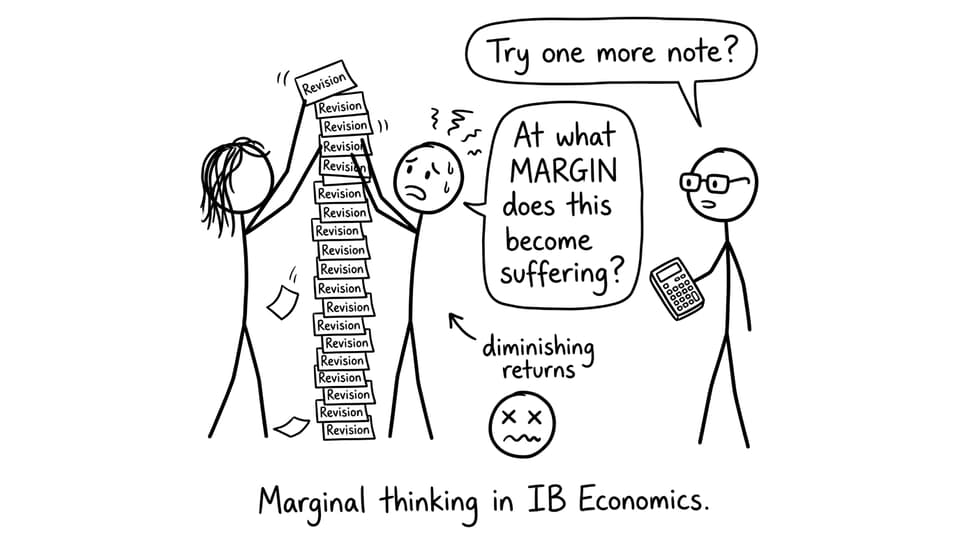
Microeconomics doesn’t ask, “Should you study?” It asks, “How much should you study, and what should the next minute be used for?” That’s marginal thinking: comparing marginal benefit to marginal cost.
For exam students, the biggest win is noticing diminishing returns. The first 20 minutes of practice often give you more learning than the fifth hour of “perfecting” a single set of notes. A more micro-smart approach is to do small cycles: a question, feedback, one focused fix, repeat.
That’s exactly what RevisionDojo’s Microeconomics Questionbank is built for: quick repetitions, exam-style phrasing, and the kind of practice that improves your marginal gain per minute. If you want the platform overview, start with Questionbank.
Incentives: why you do what you do (and how to change it)
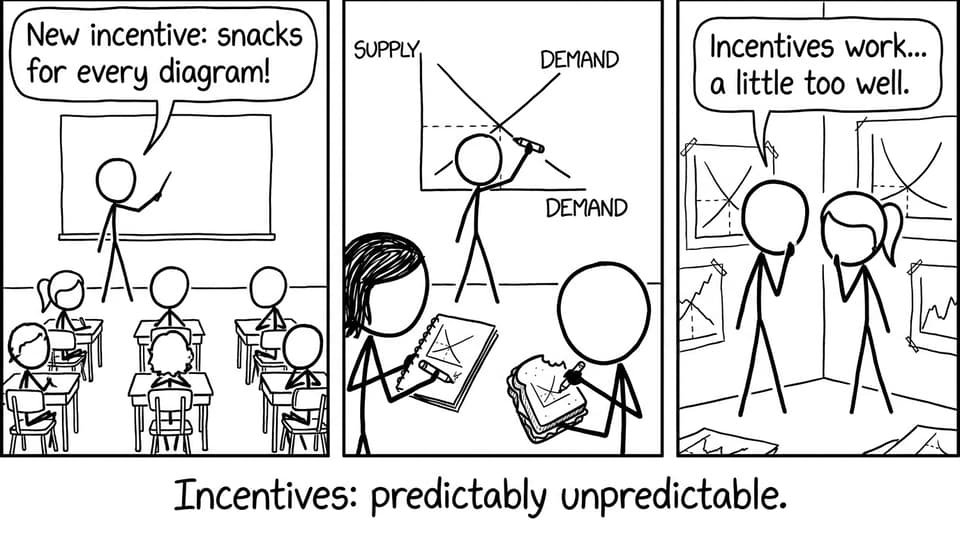
In IB Economics, incentives explain behavior in a way that feels almost unfairly accurate. Change the reward, and choices change.
For students, incentives are everywhere: grades, deadlines, praise, fear, convenience. If your environment rewards “looking busy” (rewriting notes) more than “getting better” (practicing questions), you’ll drift toward the wrong task.
So design incentives that match your goal. Use active recall, timed mini-sprints, and immediate feedback. RevisionDojo makes this easier with Flashcards, Study Notes, and AI Chat for quick clarification, plus Grading tools that push you toward examiner-style precision. For micro definitions on the go, try 2. Microeconomics Flashcards and build momentum from there.
Turning IB Economics into exam marks
Microeconomics improves decision-making only if you practice applying it. One clean way to do that in IB Economics revision is:
-
Learn the model quickly with Define supply and demand
-
Drill application with the Questionbank
-
Cement key terms with flashcards
-
Use Mock Exams and Predicted Papers to pressure-test timing
-
Use AI Chat when a diagram or chain of reasoning breaks
If you need a broader revision framework, read Methods for Effective IB Economics Revision.
Conclusion: microeconomics is a study skill in disguise
The quiet power of IB Economics is that microeconomics doesn’t just help you explain markets; it helps you run your own life like a rational decision-maker. Opportunity cost keeps you honest. Marginal thinking keeps you efficient. Incentives keep you consistent.
If you want that advantage in exams, build your routine inside RevisionDojo: the Questionbank, Study Notes, Flashcards, AI Chat, Grading tools, Predicted Papers, Mock Exams, and even the Tutors and Coursework Library when you need extra support. In IB Economics, good decisions compound. Start with the next one.

