


A quick story: the café that couldn’t afford to be sloppy
On a quiet street, two cafés sell the same iced coffee. One is always busy. The other is always “rebranding,” always raising prices, always blaming rent. Nothing dramatic happens. No villain appears. But week by week, the inefficient café runs out of oxygen.
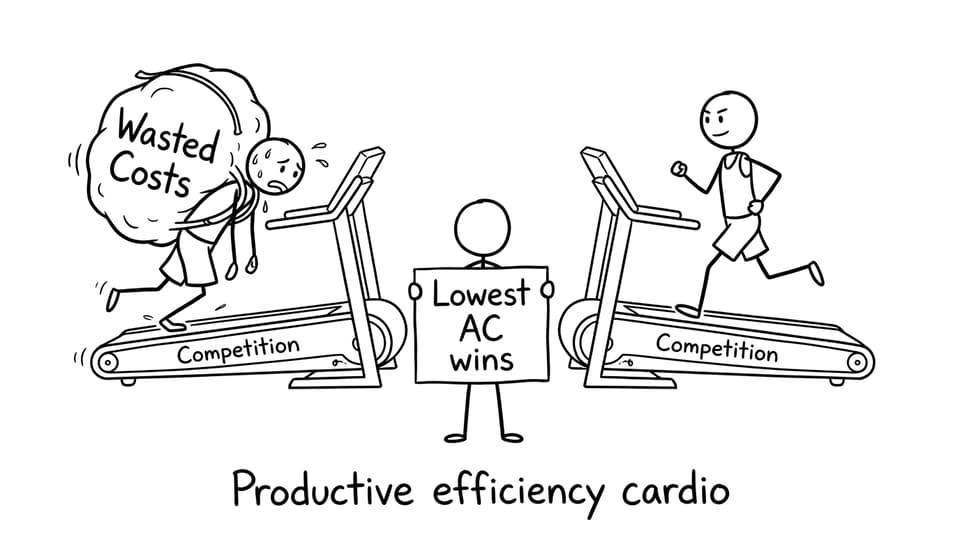
That slow pressure is the heart of IB Economics productive efficiency: when firms are pushed to produce at the lowest possible average cost (the bottom of the AC curve), using the fewest resources while keeping quality steady.
Productive efficiency checklist (exam-ready)
Use this as your mental “spot check” in IB Economics essays and data response:
-
Define productive efficiency: output produced at minimum AC
-
Explain the mechanism: competitive pressure reduces waste
-
Add drivers: technology, innovation, economies of scale
-
Link to outcomes: lower costs, often lower prices, higher potential welfare
-
Evaluate limits: market power, barriers to entry, X-inefficiency, regulation problems
For key wording, keep the IB Economics Key Definitions open while you practice.
Competition: the quiet force that squeezes costs
In IB Economics, competition matters because it changes what “survival” means. If several firms sell close substitutes, consumers can switch quickly. That makes high-cost firms fragile. A slightly higher AC today becomes a lower profit margin tomorrow, and eventually a reason to exit.
This is why competitive markets tend to push firms toward the minimum point on the AC curve. Waste becomes expensive. Extra staffing, slow inventory systems, and outdated processes stop being “quirks” and start being disadvantages.
To connect this to market structures, revise market power and its effects using Market failure -- market power (HL) and practice exam-style prompts in the matching Questionbank.
Technology and innovation: cost curves don’t shift themselves
A firm can cut costs by working harder. But the bigger jumps usually come from working differently.
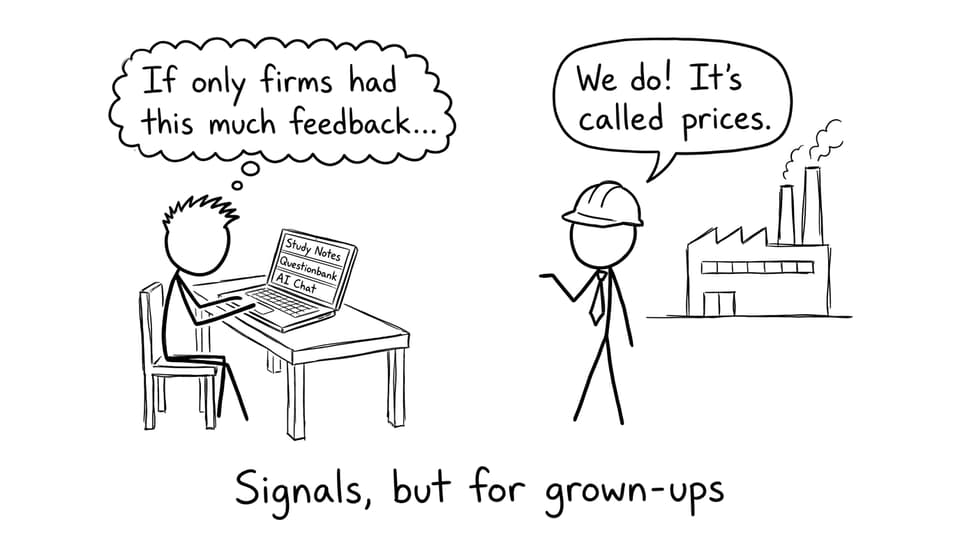
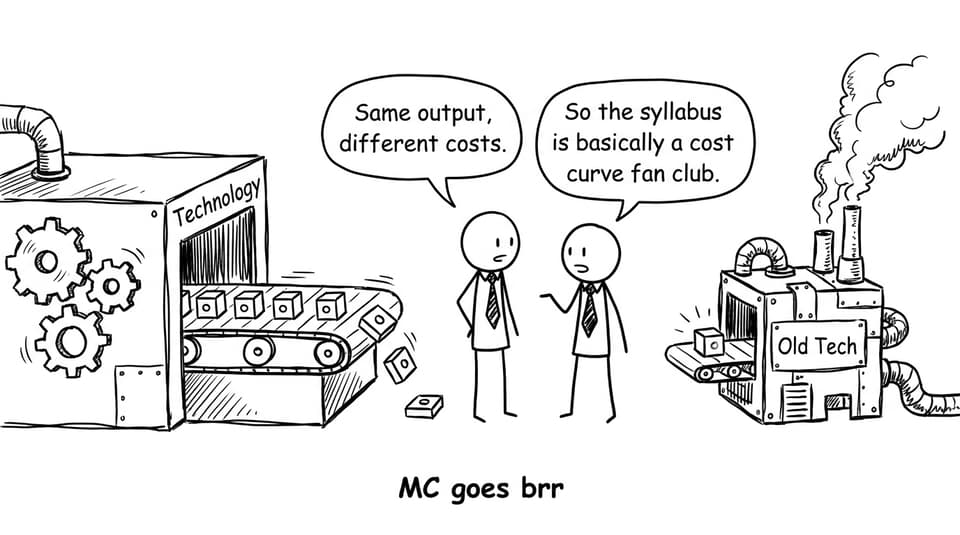
In IB Economics, you can describe technology as a driver of productive efficiency because it can:
-
reduce marginal cost (MC) through automation or better logistics
-
reduce average cost (AC) by lowering waste and improving consistency
-
raise maximum output from the same inputs (higher productivity)
Your evaluation can be stronger if you link technology to “efficiency with current resources,” which is the same logic behind the PPC. If you need that foundation, use PPC explained with real-life examples and the syllabus-aligned PPC model notes.
Economies of scale: when size becomes a cost advantage
Another classic IB Economics route to productive efficiency is economies of scale. As firms expand output in the long run, they can spread fixed costs, specialize labor, negotiate cheaper inputs, and optimize production lines.
In a competitive environment, efficient firms often grow (because they earn profits and attract customers), while inefficient firms shrink. That selection process can shift an industry toward lower-cost producers overall.
But you should also mention a limit: beyond a point, diseconomies of scale can appear (coordination problems, bureaucracy), pushing AC up again.
To link scale and market power in your answers, review monopoly content like What is a monopoly? (Market structure guide) and use the deeper syllabus notes on Monopoly and barriers to entry.
When productive efficiency breaks down (evaluation fuel)
In IB Economics, you score higher when you explain why productive efficiency is not automatic:
-
Market power: monopolies may face weak pressure to minimize costs, leading to X-inefficiency.
-
Barriers to entry: if new firms cannot enter, inefficient incumbents can remain.
-
Information and incentives: managers may not be rewarded for cutting long-run costs.
-
Regulation: rules can raise compliance costs or reduce flexibility (sometimes necessary, sometimes excessive).
You can connect this to broader market failure thinking with What are public goods? (Market failure guide).
Bringing it home: make the concept exam-useful
Productive efficiency in IB Economics is not just a definition you memorize. It’s a story about pressure: competition, technology, and scale quietly pushing firms toward minimum average cost, while market power and barriers quietly resist.
If you want this to stick before exams, RevisionDojo is built for it: use Study Notes to lock the theory, Flashcards to keep definitions sharp, the Questionbank and Mock Exams to practice under time pressure, AI Chat to fix confusion fast, and Grading tools plus Predicted Papers to calibrate what examiners reward. When productive efficiency shows up on your paper, you won’t just recognize it--you’ll know exactly how to explain it.
