


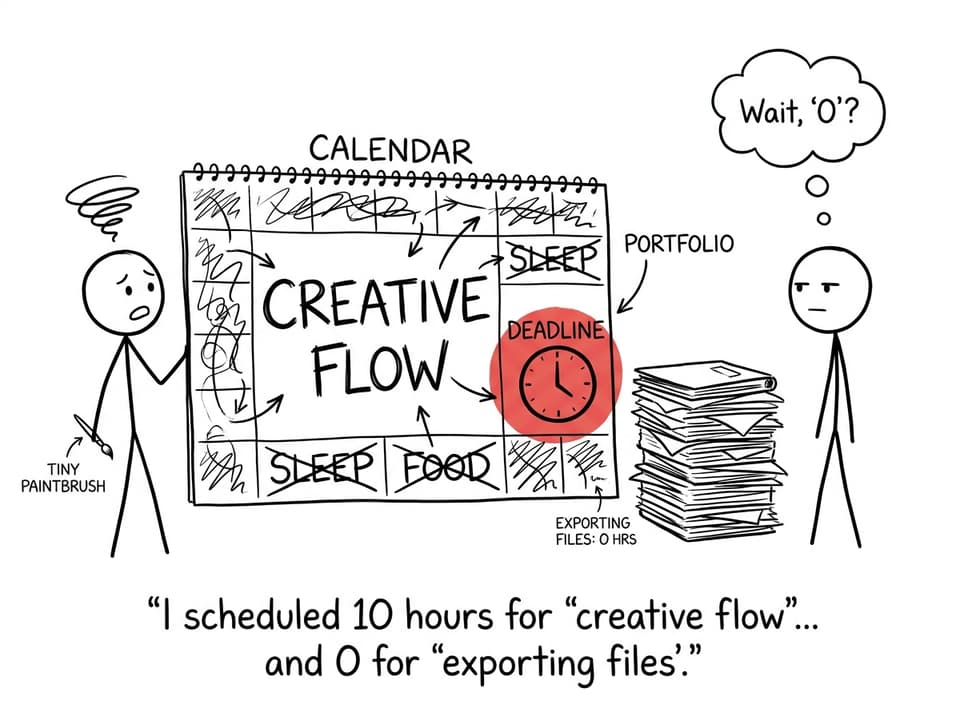
The night before a Group 6 deadline, the studio feels like an airport at weather-delay time: half the people are calm, half are frantic, and everyone swears they were “working on it for weeks.”
The truth is quieter. IB Group 6 Arts rewards the student who shows up consistently, not the student who occasionally sprints. It’s a subject group built on process: practice, iteration, documentation, and reflection. That means your weekly study time matters more than your “big push” energy.
This guide gives you a realistic answer to how many hours a week you should study for IB Group 6 Arts, plus a simple way to spend those hours so your portfolio and your exam readiness both improve.
The quick answer: weekly hours for IB Group 6 Arts
Here’s the baseline most students can sustain without burning out (outside class time). For IB Group 6 Arts, the range depends on level and where you are in the course.
A realistic weekly target
-
SL: 6-8 hours per week
-
HL: 9-12 hours per week
If you’re in a heavy production or writing phase (final exhibition selection, performance recording, film edit, comparative investigation, or major reflection drafting), expect to live at the top end for a few weeks.
Want a broader planning frame for all six subjects? Use How to Create a Balanced IB Study Schedule as your anchor, then layer your IB Group 6 Arts blocks on top.
Why IB Group 6 Arts needs weekly time (not occasional marathons)
In exam-heavy subjects, you can sometimes compress revision: learn the concept, drill questions, repeat. In IB Group 6 Arts, you’re graded on things that don’t compress well:
-
Creative development (ideas evolve slowly)
-
Skill building (technique improves through repetition)
-
Evidence of process (screens, rehearsal logs, drafts, experiments)
-
Reflection and intention (you must explain decisions clearly)
This is why students who “wait until it matters” often end up with frantic work that’s hard to justify against criteria. If you want your marks to feel earned, build a weekly rhythm.
If you’re unsure what Group 6 includes and how it’s assessed, read What Is a Group 6 Class in IB? for a clear overview.
A simple weekly schedule that actually works
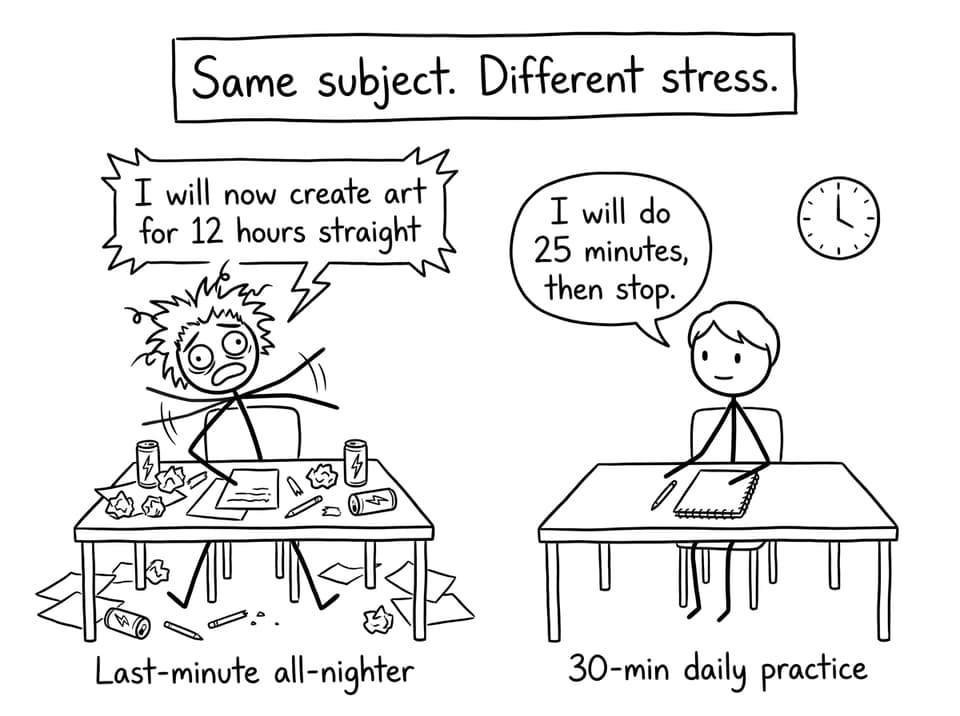
The best IB Group 6 Arts schedule is boring in the right way: predictable, repeatable, and split across creation + reflection.
The “1 + 2” weekly framework
One theory/criteria block (60-90 minutes)
-
Review assessment criteria and exemplars
-
Do targeted content review (terminology, context, analysis)
-
Plan your next micro-goal
Two creative blocks (2 x 90-120 minutes)
-
Studio making, rehearsal, composing, editing, filming
-
Capture evidence as you go (photos, screenshots, annotations)
One reflection micro-block (20-30 minutes)
- Write 6-10 lines: what you tried, what changed, what you’ll do next
This structure keeps IB Group 6 Arts moving even when other subjects get loud.
For the broader exam season loop (notes, practice, feedback), adapt the system from How to Study for IB Exams: Step-by-Step Guide and treat your arts work as “performance training” rather than “reading time.”
SL vs HL: what changes in IB Group 6 Arts study hours?
The biggest difference is not talent or “difficulty.” It’s volume and depth.
SL: aim for steady progress
At SL, IB Group 6 Arts is manageable if you protect consistency.
-
4-6 hours: making + iterative improvement
-
1-2 hours: research, analysis, criteria checks, and reflection
HL: build endurance and documentation
HL students usually need more cycles of experimentation and clearer written thinking.
-
6-8 hours: making, rehearsal, editing, refinement
-
2-4 hours: research, planning, investigation writing, reflection polish
If you’re doing Visual Arts, it helps to be crystal clear on component requirements early. Keep Requirements for IB Visual Arts bookmarked, and if you’re deciding level, use SL vs HL in IB Visual Arts: What’s the Difference?.
How to use RevisionDojo to make your IB Group 6 Arts hours count
Hours only matter if they produce evidence: better work, clearer reflection, stronger alignment to criteria.
Here’s a practical way to turn IB Group 6 Arts time into measurable progress with RevisionDojo:
-
Use Study Notes to tighten the language you use to explain intent and technique.
-
Build Flashcards for key vocabulary (elements, techniques, theatre conventions, film language, musical terminology).
-
Use AI Chat when you’re stuck turning “vibes” into criteria-based reflection.
-
Use Grading tools to test whether your written commentary actually answers what the examiner rewards.
-
Use the Coursework Library to compare structure and clarity, especially for reflection-heavy components.
-
Schedule one monthly checkpoint with Tutors if you need an outside eye on coherence.
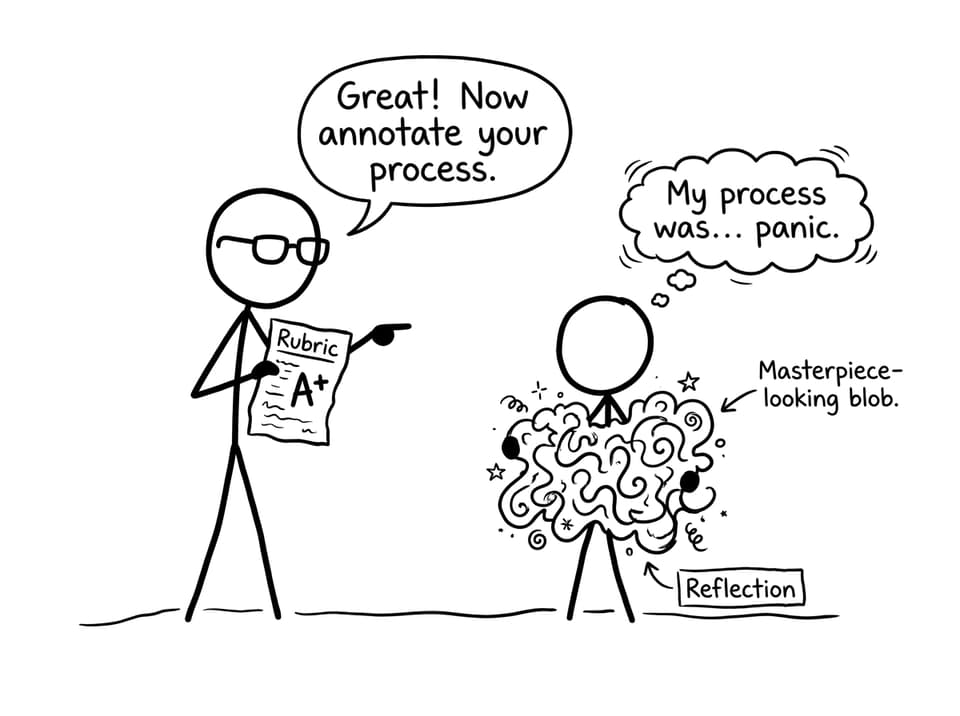
If you want to understand how reflection affects marks across IB Group 6 Arts, this is worth your time: The Role of Reflection in IB Group 6 Assessment.
Overview checklist: your weekly IB Group 6 Arts plan
Use this as a weekly reset.
-
Block 6-8 hours (SL) or 9-12 hours (HL) for IB Group 6 Arts
-
Do 2 creative sessions minimum (short and frequent beats long and rare)
-
Record process evidence while working (not after)
-
Write one short reflection micro-block
-
Spend one session checking criteria and next steps
When motivation collapses, use a strategy guide like How to Deal With Creative Blocks During IB Group 6 Projects.
Conclusion: the sustainable answer for IB Group 6 Arts
If you want a weekly target you can trust, keep it simple:
-
SL: plan for 6-8 hours a week of IB Group 6 Arts
-
HL: plan for 9-12 hours a week of IB Group 6 Arts
Split that time between making, criteria review, and reflection. The point isn’t to grind. It’s to build a calm rhythm where your process becomes obvious on the page, not just in your head.
When you’re ready to make those hours count, RevisionDojo is built for the full loop: Questionbank practice where relevant, sharp Study Notes, daily Flashcards, supportive AI Chat, rubric-aligned Grading tools, realistic Mock Exams, examiner-written Predicted Papers, a strong Coursework Library, and on-demand Tutors to keep your work coherent and assessable.
Keep your weekly schedule small enough to repeat. That’s how creative work compounds in the IB.