Macroeconomic equilibrium sounds like a neat, stable destination. But in IB Economics, it’s more like a moving target you keep reacquiring as the economy gets nudged by confidence, costs, and policy. The good news is that exam questions reward students who can calmly explain one core idea: equilibrium is where aggregate demand (AD) and aggregate supply (AS) agree on the economy’s real output and price level.

The core idea in IB Economics: AD meets AS
In the AD-AS model, macroeconomic equilibrium is determined at the intersection of AD and AS. At that point, firms are producing exactly what households, businesses, government, and foreign buyers want to purchase at the existing average price level. Because planned spending equals planned production, there’s no automatic pressure for the economy’s overall output or price level to change.
If you want a syllabus-aligned definition and a diagram-driven explanation, start with RevisionDojo’s Macroeconomic equilibrium notes.
Quick checklist (what examiners want you to state)
-
Identify equilibrium price level and real GDP (output)
-
Explain what shifts AD vs what shifts SRAS/LRAS
-
Distinguish short-run equilibrium (AD with SRAS) from long-run equilibrium (at potential output on LRAS)
-
Link outcomes to inflation and unemployment
For wider context across the unit, RevisionDojo’s 3.2 AD-AS unit page helps you connect the subtopics quickly.
Short-run macroeconomic equilibrium: AD intersects SRAS
In the short run, macroeconomic equilibrium is where AD intersects SRAS. Here, prices and wages are assumed to be sticky enough that firms respond to changes in spending by changing output.
-
If AD increases, equilibrium output rises and the price level rises (classic demand-pull pressure).
-
If AD falls, output falls and unemployment tends to rise.
To revise the drivers of AD shifts (C, I, G, X-M) and how they move the curve, use RevisionDojo’s Economic growth notes (AD components).

SRAS shifts change equilibrium even if demand is stable
SRAS shifts when economy-wide production costs change. Higher wages, higher energy costs, or disrupted supply chains typically shift SRAS left, raising the price level while reducing real output (a painful combination).
RevisionDojo’s SRAS curve notes are especially useful for clarifying why the SRAS curve slopes upward in macro (and why the axes differ from micro).
Long-run macroeconomic equilibrium: AD adjusts around LRAS
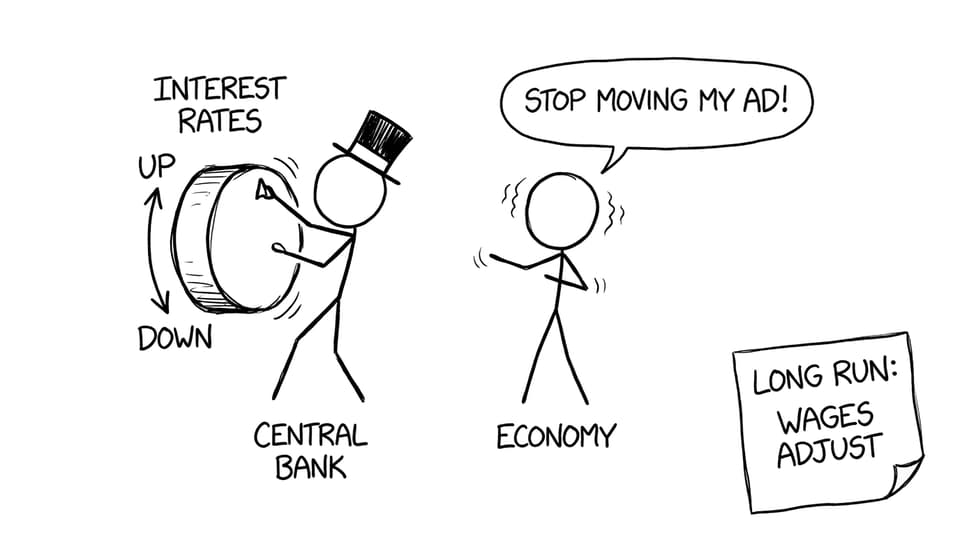
In the long run, macroeconomic equilibrium is anchored by LRAS, which represents the economy’s productive capacity (potential output). LRAS depends on technology, capital, institutions, and human capital. A key IB Economics storyline is this: AD can push the economy away from potential output temporarily, but over time wages and input prices adjust, shifting SRAS so the economy returns to long-run equilibrium.
If you’re comparing perspectives, RevisionDojo’s Monetarist vs Keynesian implications notes help you write more nuanced evaluation.
Exam application: turn equilibrium into analysis
A strong IB Economics response doesn’t just define macroeconomic equilibrium. It shows what changes, why the curves shift, and what the consequences are.
Build speed by practicing AD-AS questions in RevisionDojo’s IB Economics resources hub and revisiting the concept foundations in the IB Economics 3. Macroeconomics overview. When you’re drilling definitions, the Macroeconomics flashcards make “equilibrium, output gap, price level” feel automatic.
Conclusion: make equilibrium your anchor concept
Macroeconomic equilibrium is determined where AD intersects AS, but the real IB skill is explaining how that intersection shifts in the short run and how the economy returns toward LRAS in the long run. If you can narrate those movements calmly, you can handle questions on inflation, unemployment, growth, and policy in one framework.
To consolidate, use RevisionDojo’s Study Notes, drill the topic in the Questionbank, test recall with Flashcards, and refine explanations using AI Chat and Grading tools. Then pressure-test your understanding with Mock Exams and Predicted Papers--so when macroeconomic equilibrium shows up on exam day, it feels familiar rather than intimidating.