

A hook for your next IB Economics essay
In IB Economics, inequality can feel like a scoreboard nobody agreed to. Some students start the year with tutors, quiet study spaces, and spare time; others juggle chores, part-time jobs, and crowded homes. The point is not guilt. It is insight. Markets are powerful at generating output, but they are not built to guarantee fair outcomes. That is why governments step in: to pull the distribution of income and wealth a little closer to what society calls “equitable.”
If you can explain how governments reduce inequality and then evaluate the trade-offs, you are already writing like an examiner expects.
Quick checklist: policies that reduce inequality
For IB Economics, you can group government action into four exam-friendly buckets:
-
Progressive taxation (and broader tax design)
-
Transfer payments (cash benefits and social insurance)
-
Public services (education, healthcare, infrastructure)
-
Labour market policies (minimum wage, regulations, anti-discrimination)
Each one can reduce inequality, but each one also creates potential efficiency costs, incentive effects, or fiscal pressure.
Progressive taxation: raising revenue and reshaping outcomes
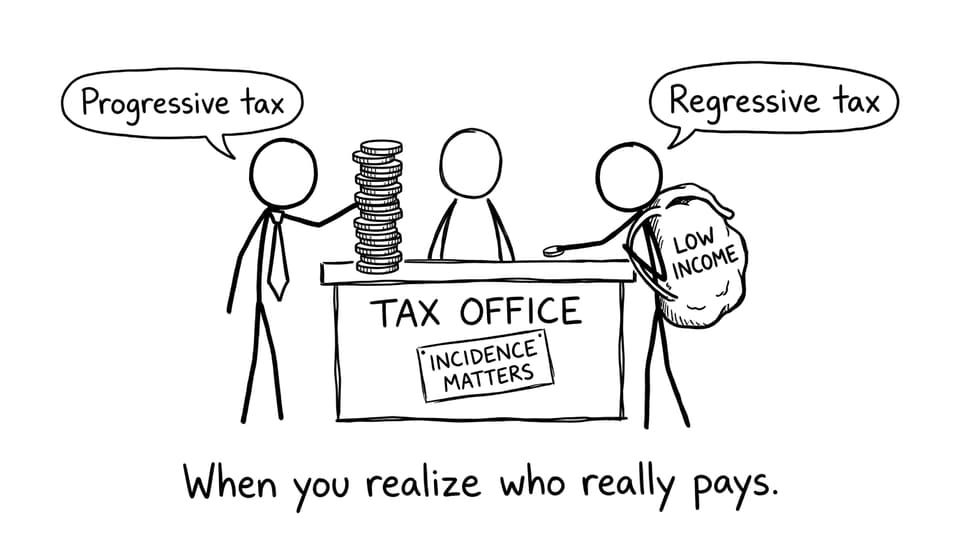
A progressive tax system takes a larger proportion of income from higher-income earners. In IB Economics, the key mechanism is simple: it reduces post-tax income gaps and funds redistribution.
To revise the core definitions and comparisons (progressive vs regressive vs proportional), use Role of taxation in reducing poverty, income and wealth inequalities. If you want the bigger chapter context, start with 3.4 Economics of inequality and poverty and the matching chapter notes.
The trade-off you must evaluate
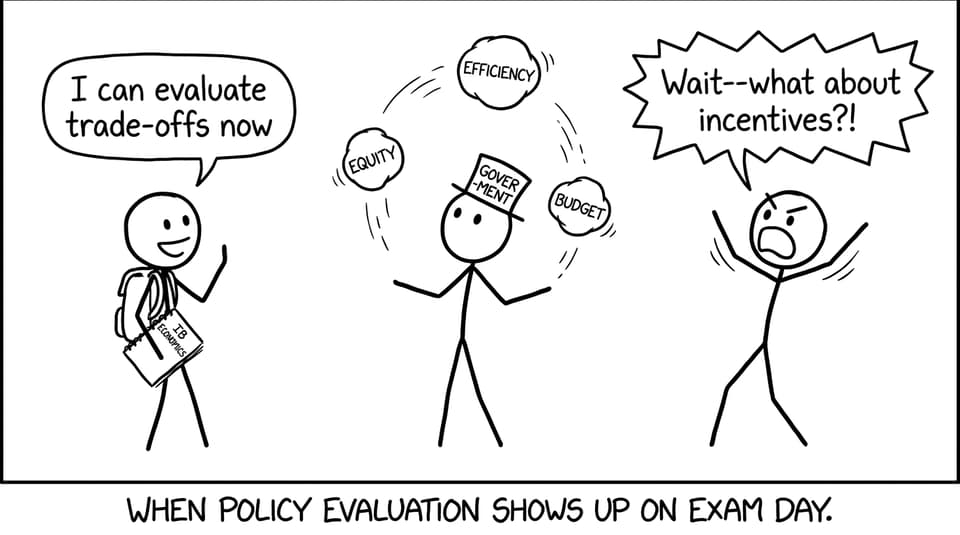
In IB Economics, evaluation is where marks live. Progressive taxation can weaken incentives to work, save, or invest if rates become very high, and it can increase tax avoidance. Your conclusion should weigh equity gains against possible efficiency losses and administrative complexity.
Transfers and public services: the safety net and the ladder
Transfers are payments from the government to households without an exchange of goods and services (think unemployment benefits, pensions, child allowances). They reduce inequality quickly by boosting the disposable income of lower-income groups.
Public services reduce inequality more slowly, but often more deeply. Education and healthcare are classic “merit good” style interventions: they expand opportunity and raise long-run productivity. Revision resources that map these policies cleanly include Further policies to reduce poverty, income and wealth inequality and the Impact of income and wealth inequality topic page.
The trade-off you must evaluate
Transfers and public spending need funding. In IB Economics, that means opportunity cost and fiscal sustainability. Poorly designed benefits can reduce work incentives (the dependency argument), while overspending can raise government debt. Good evaluation notes design matters: targeting, eligibility rules, and time limits can change outcomes.
Labour market policies: minimum wage and worker protections
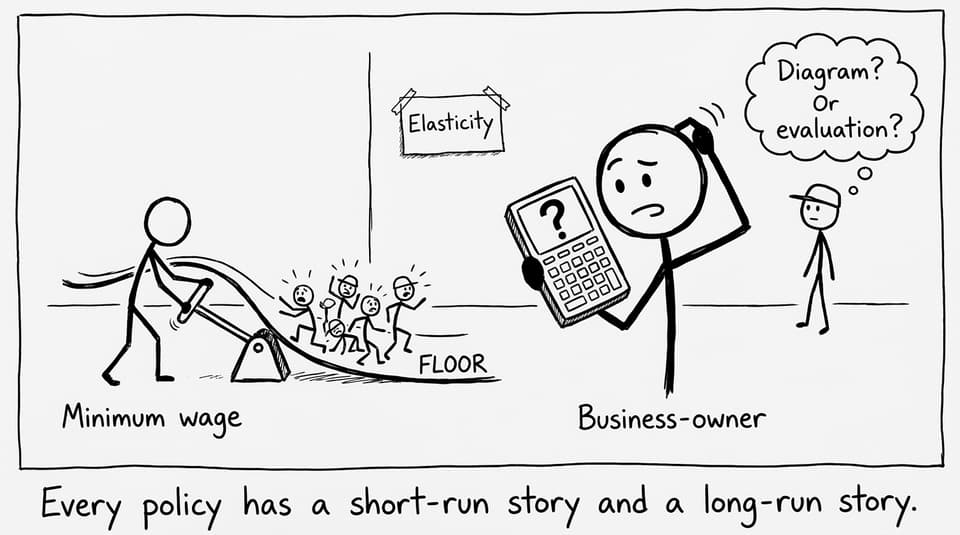
Minimum wage laws attempt to lift the lowest earnings and reduce working poverty. In IB Economics, you should link it to labour demand elasticity: if demand for labour is elastic, job losses are more likely; if inelastic, wage gains may dominate.
For a focused set of notes, see Labour market reforms: market-based policy. And to connect the “why intervene?” logic, use Reasons for government intervention in markets alongside Why do governments sometimes intervene in otherwise free markets?.
The trade-off you must evaluate
Minimum wages can reduce inequality for employed workers, but may create unemployment for the least skilled if set too high. Evaluation should consider enforcement, regional wage differences, productivity effects, and whether complementary policies (training, tax credits) soften the downside.
Exam tip: how to write the evaluation paragraph
In IB Economics, aim for a balanced “it depends” built on conditions:
-
How severe is inequality (income vs wealth)?
-
How progressive is the tax system in practice?
-
Are benefits targeted or universal?
-
What is the elasticity of labour demand?
-
Is the budget position sustainable?
If you want structured practice, use 3.4 Economics of inequality and poverty Questionbank and then tighten definitions with the 3.4 flashcards.
Conclusion: the IB Economics takeaway
Reducing inequality is not a single policy. It is a portfolio: progressive taxation, transfers, public services, and labour market rules, each shaping who gets what, and who gets the next chance. In IB Economics, your advantage is not memorizing a list, but explaining mechanisms and evaluating trade-offs with real conditions.
When you are ready to turn that understanding into exam marks, RevisionDojo helps you practise the way examiners think, with a powerful Questionbank, clear Study Notes, quick Flashcards, AI Chat for explanations, Grading tools for feedback, Predicted Papers and Mock Exams for timed practice, plus a Coursework Library and Tutors when you want targeted support.