A quick hook: when your currency moves, everything moves
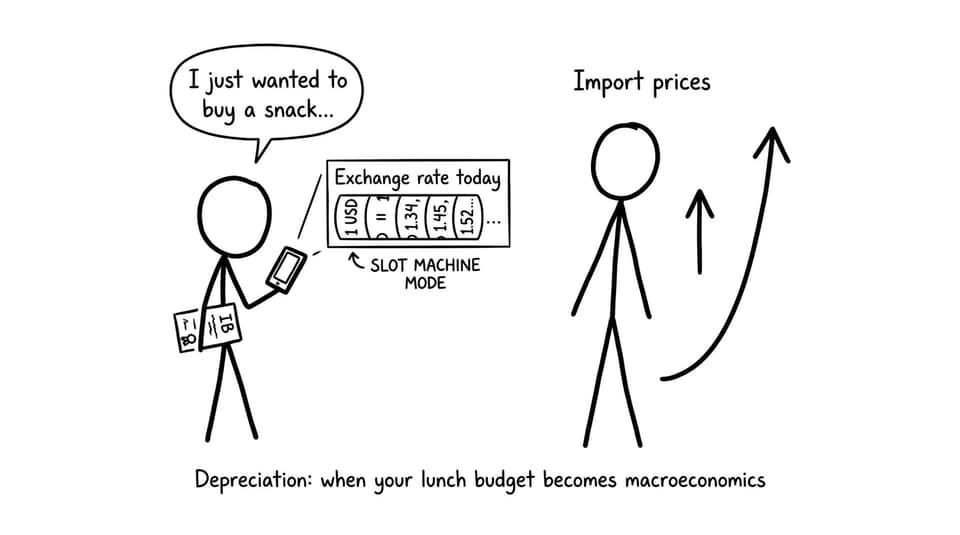
The first time most students feel exchange rates is painfully small: you go to buy something online, the price looks fine, then your card converts it and suddenly your snack budget turns into a macroeconomic case study. That tiny moment is the same mechanism that drives big headlines about inflation, growth, and job markets.
In IB Economics, exchange rate changes matter because they quietly reshape incentives across an entire economy: what households can afford, what firms can sell abroad, and how policymakers react when stability starts to wobble.
Depreciation and your lunch budget becomes macroeconomics
IB Economics checklist: what to mention in an answer
When a question asks how exchange rate changes impact the economy, build your analysis around four channels:
Trade: exports, imports, and net exports (X--M)
Inflation: imported inflation, plus AD/SRAS effects
Investment flows: foreign direct investment and portfolio flows
Policy response: interest rates, intervention, and confidence
For the syllabus framing, it helps to anchor your definitions and diagrams using the 4.5 Exchange Rates hub and then zoom into consequences.
Appreciation vs depreciation: why trade is the first domino
In IB Economics, you usually start with competitiveness.
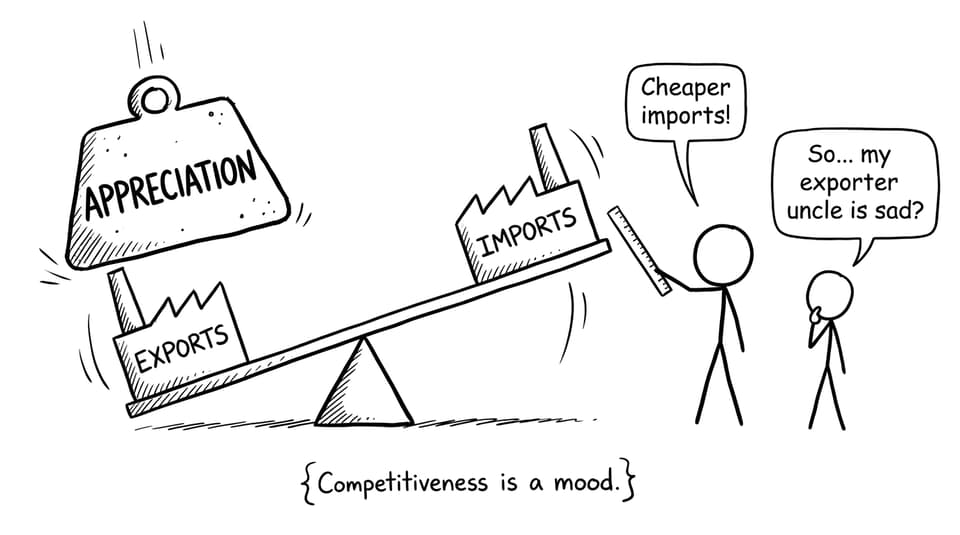
An appreciation makes the currency stronger. Imports become cheaper for domestic consumers and firms, which can raise real purchasing power and lower costs for imported inputs. But exports become more expensive for foreign buyers, so export demand can fall. That can reduce revenues for export industries and weaken the current account.
If the currency depreciates
A depreciation makes exports cheaper to foreigners and imports more expensive to domestic buyers. Export volumes often rise, import volumes often fall, and net exports (X--M) can improve. That can lift aggregate demand and output, especially in open economies.
Exchange rates shape inflation through two routes that pair nicely with AD/AS diagrams in IB Economics:
Imported inflation (cost-push): if the currency depreciates, imported consumer goods and imported inputs become more expensive. Firms’ costs rise, short-run aggregate supply can shift left, and the price level rises.
Demand-pull pressure (AD): depreciation can increase net exports, which increases AD. Higher AD can push up the price level.
Appreciation generally flips these effects: cheaper imports reduce cost pressures and weaker net exports can reduce AD.
If you need a quick refresher on how inflation is defined and measured for IB-style responses, link your explanation to How Is Inflation Measured?.
Investment and confidence: when money gets nervous
Currencies are also signals. A stable or appreciating currency can attract foreign investors because returns (once converted back home) feel safer. But a rapid depreciation can trigger capital outflows if investors expect further falls. That can amplify volatility, tighten financial conditions, and make long-term planning harder for firms.
This is where you can score evaluation marks in IB Economics: mention that outcomes depend on expectations, time lags, and the structure of the economy (for example, how dependent it is on imported fuel or how elastic export demand is).
Policy response: why central banks sometimes step in
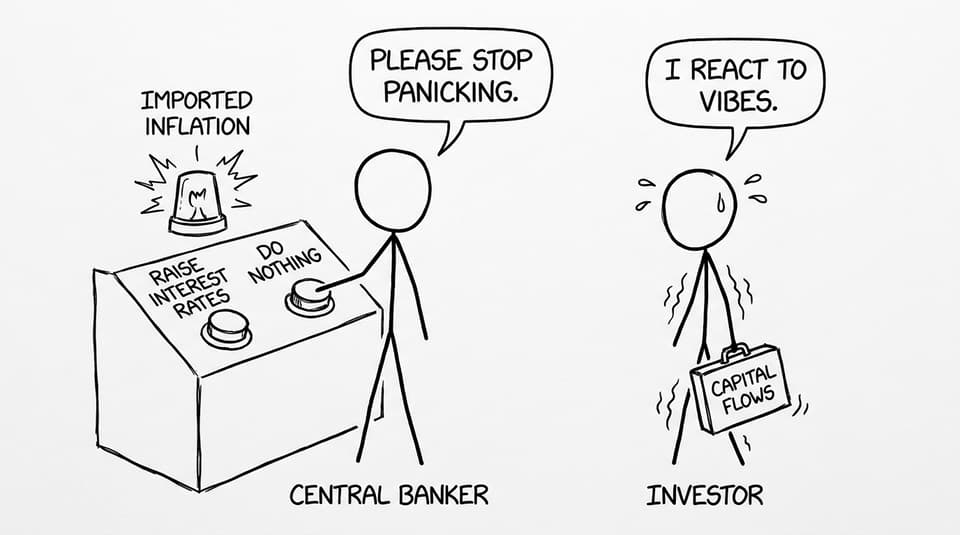
Exchange rate swings can force policy decisions. If depreciation threatens inflation, a central bank may raise interest rates to support the currency, even if that risks slowing growth. In some systems, authorities may also manage the exchange rate through intervention.
Conclusion: make exchange rates your scoring topic
Exchange rates are one of those IB Economics topics that look small in a textbook, then show up everywhere in real life. Appreciation and depreciation ripple through trade, inflation, investment, and policy, and each ripple is a chance to earn analysis and evaluation marks.
If you want to turn this into consistent exam performance, RevisionDojo is built for it: use the Questionbank for exam-style practice, Study Notes for tight definitions, Flashcards for quick recall, AI Chat for feedback, and Grading tools to refine structure. Add Predicted Papers and Mock Exams when you’re close to test day, and lean on the Coursework Library and Tutors if you want guided support. Your next exchange-rate question should feel less like guesswork and more like a well-rehearsed story with clean diagrams and confident evaluation.
· 6 min read
IB Economics: Unintended Effects of Price Controls
IB Economics guide to why price ceilings and price floors backfire: shortages, surpluses, black markets, and quality drops, explained simply.