


A demand curve can move without the price moving
You stare at your demand diagram the night before an assessment. The curve is neat, downward sloping, perfectly labeled. Then the prompt hits: “Explain why demand increased.” No price change is mentioned. That is the moment IB Economics stops being a graphing exercise and becomes a story about people.
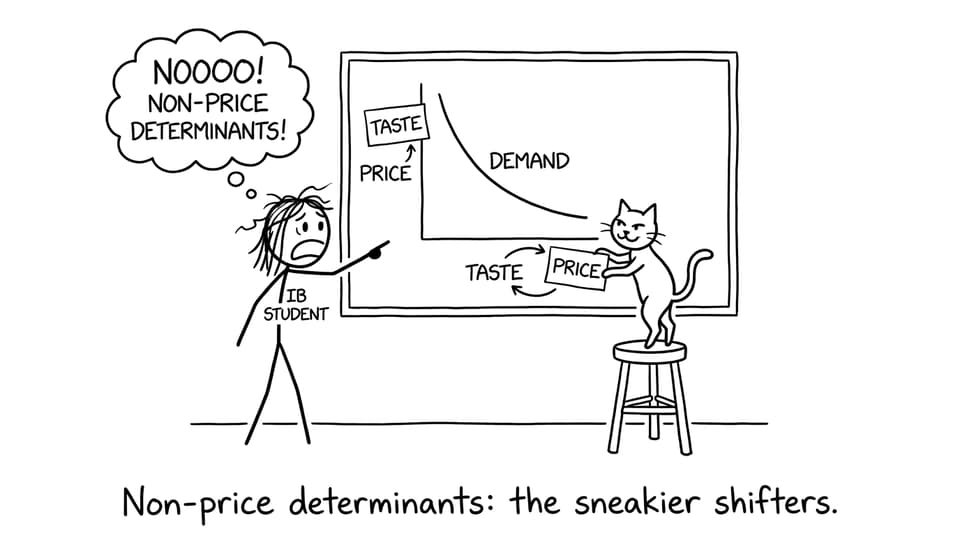
In IB Economics, a price change causes a movement along the demand curve. But when a non-price determinant changes, the entire demand curve shifts left or right. That matters because it means consumers want to buy more (or less) at every price.
If you want a quick refresher on the big picture, pair this post with Define Supply and Demand - IB Economics.
Quick checklist: what shifts demand in IB Economics?
Use this as your exam trigger list. If any of these change, think shift (new demand curve), not movement.
-
Income (normal vs inferior goods)
-
Tastes and preferences (trends, advertising, social change)
-
Population and demographics
-
Expectations (future prices, future income, uncertainty)
-
Prices of related goods (substitutes and complements)
-
Seasonal factors (weather, holidays, routines)
For the formal syllabus framing, see 2.1.4 Non-price determinants of demand and the companion note IB Economics 2.1.5 Movements and Shifts of the Demand Curve.
Income: the quiet engine behind demand shifts
Income is the classic IB Economics determinant because it connects theory to real life fast.
-
If income rises, demand for normal goods increases (shift right). Think branded trainers, cinema trips, better smartphones.
-
If income rises, demand for inferior goods can fall (shift left) because consumers trade up. Think instant noodles or bus rides in some contexts.
In exam answers, signal that income changes affect willingness and ability to buy at every price, so the curve shifts. If you want to drill this with practice, use the 2.1 Demand Questionbank (SL/HL).
Tastes and preferences: why trends move markets
Preferences are slippery, which is exactly why they show up in IB Economics questions.
Advertising, health information, cultural moments, and social identity can all rewire demand. A sudden preference for plant-based meals increases demand for meat substitutes (shift right). A scandal can do the opposite, shifting demand left even if the price stays the same.
RevisionDojo’s 2.1 Demand Notes are useful here because they keep the language examiner-friendly: determinant changes cause shifts.
Related goods: substitutes and complements (the exam-friendly one)
Related goods let you show clean chain logic.
-
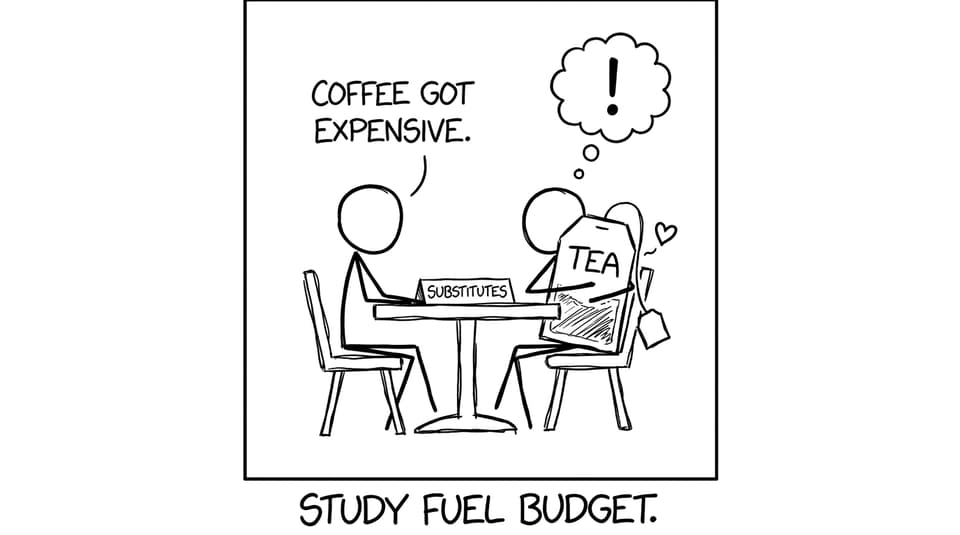
Substitute price rises -> demand for this good rises (shift right). Coffee up? Tea demand up.
-
Complement price rises -> demand for this good falls (shift left). Cinema tickets up? Popcorn demand down.
To strengthen your diagrams and labeling (a common mark-loss zone), revise Movements along and shifts of the demand curve.
Expectations, demographics, and seasonality: the “life happens” determinants
These three are where IB Economics starts to feel like reading the news.
Expectations
If consumers expect prices to rise later, they may buy now, shifting demand right. If they expect lower future income or a downturn, demand can shift left. Expectations are especially strong for big-ticket items.
Population and demographics
A larger population generally increases market demand (shift right). But demographics change what is demanded: aging populations raise demand for healthcare services, while a youth bulge might raise demand for education and entry-level tech.
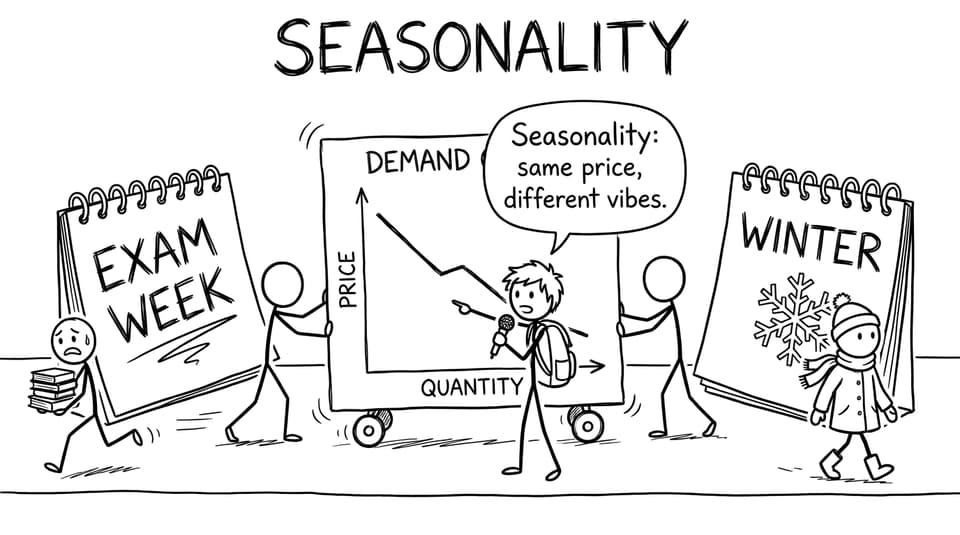
Seasonal factors
Winter boosts heaters. Summer boosts cold drinks. The key is that the entire curve shifts because preferences and needs change across time.
How to write this in Paper 1 without overthinking it
A strong IB Economics explanation is usually three clean steps:
-
Name the determinant (e.g., income rises).
-
State the direction of the shift (demand shifts right).
-
Explain the mechanism (at every price, consumers buy more because purchasing power increased).
Then add the diagram with D1 to D2, and keep ceteris paribus explicit.
For targeted revision, the IB Economics resources hub is a fast way to jump between notes, videos, and practice.
Bring it home: use shifts like a storyteller
The best IB Economics answers treat a demand shift like a human narrative: something changed in people’s lives, so their choices changed at every price.
When you are ready to practice this under time pressure, RevisionDojo is built for it: the Questionbank feature helps you drill exam-style prompts, while the Economics notes and videos keep your diagrams sharp. Add RevisionDojo’s Study Notes, Flashcards, AI Chat, Grading tools, Predicted Papers, Mock Exams, Coursework Library, and Tutors when you want feedback loops that actually feel like progress.
If you remember one line for the exam: non-price determinants shift demand; price changes move along demand, and IB Economics becomes much more predictable.