

If the periodic table feels like a wall of symbols, here’s the quiet secret: in IB Chemistry, it’s less a chart and more a prediction machine. When you learn to read atomic trends, you stop memorizing bond types and start anticipating them. Under exam pressure, that shift matters. It turns “I hope this is ionic” into “of course it’s ionic--and here’s why.”
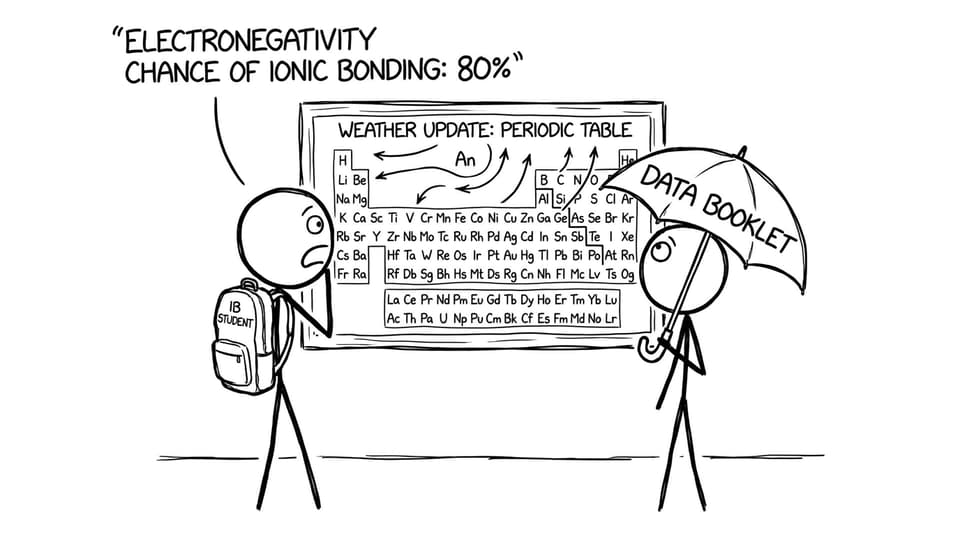
The quick checklist (IB Chemistry bond prediction)
Use this quick routine before you commit to ionic vs covalent in IB Chemistry:
-
Check electronegativity difference (ΔEN): big difference tends toward ionic, small difference tends toward covalent.
-
Check ionization energy: low IE elements lose electrons easily (cations).
-
Check atomic radius and shielding: larger atoms hold valence electrons less tightly.
-
Remember bonding is a continuum--use trends to justify the direction.
For extra practice in the exact style examiners expect, start with the RevisionDojo Questionbank.
Electronegativity trend: the strongest bond-type signal
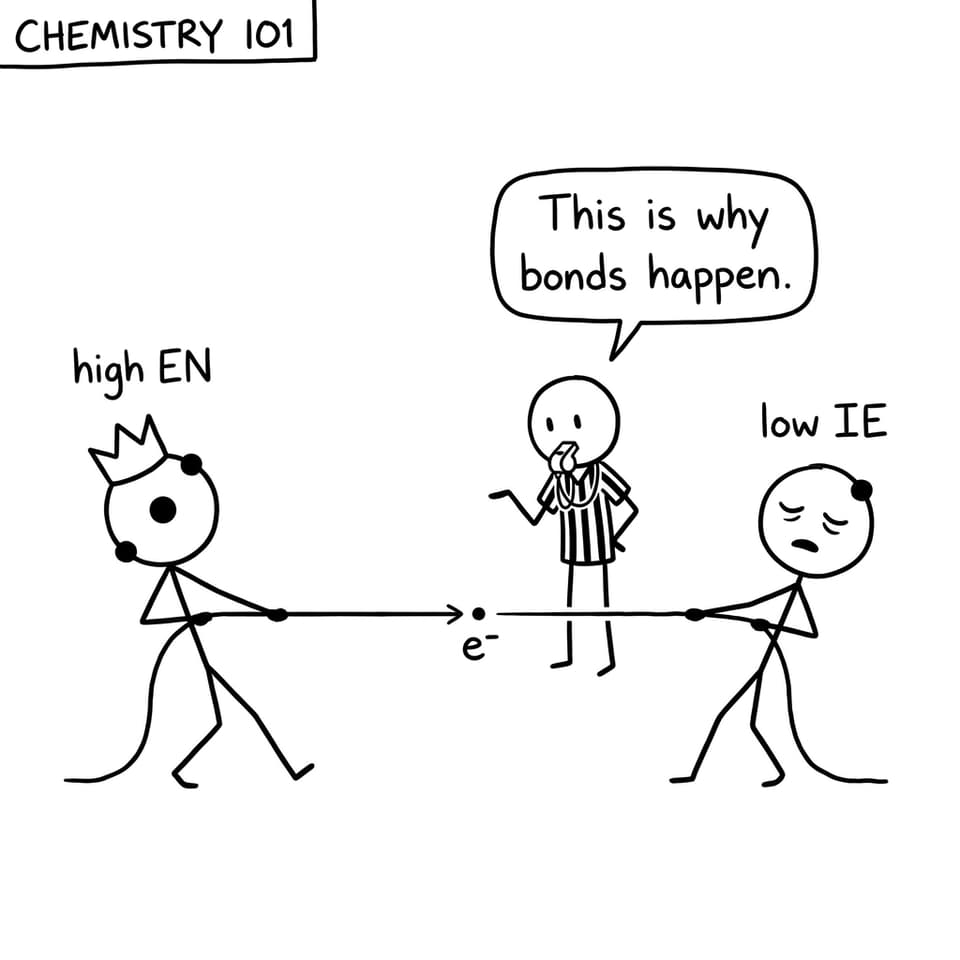
In IB Chemistry, electronegativity is your fastest shortcut because it directly describes an atom’s pull on bonding electrons. When ΔEN is large, one atom pulls so strongly that electron density is effectively transferred--a strong indicator of ionic bonding (classic metal + nonmetal behavior). When ΔEN is smaller, electrons are shared, giving covalent bonding.
The key is to connect the trend to structure: electronegativity generally increases across a period (higher effective nuclear charge, smaller radius) and decreases down a group (more shielding, larger radius). If you want a clean, exam-ready explanation, use Electronegativity Explained Simply for IB Chemistry and Electronegativity Trend Across a Period: IB Chemistry Guide.
Exam move
When you state a bond type in IB Chemistry, add one sentence of justification: “ΔEN is large/small, so electrons are transferred/shared.” For ΔEN guidance, see What Is Electronegativity Difference? and the bonding application in Notes for S2.2.5 Bond polarity - IB.
Ionization energy: who can afford to lose electrons?
Ionization energy tells you how “expensive” it is for an atom to remove an electron. In IB Chemistry, low ionization energy elements (especially on the left side of the periodic table) form cations easily, which supports ionic bonding with high-electronegativity nonmetals. High ionization energy elements resist losing electrons, pushing systems toward sharing instead.
If trends ever feel like disconnected facts, learn the engine underneath: Effective Nuclear Charge Explained. It links atomic size, ionization energy, and electronegativity into one cause-and-effect story.
Atomic radius and shielding: the “grip strength” of an atom
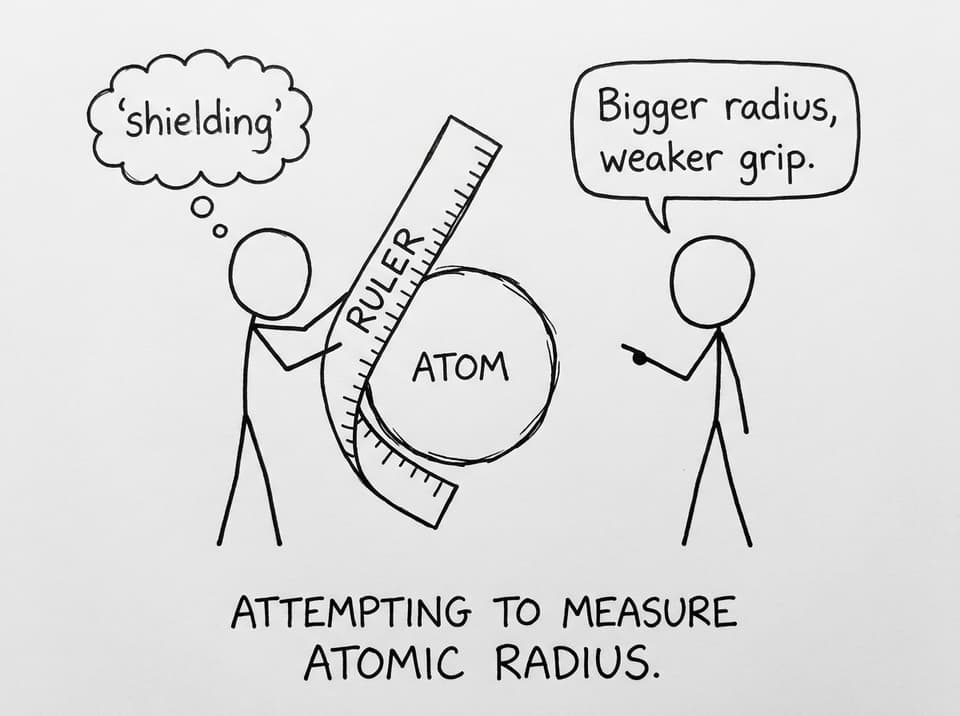
Atomic radius matters because distance weakens attraction. A larger radius plus stronger shielding means valence electrons feel less nuclear pull--so they’re easier to remove (supporting ionic bonding). Smaller atoms hold electrons more tightly and often form stronger covalent bonds because effective overlap and attraction are higher.
For periodic trend foundations, pair this with Periodic trends study notes and exam technique from How to Use the IB Periodic Table in Exams and Revision.
Bring it together: make IB Chemistry trends do the work
Atomic trends predict bond types because they reveal the incentives inside atoms: who pulls electrons, who lets go, and who shares under pressure. In IB Chemistry, that means electronegativity, ionization energy, and atomic radius become your fastest route to a defensible answer.
If you want this to feel automatic, use RevisionDojo’s IB Chemistry Resources hub for Study Notes, Flashcards, AI Chat support, and Grading tools--then pressure-test your understanding with the IB Chemistry Questionbank and timed practice using Predicted Papers and IB Chemistry Predicted Papers. The trends won’t just be something you “know”--they’ll be something you can use.