

A teacher once told me, “I can forgive messy thinking. I can’t grade invisible thinking.”
That single sentence explains a lot about how University departments are responding to AI use in high school assignments. The debate isn’t really about whether you touched an AI tool. It’s about whether your ideas, your judgment, and your process are still yours.
For IB students preparing for exams, this matters because the habits you build now--how you draft, cite, and revise--are exactly the habits a University will assume you already have.
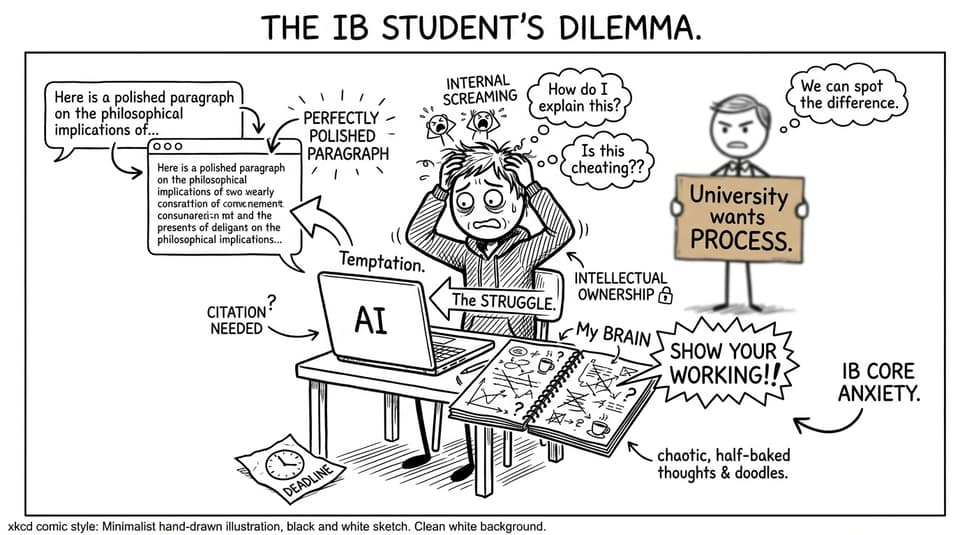
The big University shift: from bans to responsible integration
Many University policies are moving away from blanket “AI bans” and toward controlled, transparent use. The core logic is practical: AI exists, students will use it, so the real academic skill is learning to use it responsibly.
That approach lines up closely with IB expectations around academic honesty and ownership. AI can support learning, but it can’t replace authorship. If a tool meaningfully shapes wording, structure, or analysis, disclosure matters.
A useful way to think about it is: a University isn’t trying to catch you using a calculator. It’s trying to see whether you understand the maths.
What University policies are actually doing (and why)
Different schools phrase it differently, but the trend is consistent: regulate the conditions of AI use.
Here are two examples often cited in policy conversations:
-
University of Sydney uses a “two-lane” approach: AI may be acceptable for take-home or formative work when acknowledged, while remaining prohibited in final in-person exams.
-
Trinity College Dublin has allowed AI-assisted writing in some contexts when students critically evaluate outputs and clearly acknowledge the tool’s role.
In both cases, the University focus is the same: AI is fine as an assistant, not as a ghostwriter.
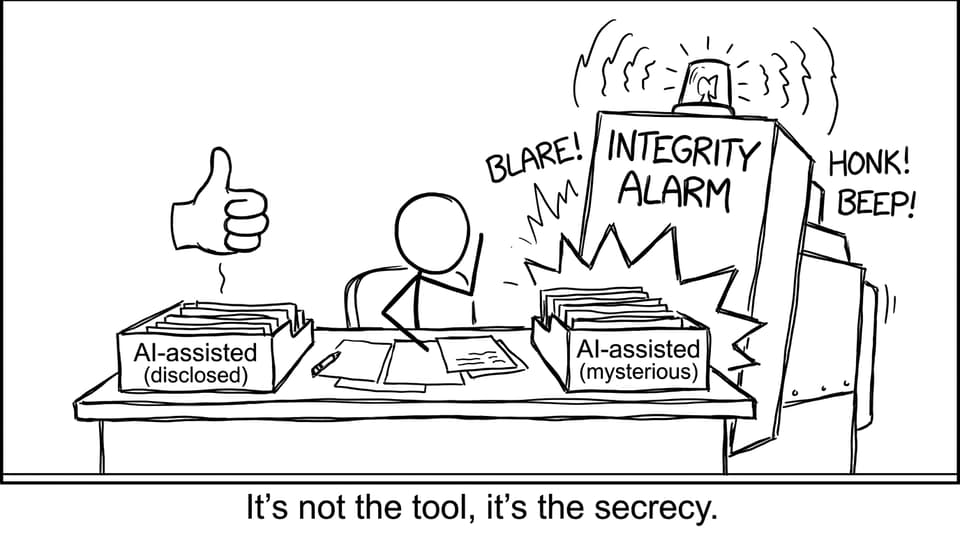
Academic integrity now includes AI literacy
A University is increasingly treating “AI literacy” as part of academic integrity. Not a separate rulebook--an extension of the same old principles: attribution, honesty, and accountable thinking.
For IB students, that usually means:
-
Using AI for brainstorming, outlining, quick explanations, or retrieval practice
-
Keeping drafts and rough work so your thinking is visible
-
Acknowledging AI if it meaningfully influenced your structure, phrasing, or analysis
If you want a clear IB-aligned framework, RevisionDojo’s guidance on academic honesty is a solid place to start: How RevisionDojo Helps You Maintain Academic Integrity While Studying.
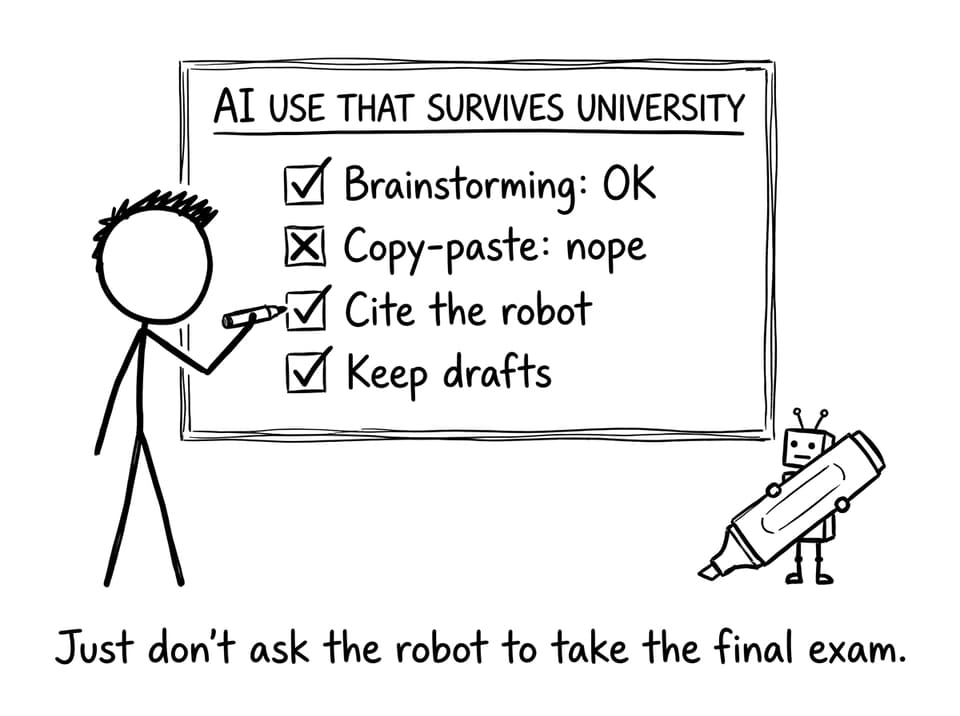
A simple checklist for “University-proof” AI use
Use this when you’re revising or writing anything that might later matter for a University application, reference, or internal school policy.
-
Use AI to ask questions, not to replace answers
-
Save your outline, drafts, and feedback notes
-
If AI changes the substance of your work, acknowledge it
-
Be able to explain your reasoning out loud (TOK-style)
-
Practice under exam conditions without AI support
RevisionDojo helps you build those habits with tools that keep learning at the center: AI Chat, Flashcards, Study Notes, and a high-volume Questionbank for exam-style practice.
How RevisionDojo fits what University staff are asking for
The easiest mistake with AI is using it too late in the process--when you’re tempted to accept polished wording instead of building clear thinking.
RevisionDojo is designed to push you the other way: toward practice, feedback, and ownership.
-
Use Jojo AI Chat to clarify concepts quickly without losing an hour
-
Use the Questionbank to turn understanding into marks
-
Use Grading tools and the Coursework Library to learn what quality looks like, then produce it yourself
-
Use Predicted Papers and Mock Exams to build calm under time pressure
-
Use Tutors when you need a human to challenge your reasoning
If TOK is where you most feel the “AI temptation,” read: Can AI Help Me Brainstorm Ideas for My TOK Essay Without Plagiarizing? and Practical Guide to Using AI Tools for IB TOK Essays.
For coursework drafting habits that protect integrity (and your stress levels), this is useful: How Can AI Be Used to Improve My IA Drafts and Feedback Process.
What University assessment changes mean for IB exam prep
As AI becomes normal, a University can shift assessment toward things that are harder to outsource:
-
More in-person writing or timed problem-solving
-
More presentations, vivas, and oral defenses
-
More emphasis on evaluation, reflection, and decision-making
That’s good news for IB students, because the IB already trains you for defensible thinking. You can practice this directly by doing timed sessions and then explaining your markscheme logic.
A strong exam workflow is laid out here: RevisionDojo App: The Smarter Way to Prep for IB Exams and How to Study for IB Exams When You Feel Behind.
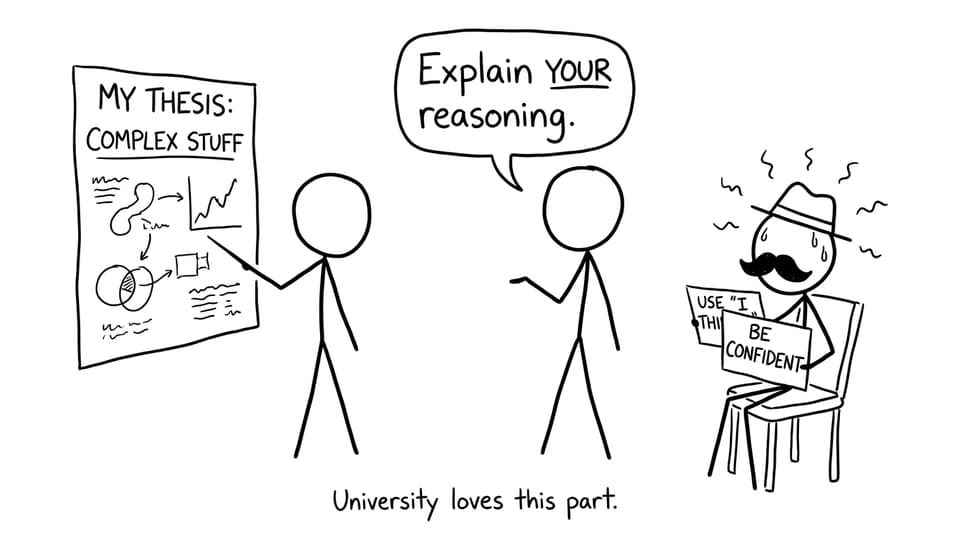
Closing: the University skill is visible thinking
AI is changing schoolwork, but it isn’t changing what a University values most: clear reasoning, honest process, and work you can defend.
If you treat AI as a study partner (not a substitute author), you’ll walk into any University environment with the one advantage that never goes out of date: ownership of your thinking.
Build that ownership with RevisionDojo’s Questionbank, Study Notes, Flashcards, AI Chat, Grading tools, Predicted Papers, Mock Exams, Coursework Library, and Tutors--and make your learning visible, long before a University ever asks for it.