


A gallery is a strange place to feel judged. Everything is quiet, the lighting is harsh, and even a tiny gap between frames can feel like a confession.
That’s why the curatorial rationale matters so much in IB Visual Arts. It turns your exhibition from “a set of artworks” into “a coherent argument.” And when it’s written well, it quietly tells the examiner: I made decisions on purpose.
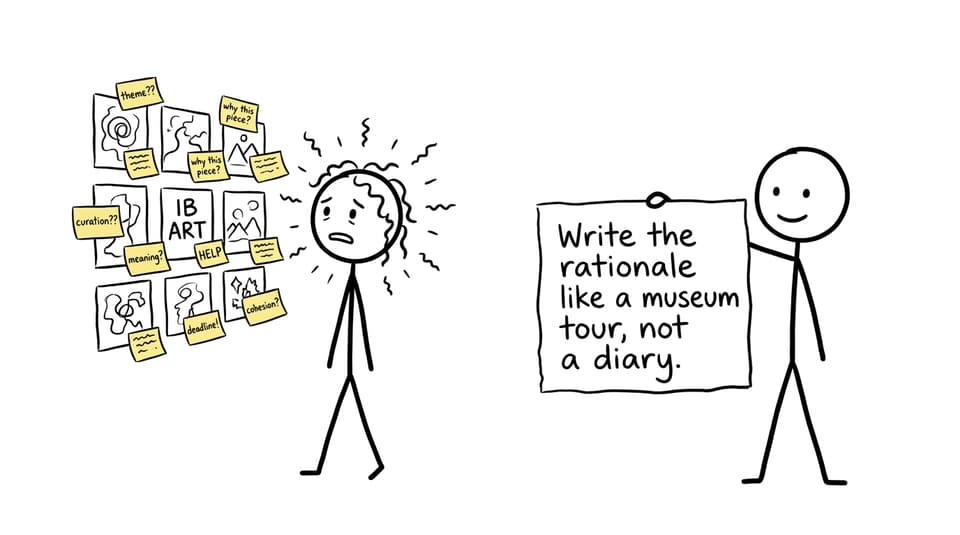
What high-scoring IB Visual Arts curatorial rationales actually do
A strong IB Visual Arts curatorial rationale is short, but it carries a lot of weight. Think of it like a museum audio guide: it doesn’t list everything on the wall; it gives viewers the thread that ties the room together.
Use this quick checklist before you finalise yours:
-
State one clear theme or guiding question
-
Justify why these works belong in the final selection
-
Explain layout choices (sequence, contrast, grouping, spacing)
-
Reflect on development: what changed, what failed, what you refined
-
Keep a personal voice without becoming vague
If you want the requirements clearly broken down, cross-check with The Exhibition in IB Visual Arts: What You Need to Know and the SL/HL differences in How to Succeed in the IB Visual Arts Exhibition at SL vs HL.
IB Visual Arts curatorial rationale examples that scored high (and why)
These are IB Visual Arts “models of approach” you can adapt. Don’t copy lines; copy the logic.
Identity and memory: the rationale that reads like a timeline
Core move: the student frames the exhibition as a journey from inherited identity to chosen identity.
What the rationale explains well:
-
Why multiple media were necessary (photo for evidence, textiles for inheritance, paint for distortion)
-
Why certain pieces were excluded (they didn’t push the inquiry forward)
-
Why the layout is chronological: early works near the entrance, later works deeper inside, like walking into the present
This approach scores because it blends theme + selection + curation into one story. For help sharpening “voice,” see How to Connect Personal Voice in Your IB Visual Arts Portfolio.
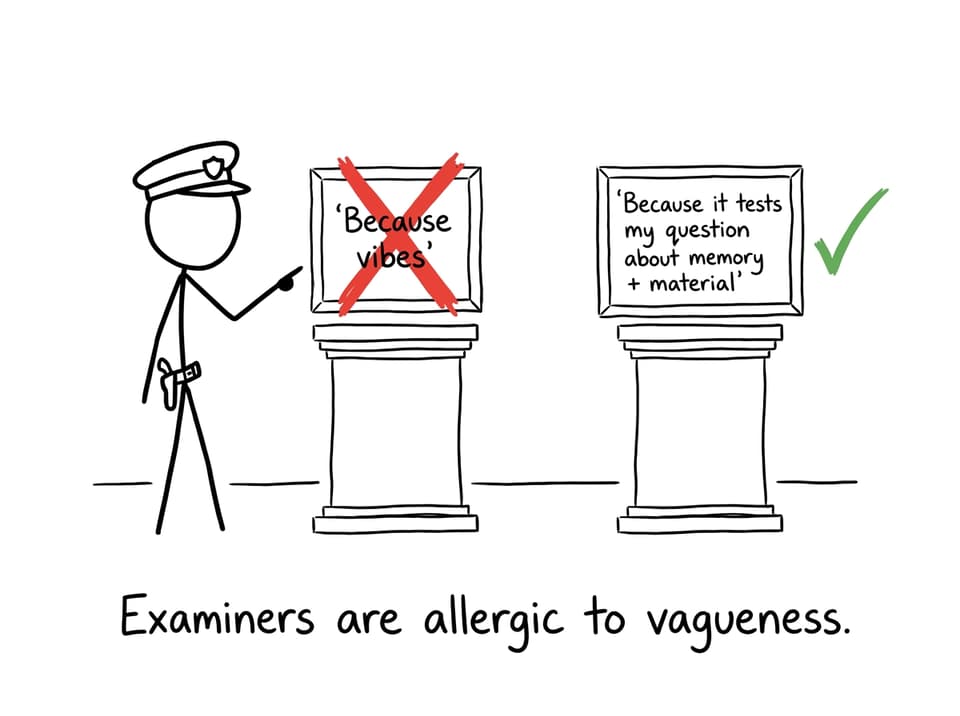
Environmental impact: the rationale that uses contrast as the organising principle
Core move: the student curates emotional whiplash on purpose.
What the rationale does:
-
Justifies found/recycled materials as concept, not aesthetic trend
-
Places “damage” works next to “regeneration” works to force comparison
-
Reflects honestly on experimentation (some materials failed structurally, which led to a new method)
This scores high because the student shows curatorial awareness. If you’re still unsure what examiners reward, read How Examiners Grade the IB Visual Arts Exhibition.
Dreams and the subconscious: the rationale that treats layout like a visual metaphor
Core move: the student uses physical arrangement to mirror a dream logic.
What the rationale explains:
-
Why repetition and looping motifs appear across pieces
-
Why a circular or “returning” arrangement fits the concept (no clear beginning or end)
-
What went wrong early on (overcrowded compositions) and how refining negative space improved clarity
If you want to avoid common traps while planning your display, keep Common Exhibition Mistakes That Cost IB Visual Arts Students Marks open as a pre-submission checklist.
A simple structure you can steal for IB Visual Arts (without sounding generic)
When students struggle in IB Visual Arts, it’s rarely because they have “nothing to say.” It’s because they try to say everything.
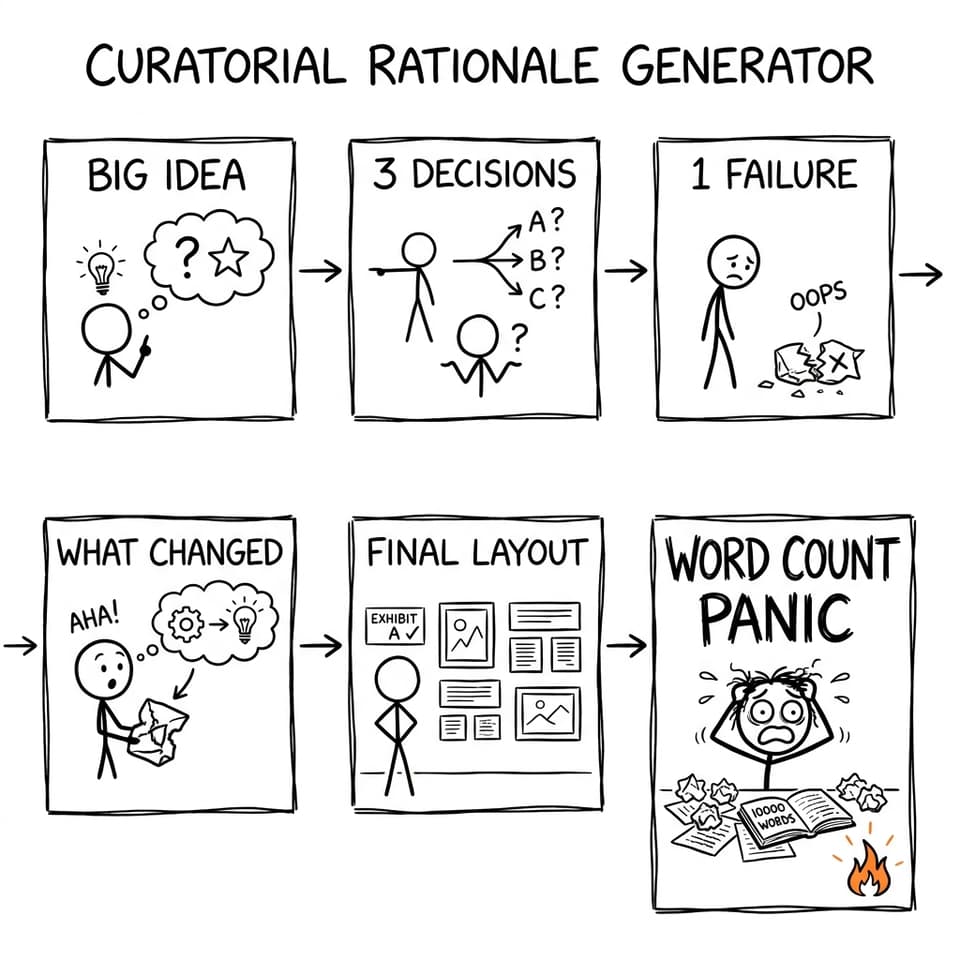
Use this structure:
-
Theme in one sentence (with one personal reason)
-
Selection logic: 2-3 sentences on what qualified a piece for the final show
-
Curatorial decisions: grouping, sequencing, and what you want viewers to notice first
-
Development: one risk, one failure, one refinement
-
Closing impact: what the exhibition invites the viewer to question
Want to connect rationale writing to your documentation? Pair it with How to Structure Your IB Visual Arts Process Portfolio.
Bring it home: write like a curator, revise like an examiner
A high-scoring IB Visual Arts curatorial rationale isn’t about sounding academic. It’s about being precise: what you explored, what you chose, how you arranged it, and what you learned along the way.
When you’re ready to tighten your final draft, RevisionDojo helps you practice the exact skills examiners reward: use the Coursework Library for models and standards in IB Visual Arts Examples, sanity-check your choices against exhibition expectations, and build confidence with RevisionDojo’s Study Notes, Flashcards, AI Chat, Grading tools, Mock Exams, and Tutors.
Your exhibition is the artwork. Your rationale is the proof you understand why it works in IB Visual Arts.


