


Studying a second language can feel like carrying an extra textbook in a backpack that’s already too full. Yet months later, at the exact moment you need an edge--an interview, a scholarship form, a first-year seminar--that “extra” becomes the thing that quietly pays you back.
That’s the real promise of IB Language B. It’s not just about getting through exams. IB Language B trains you to write with precision, speak with intent, and read for meaning under time pressure--which is basically the job description of university.
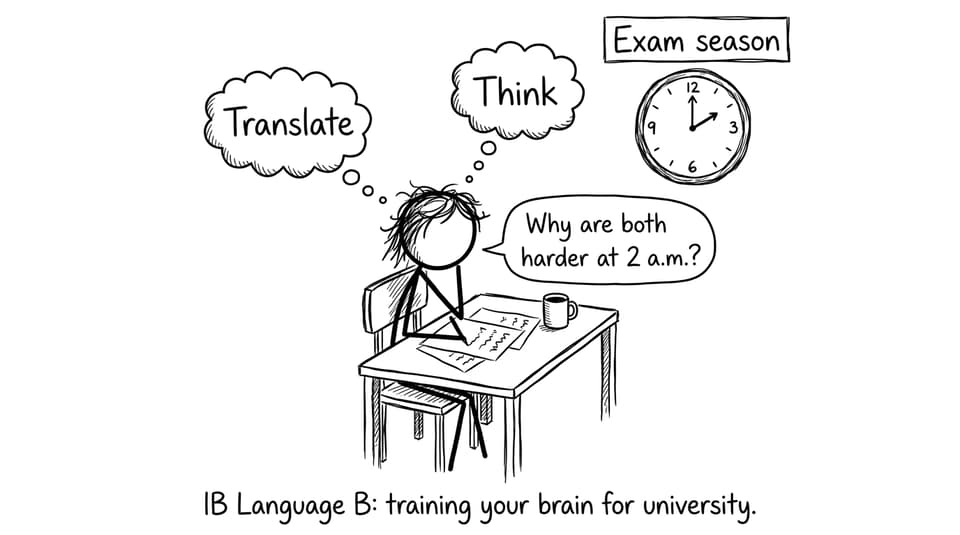
A quick checklist: what IB Language B gives you for university
-
Proof of academic rigor (especially if you take HL)
-
Stronger writing and speaking habits under pressure
-
Cultural awareness you can actually use in essays and discussions
-
Better readiness for international programmes, exchanges, and internships
-
Potential pathways to recognition or credit (policy depends on the university)
IB Language B signals academic rigor (and universities notice)
Universities read your subject choices like a story about how you handle difficulty. IB Language B--particularly at Higher Level--shows you can manage complex grammar, nuanced reading, and structured oral tasks.
If you’re still deciding between courses, this comparison helps clarify what admissions teams tend to value: Language B vs Language Ab Initio: Which Is Better for University Applications. And if you want the course “map” before you plan revision, use: IB Language B Syllabus: Breakdown & Study Strategy.
IB Language B builds the university skills nobody teaches directly
In university, marks often come from clarity: making a claim, supporting it, and adjusting tone for the audience. IB Language B forces you to practise those skills early.
You learn register (formal vs informal). You learn cohesion (connectors, logical flow). You learn how to paraphrase instead of panic-translate. And those are academic skills, not just language tricks.
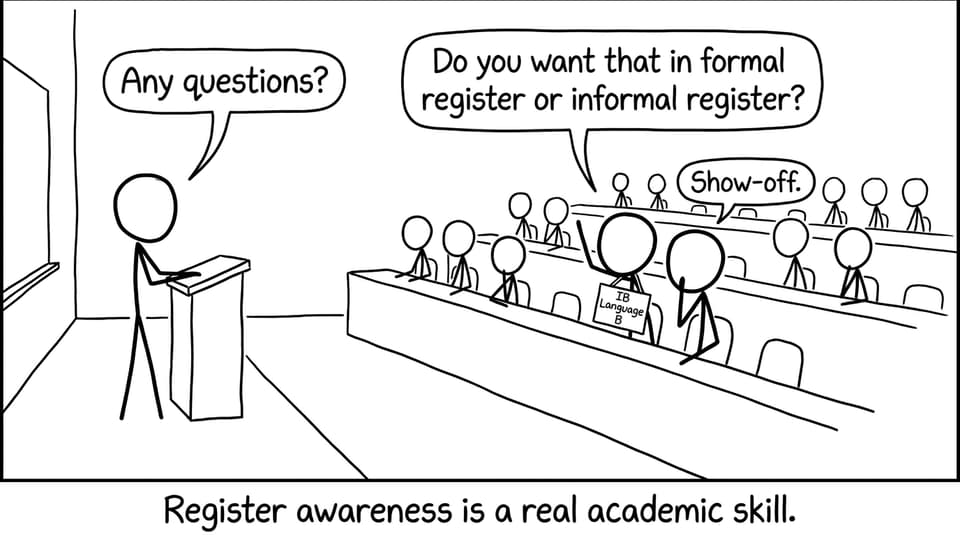
To sharpen these skills for exams now (and for uni later), build a routine around targeted practice: How to Effectively Revise for Language B Exams, plus speaking focus from How to Improve Your Language B Speaking Skills and structured output practice from How to Master Language B Writing Through Practice.
IB Language B is global prep that turns opportunities into access
A lot of “global readiness” is really just: can you communicate when it matters? IB Language B gives you that advantage in a practical way--emails, presentations, discussions, and real comprehension.
It also connects naturally with broader university signalling. If you’re aiming for competitive UK pathways, it helps to understand how the IB is interpreted: Does OxBridge like IB better? and Does Imperial College like IB better?. For bilingual pathways, this deeper context matters too: Is Bilingual Diploma Good For University Admissions?.

How RevisionDojo helps you turn IB Language B into points
Confidence improves when practice becomes measurable. RevisionDojo is built for that: Questionbank practice, Study Notes that keep the syllabus clear, Flashcards for theme vocabulary, and AI Chat for fast explanations.
When you’re ready to make your work exam-real, use Grading tools to tighten writing, Mock Exams to train timing, and Predicted Papers to focus your final weeks. If you need tailored feedback, the Tutors option makes practice feel like a conversation instead of a guess. And if you’re juggling core requirements too, the Coursework Library helps you stay organised across subjects.
Conclusion: make IB Language B your unfair advantage
The best part of IB Language B is that it compounds. Every theme you master, every speaking recording you redo, every writing task you tighten with feedback becomes future-you’s advantage in university classrooms and global spaces.
If you want to turn IB Language B into higher marks and stronger university readiness, build your system with RevisionDojo: practise with the Questionbank, lock in themes with Flashcards, refine with AI Chat and Grading tools, and finish strong with Mock Exams and Predicted Papers.
