


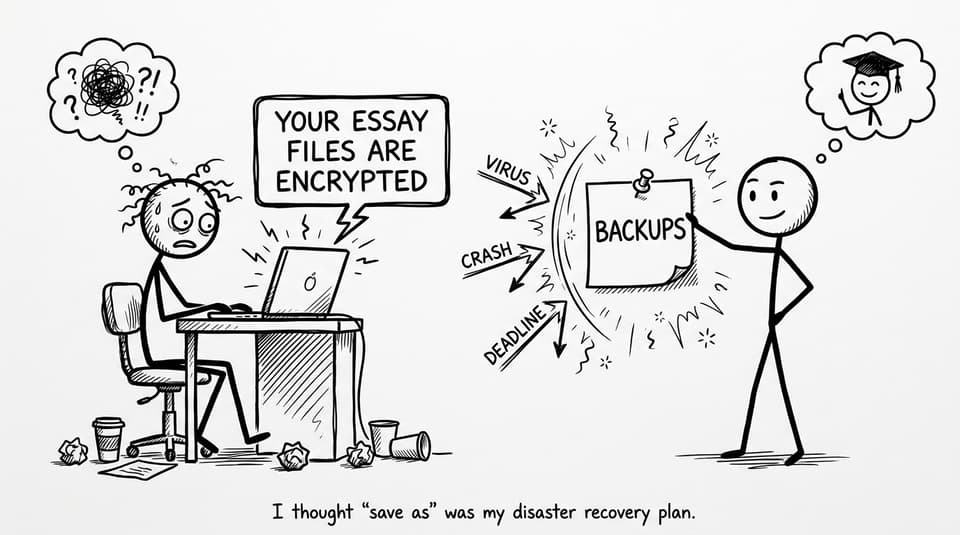
If you’ve ever opened your laptop in a hurry and imagined your notes vanishing, you already understand the emotional core of ransomware. It doesn’t just “break” a computer. It corners you. That’s why ransomware is a favourite real-world scenario in IB Computer Science: it blends malware, encryption, human behaviour, and organisational impact into one story examiners can test.
What ransomware is (IB Computer Science definition)
Ransomware is malware that denies access to data or a system and then demands payment to restore access. In IB Computer Science, the clean phrasing is:
-
It encrypts files or locks the system
-
It displays a ransom message (often requesting cryptocurrency)
-
It promises recovery, but provides no guarantee
If you want a wider map of malicious software types (and how to contrast them in answers), pair this topic with Malware Types Explained: Viruses, Worms, and Trojans.
How ransomware works (the simple mechanism)
Most ransomware attacks follow a predictable chain. Writing it as a sequence is exam-friendly:
-
Infection: the malware is installed (often without the user realising)
-
Action: files are encrypted and/or the OS is locked
-
Impact: the user loses access to important data and services
-
Extortion: a ransom demand appears with a deadline and instructions
In higher-mark questions, add a sentence linking to risk: ransomware is high-impact because it targets availability and often threatens confidentiality too.
How ransomware spreads: the “human layer”
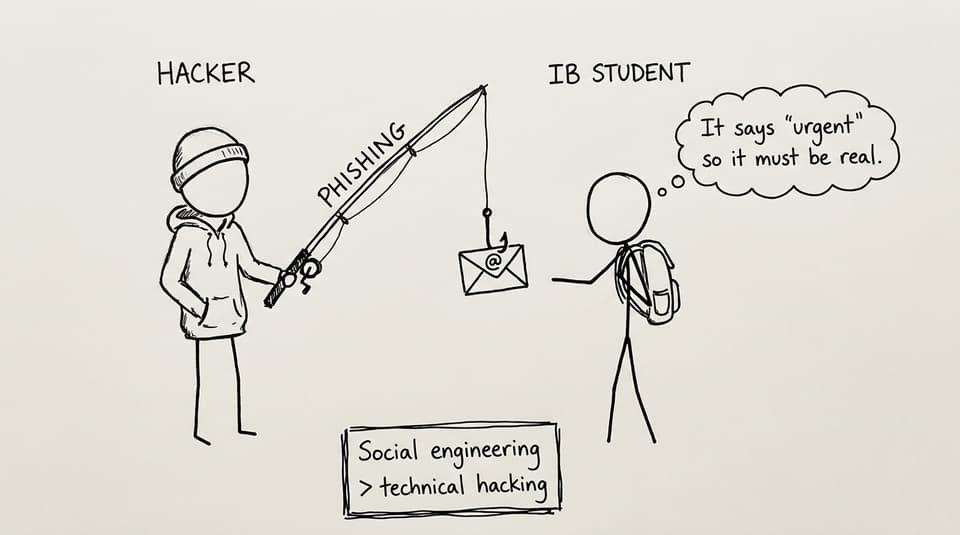
Ransomware rarely needs movie-style hacking. It often wins by persuasion.
Common spread methods include:
-
Phishing emails with malicious links or attachments
-
Drive-by downloads from compromised websites
-
Infected installers or “free” software downloads
-
Exploiting unpatched vulnerabilities
The IB framing that earns marks: ransomware is frequently enabled by social engineering and user error, not just weak technical controls.
To connect this to the bigger syllabus idea of “what could go wrong vs why it can happen,” see Cybersecurity Threats vs Vulnerabilities Explained and Network Security Threats IB Computer Science Students Must Know.
Why ransomware is dangerous (especially for organisations)
Ransomware is dangerous because it creates instant operational paralysis. For individuals, it’s devastating. For organisations, it’s existential.
Realistic consequences you can analyse in IB Computer Science answers:
-
Services stop (schools, hospitals, businesses)
-
Data becomes inaccessible, delaying decisions and workflows
-
Reputation damage reduces trust
-
Recovery costs escalate (downtime, incident response, legal obligations)
A strong exam response doesn’t just list impacts. It explains the pressure: ransomware uses urgency and fear to push victims into fast decisions.
Encryption: the reason ransomware “sticks”
The power move in ransomware is encryption. If strong encryption is used correctly by attackers, files are effectively unusable without the decryption key.
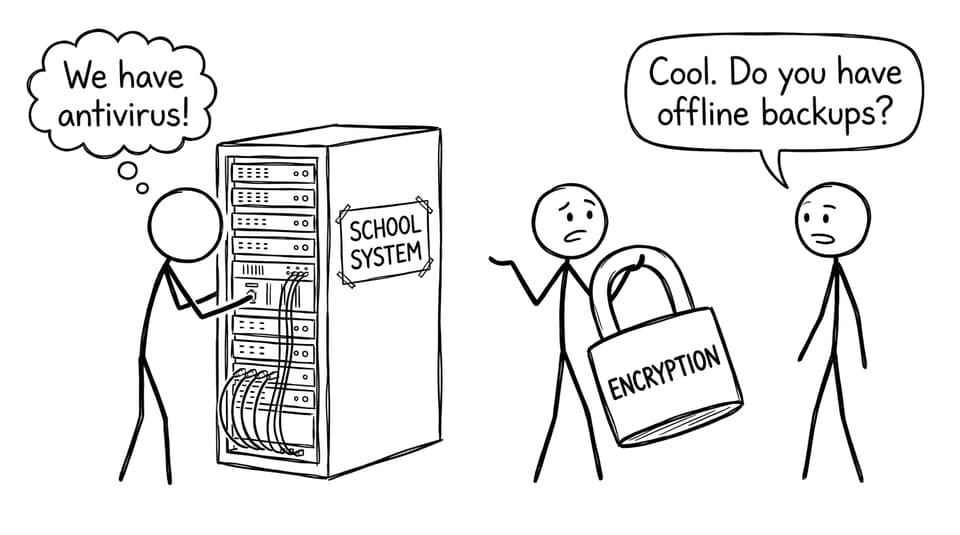
Your IB-ready sentence: without the key, decryption is computationally infeasible (so antivirus alone may remove the malware but not restore the data).
For syllabus-aligned encryption knowledge, revise A2.4.4 Process of Encryption and Digital Certificates and the matching encryption notes.
Prevention and recovery: what IB wants you to recommend
In IB Computer Science, prevention answers score best when they mix people, process, and technology:
-
User training and phishing awareness
-
Regular patching and updates
-
Least privilege and access control
-
Backups (including offline or isolated backups)
-
Network security controls and monitoring
When the question becomes “pay or restore,” the safest argument is that backups reduce dependency on attackers. For a deeper exam-style comparison, use Backup Strategies vs Paying the Ransom.
Quick checklist: a 30-second ransomware answer plan
When you see ransomware in a scenario question, hit these points:
-
Define ransomware (deny access + demand payment)
-
Explain mechanism (infection -> encryption/lock -> ransom message)
-
Explain spread (phishing/social engineering + unpatched systems)
-
Analyse impact on an organisation (downtime, cost, reputation)
-
Recommend prevention and recovery (education, updates, access control, backups)
Closing: turn ransomware into easy marks
Ransomware is scary in real life because it weaponises time, access, and uncertainty. But in IB Computer Science, that same structure makes it predictable to explain. Define it clearly, show the mechanism, highlight the human entry points, and connect encryption to impact and recovery.
If you want to make this topic feel automatic before exams, build a short loop using RevisionDojo’s IB Computer Science hub: read the Study Notes, drill the Questionbank, lock definitions with Flashcards, then use AI Chat to mark and refine your phrasing. Add Mock Exams, Predicted Papers, and the Grading tools when you’re ready to simulate pressure, and you’ll walk into security questions with calm, exam-ready control.


