
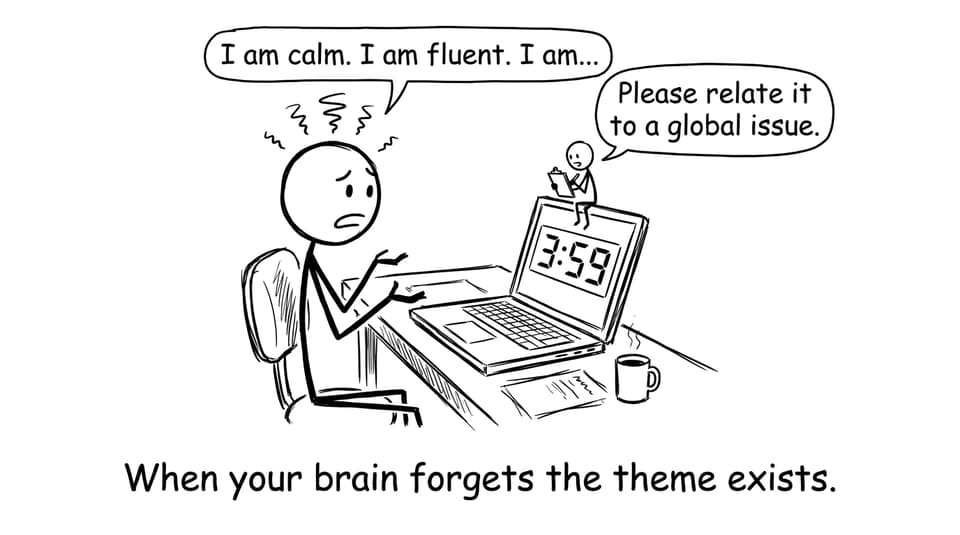
A week before the IB Spanish oral, most students don’t worry about Spanish.
They worry about silence.
That one moment where your mind blanks, your “perfect” memorised line disappears, and you’re left trying to improvise a global issue connection with a racing heart. The good news is that strong performance in IB Language B orals isn’t built on perfect wording. It’s built on a repeatable system: understand the format, train a few high-leverage habits, and practise under pressure often enough that the real thing feels familiar.
IB Language B Spanish oral: what you’re actually being tested on
In the IB Language B oral, examiners aren’t listening for rare vocabulary. They’re listening for control.
You’re assessed on how clearly you communicate, how accurately you use language, and how well you interact when the conversation moves off-script. That’s why tools like timed practice and feedback loops matter more than another vocabulary list.
If you want a broader map of how oral fits into the course, keep this open: IB Language B Exams: Format, Timing, Strategy.
A quick preparation checklist (save this)
-
Know your oral structure (intro, main points, link to IB themes, mini conclusion)
-
Prepare “bridge phrases” to connect any answer back to a theme
-
Practise follow-up questions out loud (not in your head)
-
Record yourself twice: once for clarity, once for range
-
Do one timed simulation each week using a realistic prompt
For a theme-first approach (which is gold for IB Language B), read: IB Language B Syllabus: Breakdown & Study Strategy.
Tips and strategies to master the IB Spanish oral exam
Build a “theme ladder” for IB Language B
A theme ladder is a small set of steps you can climb no matter what the prompt is:
-
Describe what you see / what the extract shows.
-
Interpret meaning (attitudes, message, conflict, consequences).
-
Connect to one IB theme.
-
Add one concrete example (a place, trend, event, statistic you can explain simply).
-
Finish with a personal or cultural reflection.
This is how you sound organised even when you’re improvising.
To gather topic-specific language efficiently, use RevisionDojo’s IB Spanish B Resources alongside Study Notes and daily Flashcards.
Train follow-up questions like a skill, not a surprise
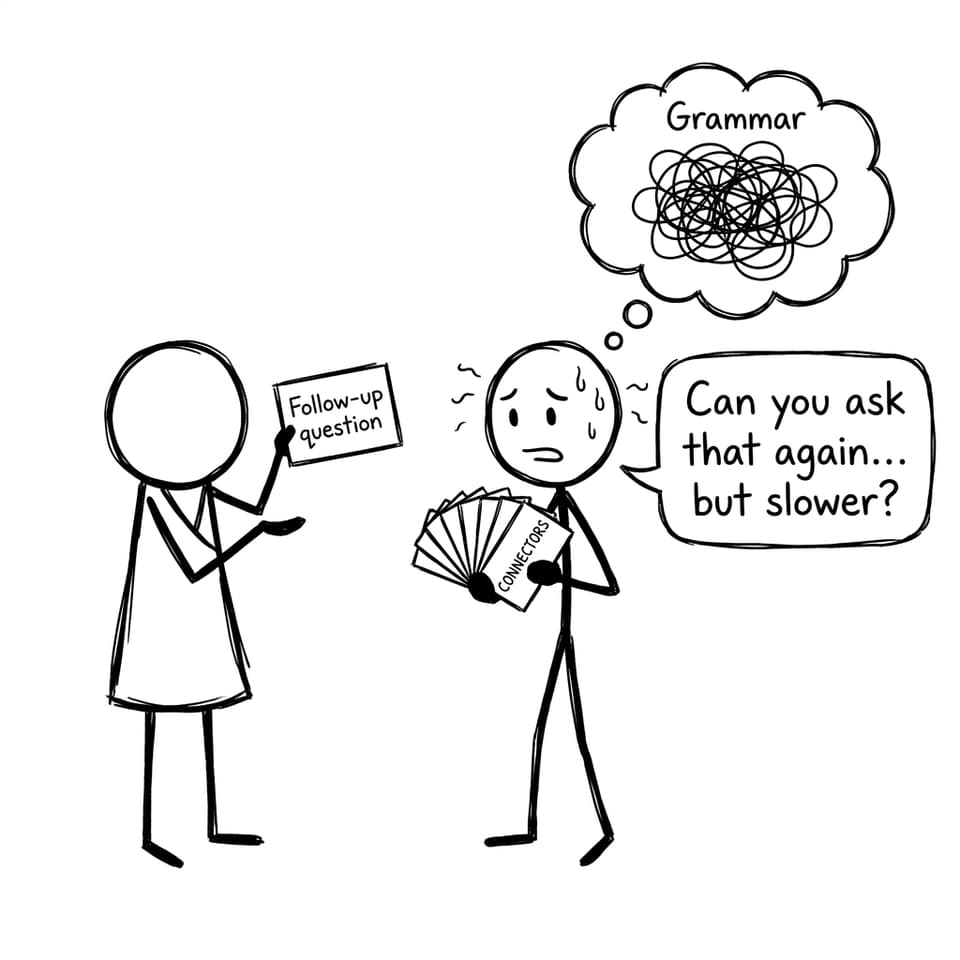
Follow-up questions are where IB Language B scores often rise or fall. The trick is to practise “soft control” phrases that buy you time without sounding stuck:
-
“That’s an interesting question. I’d say…”
-
“From another perspective…”
-
“Could you repeat the last part, please?”
-
“What I mean is…”
Then simulate unpredictability. RevisionDojo’s IB Oral Recording Platform: Professional Audio Analysis helps you practise under exam-style pressure and spot patterns in pacing, hesitations, and clarity.
Practise with feedback loops (the fastest way to improve)
Most students practise the oral like a performance. High scorers practise it like an experiment: attempt, feedback, adjust, repeat.
On RevisionDojo, you can combine:
-
Questionbank practice to build theme vocabulary and sentence control
-
AI Chat to generate follow-up questions in Spanish and push spontaneity
-
Mock Exams to rehearse timing and pressure
-
Grading tools to tighten accuracy in written prep (so speaking becomes easier)
-
Tutors when you want human coaching on pronunciation and delivery
If you want a structured method for oral practice with AI support, see: IB IO Practice Tool: Perfect Your Individual Oral Skills with AI.
Closing: turn IB Language B oral prep into a system
The students who do well in the Spanish oral don’t have fewer nerves. They just have fewer unknowns.
Build your IB Language B oral around structure, theme connections, and repeated timed practice. Then let RevisionDojo compress the feedback loop with Study Notes, Flashcards, AI Chat, Questionbank practice, Mock Exams, Predicted Papers, Grading tools, a Coursework Library, and Tutors when you want a human edge.
Start with the Spanish hub here: IB Spanish B Resources, and practise until the exam feels like another rehearsal.