
Choosing an IB language feels like choosing a story about yourself
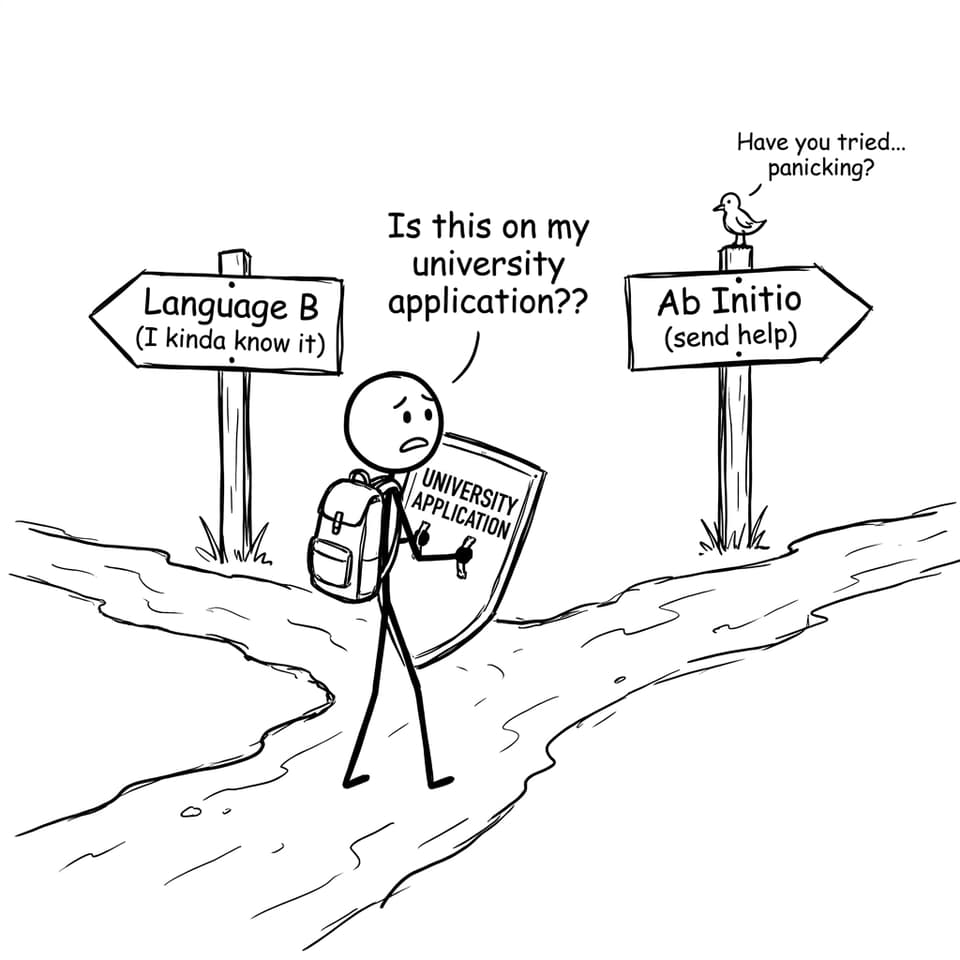
In the IB, your language choice can feel strangely personal. Not because universities are obsessing over whether you took Language B or Ab Initio, but because you are. One path says, “I’m building on something.” The other says, “I’m brave enough to start from zero.” And when you’re filling out university applications, it’s easy to hear every decision echo.
The truth is calmer: universities usually read your IB language choice in context. They care about rigor, yes, but they care more about whether you chose a level you can actually succeed in and what your overall IB results say about your habits.
Quick checklist (save this before you decide)
-
Do you already have 2-5 years of experience in the language? (That usually points to Language B.)
-
Are you basically a beginner? (That is what Ab Initio is built for.)
-
Do you need HL for your goals? (Only Language B offers HL.)
-
Which option gives you the best chance of a strong IB grade without burnout?
-
Have you checked your target university or program requirements?
If you want a broader decision map first, start with IB Language B vs Language ab initio: Key Differences and How to Choose the Right Course.
IB Language B vs Ab Initio: the real difference is your starting point
Language B: for students who already “kind of know it”
IB Language B is designed for learners with prior exposure. You are expected to operate at an intermediate level and improve accuracy, range, and confidence under exam conditions. It is available at SL or HL, which means you can signal extra rigor if HL makes sense for you.
If you want the exam structure clearly laid out, keep this open while you plan revision: A Comprehensive Guide to the IB Language B Paper Format.
Ab Initio: for true beginners who want a structured runway
Language Ab Initio is for students starting from the beginning (or close to it). It is SL only, and it focuses on practical communication: clear meaning, simple structures, and steady progress across themes.
If you are new to the course, the fastest clarity comes from: What is Ab Initio in the IB Program? and Succeeding in an AB Initio Class: Your Ultimate Survival Guide.
Which looks “better” on university applications?
Here’s the part most people miss: universities do not award points for unnecessary suffering. They prefer strong results in a challenging course load, and they can usually tell when a student picked the wrong level for their background.
When Language B helps your application
Language B can look stronger when:
-
You already have the foundation and are showing continued development.
-
You take Language B HL and perform well (it can signal comfort with complexity).
-
Your intended degree connects to language, literature, international relations, or area studies.
If you’re unsure about difficulty, read: Is Language B Harder Than Ab Initio? A Clear Comparison for IB Students.
When Ab Initio helps your application
Ab Initio can be the smarter story when:
-
You are genuinely a beginner and want a realistic chance at a high IB score.
-
Your timetable is heavy and you need a language option that is demanding but manageable.
-
You want to show breadth: learning a new language while sustaining performance across subjects.
For practical course expectations, see IB Language ab initio Coursework: Structure, Marks & Tips.
How to make the choice that actually boosts your IB results
Choose the course where your effort converts into marks. Then build a system.
A simple RevisionDojo loop for IB languages:
-
Use Study Notes to get clarity on theme vocab and grammar.
-
Drill exam-style tasks in the Questionbank.
-
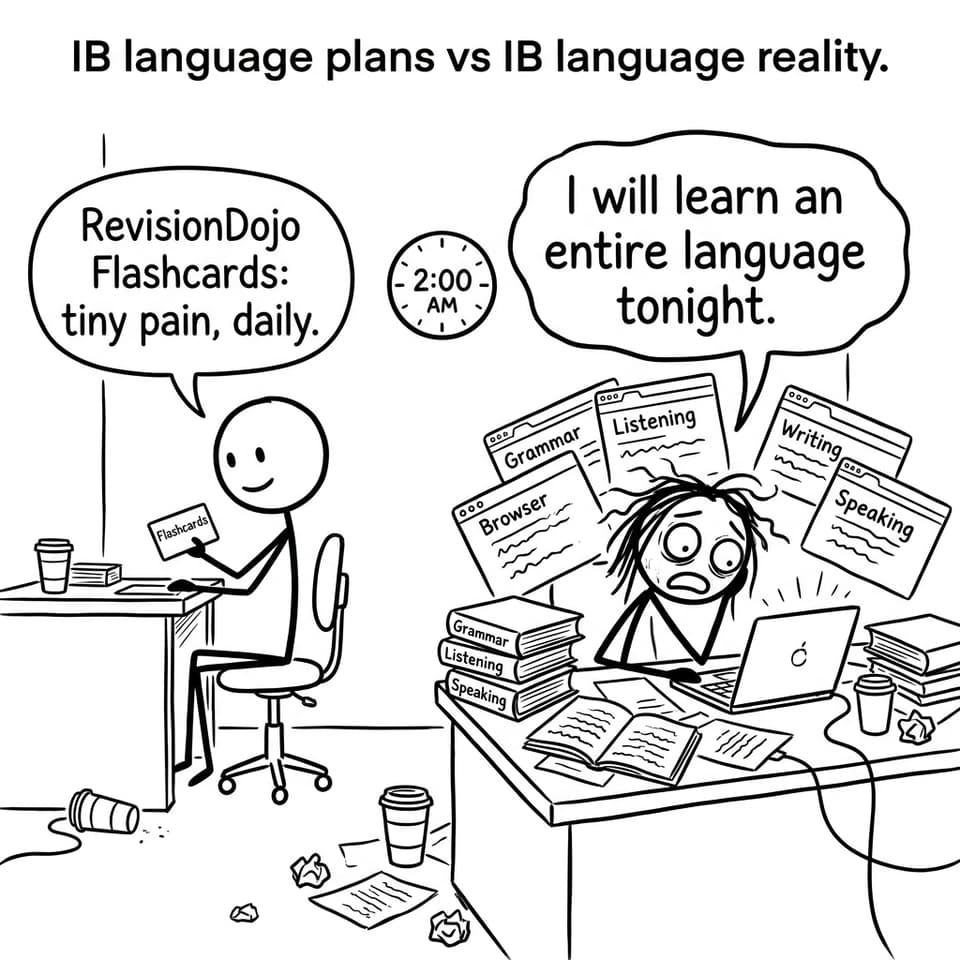
Lock phrases and core structures with Flashcards (spaced repetition).
-
Use AI Chat when you don’t understand why an answer is better.
-
Use Grading tools to tighten your writing to the criteria.
-
Run Mock Exams when timing starts to matter.
-
Add Tutors if speaking confidence or feedback is the bottleneck.
To sharpen Language B writing specifically, pair your practice with How to Avoid Common Mistakes in Language B Writing.

The bottom line: the “better” IB choice is the one you can win
Language B vs Ab Initio is not a moral test. It is placement. Universities want a strong IB profile built on realistic choices and consistent execution.
If you want your decision to translate into marks, build your weekly routine inside RevisionDojo using the Questionbank, Study Notes, Flashcards, AI Chat, Grading tools, Predicted Papers, Mock Exams, the Coursework Library, and Tutors. Choose the level you can excel in, then practise like it matters.