In IB Theatre, it’s easy to treat marks like a mysterious verdict delivered after months of rehearsal, reflection, and late-night script edits. But grade boundaries are less like fate and more like stage lighting: once you understand where the beam falls, you can step into it on purpose.
This guide breaks down the IB Theatre HL grade boundaries for 2025 (Timezone 0) and shows how to use them to plan smarter, calmer preparation. If you want to compare sessions beyond 2025, bookmark the official trend page for IB Theatre grade boundaries.
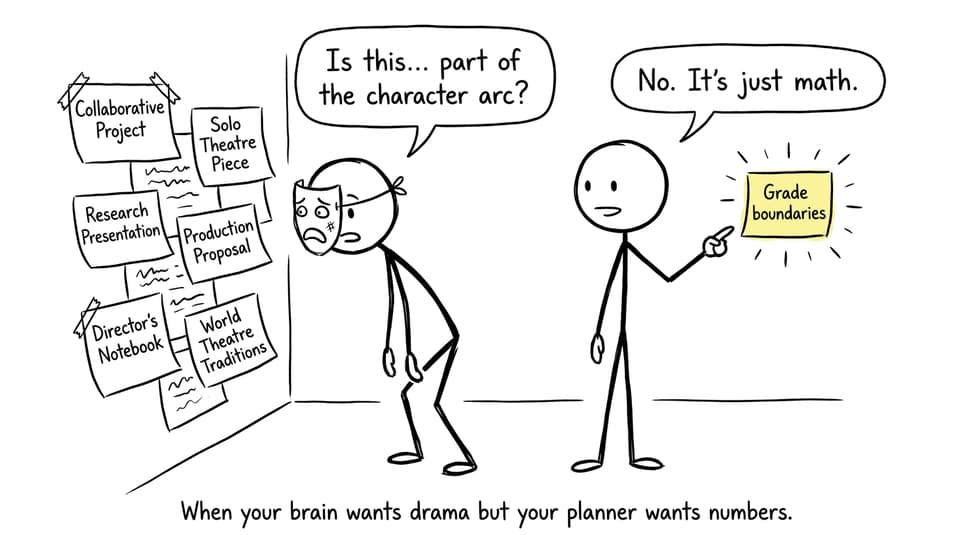
Quick checklist: how to use IB Theatre grade boundaries
-
Treat each component like its own mini-target (not just the final grade).
-
Build evidence weekly: process photos, rehearsal notes, drafts, and reflections.
-
Use criteria language when you write: intention, context, impact, evaluation.
-
Track your current marks with the IB Grade Calculator so boundaries feel concrete.
-
When you get feedback, translate it into one action for the next rehearsal or research session.
If you want a broader routine that actually fits rehearsal life, pair this article with Best Study Strategies for IB Theatre Students (SL & HL).
IB Theatre HL Grade Boundaries 2025 (Timezone 0)
These are the key IB Theatre boundaries for 2025 TZ0. Use them as a map: not to obsess, but to decide where you need margin.
Collaborative Project (out of 24)
-
Grade 7: 21-24
-
Grade 6: 17-20
-
Grade 5: 12-16
-
Grade 4: 8-11
-
Grade 3: 5-7
-
Grade 2: 3-4
-
Grade 1: 0-2
Production Proposal (out of 20)
-
Grade 7: 18-20
-
Grade 6: 15-17
-
Grade 5: 13-14
-
Grade 4: 10-12
-
Grade 3: 6-9
-
Grade 2: 3-5
-
Grade 1: 0-2
Research Presentation (out of 24)
-
Grade 7: 20-24
-
Grade 6: 16-19
-
Grade 5: 12-15
-
Grade 4: 8-11
-
Grade 3: 5-7
-
Grade 2: 3-4
-
Grade 1: 0-2
Solo Theatre Piece (out of 24)
-
Grade 7: 21-24
-
Grade 6: 17-20
-
Grade 5: 14-16
-
Grade 4: 10-13
-
Grade 3: 6-9
-
Grade 2: 3-5
-
Grade 1: 0-2
Final IB Theatre HL grade boundaries (out of 100)
-
Grade 7: 84-100
-
Grade 6: 67-83
-
Grade 5: 53-66
-
Grade 4: 36-52
-
Grade 3: 21-35
-
Grade 2: 10-20
-
Grade 1: 0-9
For broader context on how boundaries are set (and why they move), read IB Grade Boundaries: How They're Actually Calculated.
What these boundaries mean for your IB Theatre plan
In IB Theatre, the fastest way to lose marks is to assume the examiner can “see” your process because you lived it. They can’t. They only see what you document, explain, and evaluate.
If you’re chasing a 7, aim for margin (not perfection)
A 7 in IB Theatre HL starts at 84/100 in TZ0. That number is useful because it encourages a calmer strategy: build a buffer.
Try this: pick one component where you can realistically gain 2-3 marks with better structure, clearer intention, or stronger evidence. That small gain often matters more than trying to reinvent your whole performance style in the last month.
Match your work to the exact task
-
Collaborative Project: Make your contribution visible. Track decisions, roles, and change over time.
-
Production Proposal: Keep it practical and research-rooted. Examiners reward clarity and feasibility.
-
Research Presentation: Balance scholarship and theatre-making. If you need a structure, use How to Prepare for the IB Theatre Research Presentation.
-
Solo Theatre Piece: It’s performance plus reasoning. Start with How to Approach the IB Theatre Solo Theatre Piece (HL Only) and then refine the writing with How to Write a Strong Report for the IB Theatre Solo Piece.
How RevisionDojo helps you turn boundaries into marks
Grade boundaries tell you the destination. RevisionDojo helps with the daily steps.
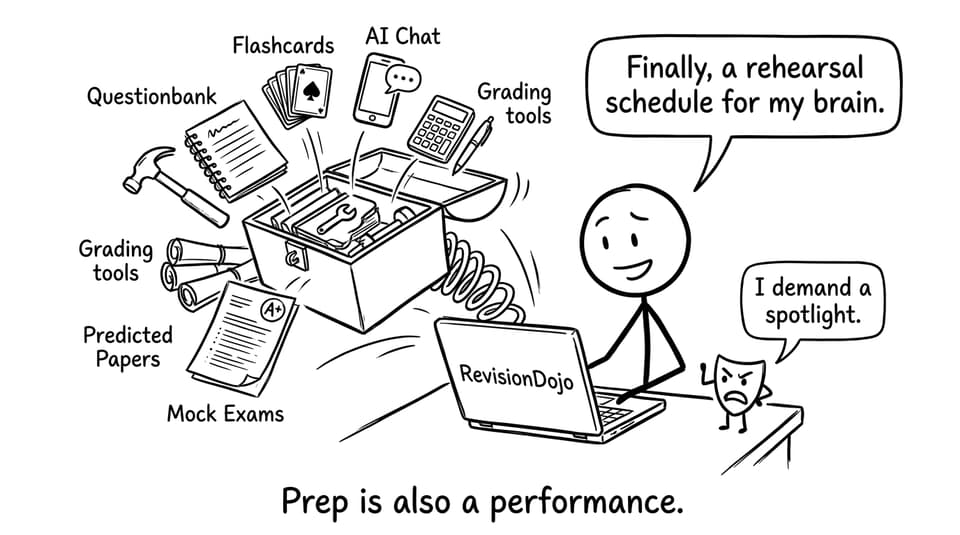
Use Questionbank to drill terminology, practitioners, and the kind of applied thinking IB Theatre rewards. Use Study Notes to clean up confusion fast, then lock it in with Flashcards. When you’re unsure if your reflection is analytical enough, use AI Chat to pressure-test your reasoning. And when you want to see how your work would score, the Grading tools help you align to criteria, not vibes.
For high-pressure weeks, add Predicted Papers and Mock Exams to rehearse under time constraints, and lean on the Coursework Library for models of strong structure. If you’re stuck in a loop, Tutors can help you fix the root issue quickly.
FAQ: IB Theatre HL grade boundaries 2025 (TZ0)
Why do IB Theatre grade boundaries vary between components?
In IB Theatre, each component measures a different kind of skill, so the mark distributions naturally differ. The Collaborative Project rewards evidence of collaboration and decision-making over time, while the Solo Theatre Piece demands controlled performance plus clear justification. The Production Proposal leans into planning and research clarity, which creates its own pattern of scoring. The Research Presentation blends academic framing with applied theatre understanding, so students who only “describe” often score lower than students who analyze impact. Because the tasks are different, the thresholds that separate a 6 from a 7 also differ. The important move is to treat each boundary as a separate target, not a single average.
How is the final IB Theatre HL grade calculated in 2025 (Timezone 0)?
Your final IB Theatre HL result is a combined total out of 100 that comes from all assessment components. That total is then matched to the final grade boundary table for the session and timezone, where 84-100 equals a 7 in TZ0 for 2025. This is why component planning matters: a small drop in one area can be difficult to “magically fix” elsewhere. The healthiest approach is to monitor where you currently sit across components and improve the easiest marks first. If you want to estimate outcomes quickly as you collect scores, use the IB Grade Calculator. In IB Theatre, clarity and evidence often lift totals more reliably than last-minute intensity.
Which IB Theatre HL component is usually the hardest to score highly in?
Most students find the Solo Theatre Piece and the Collaborative Project the most demanding, but for different reasons. The Solo can feel personal: you’re exposed, you’re timed, and you must translate theory into visible choices, then explain them with precision. The Collaborative Project adds the unpredictability of group dynamics, where your success depends partly on planning and communication. Many students underestimate how much marks come from documented process, not just the final performance. The “hardest” component is often the one where you’ve collected the least evidence. If you build a weekly habit of reflection and criteria-checking, IB Theatre becomes less stressful and more controllable.
Closing thought: make the numbers work for your art
IB Theatre is creative, but your marks come from proof. Once you know the IB Theatre grade boundaries for 2025 (Timezone 0), you can stop guessing and start building margin with intention.
If you want to turn your next rehearsal into measurable progress, start with RevisionDojo’s IB Theatre support: explore the IB Theatre tag hub, use the Questionbank and Flashcards for fast recall, and let the Grading tools keep your reflection aligned to what earns marks in IB Theatre.