
If you’ve ever lost marks in Chemistry because you knew the idea but couldn’t move fast enough under pressure, you already understand the real exam game: it’s not just knowledge, it’s navigation.
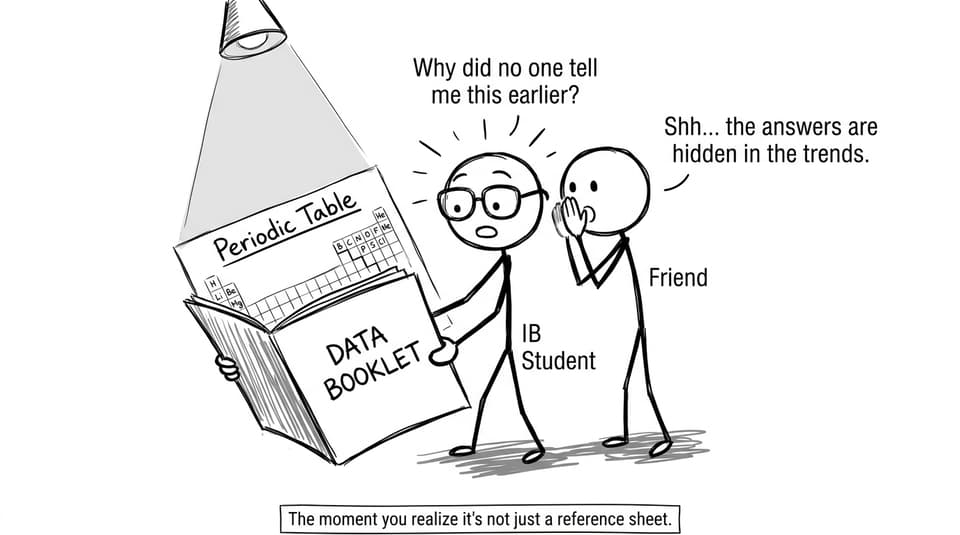
The IB periodic table (the one in the data booklet) is one of the most underrated IB Resources. Not because it tells you everything, but because it tells you just enough at exactly the moment you need it. When you learn to treat it like a tool instead of a poster, it starts saving minutes and preventing silly errors.
A quick checklist before you rely on the IB periodic table
Use this as a pre-exam “sanity check” while revising:
-
You can locate atomic number and relative atomic mass without hesitation.
-
You can read group and period position and translate that into likely properties.
-
You can sketch basic electron configurations from position (especially for main-group elements).
-
You can explain core periodic trends (radius, electronegativity, ionization energy).
-
You practice with the IB version (not a random classroom table).
To anchor the topic properly, keep a dedicated page open while you revise: IB Chemistry Periodicity. It’s one of those IB Resources that quietly connects trends, explanations, and exam-style practice in one place.
Why the IB periodic table matters more than you think
In the exam, you are not rewarded for memorising a museum’s worth of facts. You are rewarded for making the next correct step.
The periodic table helps you do that quickly:
-
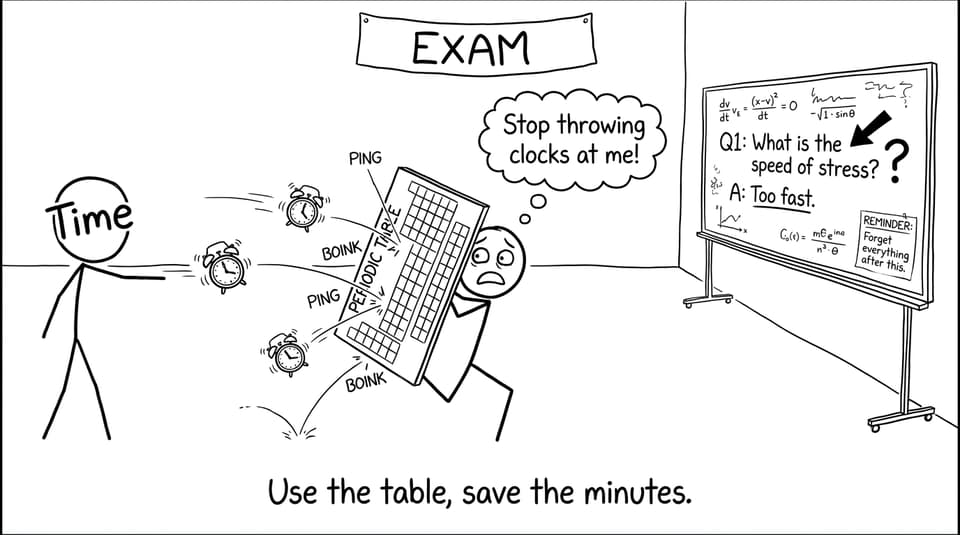
It reduces cognitive load: fewer “what was chlorine’s atomic number again?” moments.
-
It supports reasoning questions: “Explain using the periodic table…” is basically an invitation to talk about trends.
-
It helps prevent calculation slips by confirming masses and proton numbers.
A good routine is to pair the periodic table with the rest of the data booklet so you’re never hunting for information. RevisionDojo’s Chemistry Data Booklet is built for exactly that kind of exam-day scanning.
How to use the IB periodic table during revision
Revision is where you build the reflexes. The table becomes useful when your brain stops asking permission to use it.
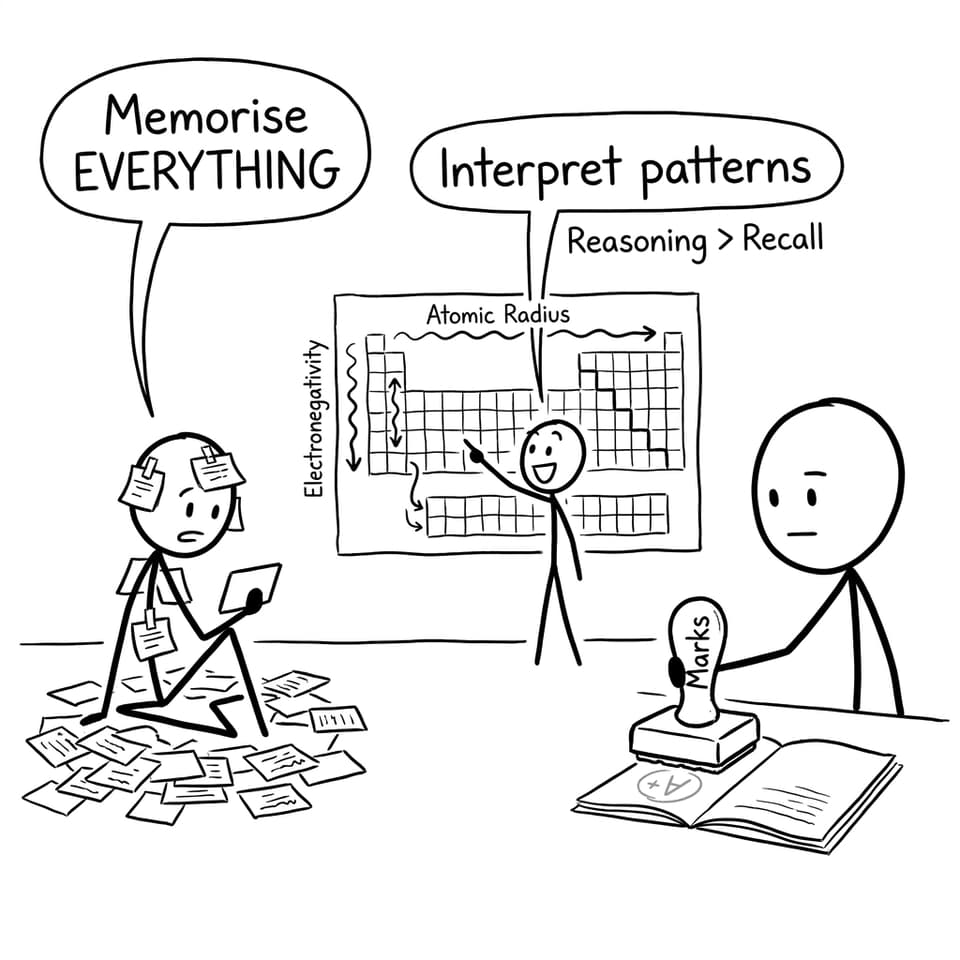
Build trend recognition, not trend memorisation
Yes, you should know the basic directions:
-
Atomic radius generally decreases across a period and increases down a group.
-
First ionization energy generally increases across a period and decreases down a group.
But the exam usually wants the reason (nuclear charge, shielding, distance, attraction). For a clean explanation path, use Periodicity Explained Simply alongside practice.
Use position to predict behaviour
When a question asks about reactivity, oxide acidity/basicity, or metal vs non-metal behaviour, the periodic table is the shortcut:
-
Group 1 trends point toward increasing reactivity down the group.
-
Group 17 trends suggest decreasing oxidizing strength down the group.
-
Moving across a period typically shifts bonding and oxide character.
If you want structured, syllabus-aligned practice on the actual table layout, go straight to S3.1 The Periodic Table.
Drill electron configuration from the table
A fast method:
-
Use the period number to estimate shells.
-
Use the group/block position to infer valence electrons.
-
Translate to likely ions (especially for main group) and link to bonding.
Then test it immediately with questions. RevisionDojo’s S3.1 Questionbank is ideal because it forces the “look, infer, apply” cycle that exams reward.
Use active recall with the table beside you
You don’t need to memorise the whole periodic table, but you do need retrieval strength for the parts that keep coming up: common ions, common oxidation states, and trend explanations.
That’s where quick sessions help. Try S3.1 Flashcards and then explain your answers out loud. This kind of practice turns IB Resources into habits.
Common mistakes students make with the IB periodic table
-
Treating it like decoration: if it’s only something you glance at, it won’t save time.
-
Explaining trends without mechanisms: “it increases” is weaker than “effective nuclear charge increases, pulling electrons closer.”
-
Rushing the basics: mixing up atomic number and atomic mass still happens under stress.
-
Not matching your practice to exam tools: revise using the booklet table, not a colourful classroom version.
Bringing it all together
The IB periodic table won’t magically hand you a 7. But it will do something just as important: it will make your thinking faster, cleaner, and harder to derail.
If you want IB Resources that turn the periodic table into a real exam advantage, build your routine around RevisionDojo: practise with the Questionbank, lock in explanations with Study Notes and Flashcards, and refine your exam technique with AI Chat, Grading tools, Predicted Papers, Mock Exams, the Coursework Library, and Tutors. The table is already in your booklet. The skill is learning to use it like you mean it.