
The moment a number tries to become your identity
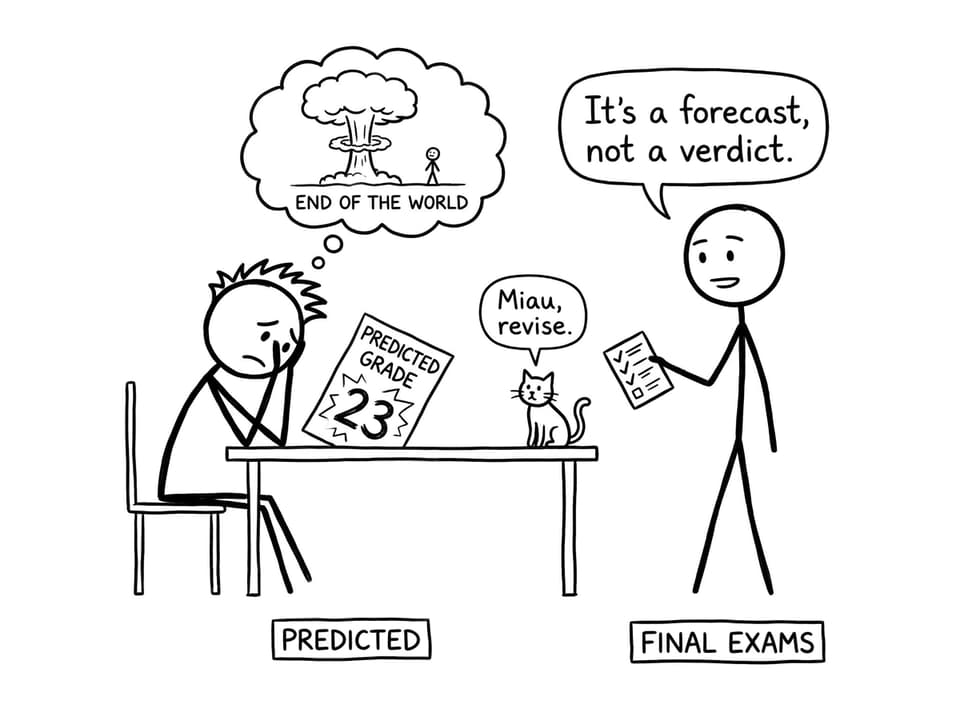
You know the scene: you open the email, you see the predicted grade, and your brain starts writing a biography from one data point. It feels final. It isn’t.
Predicted grades are a teacher’s best estimate based on your recent evidence: mocks, coursework progress, class tests, and consistency. Useful for admissions, yes. But not the same thing as your final outcome. If you need Studying Tips that actually change the evidence (and your marks), start here: treat the prediction as information, then build a recovery loop.
If you want context on how predictions are formed, read How to Interpret IB Predicted Grades and Improve Them and How to Calculate My Predicted Grade in IB.
A quick recovery checklist (save this)
-
Identify why the predicted grade dropped: content gap, method gap, command terms, timing, or stress.
-
Choose one subject to fix first (fastest points gain).
-
Build a two-track week: daily recall + repeated exam practice.
-
Ask teachers for specific evidence and the next assessment that could move the prediction.
-
Use RevisionDojo to keep everything in one place: Study Notes, Flashcards, Questionbank, AI Chat, Mock Exams, Predicted Papers, Grading tools, Coursework Library, and Tutors.
For a calm 14-day reset, bookmark IB Predicted Grades Missed? What to Do Next.
Studying Tips that turn panic into points
Separate “emotion” from “evidence”
A bad predicted grade is loud. Evidence is quiet. Your job is to rebuild quiet proof.
Start by writing one sentence per subject: What did the teacher likely use to predict this? If you’re near a threshold score (for example, a low total that still feels salvageable), the difference is often one grade bump in one or two subjects. If that’s you, see My IB Predicted Grade Is 23/42 (25 With Bonus) and How to Improve a 23 Predicted Score in IB.
Build a reverse-timeline plan you can repeat
The best plans are boring enough to survive a tired Tuesday.
Use a reverse timeline: exam dates first, then weekly blocks. If you need structure, Countdown to IB Exams: A Guide to Effective Studying pairs well with simple Studying Tips like “one timed block a week, every week.”
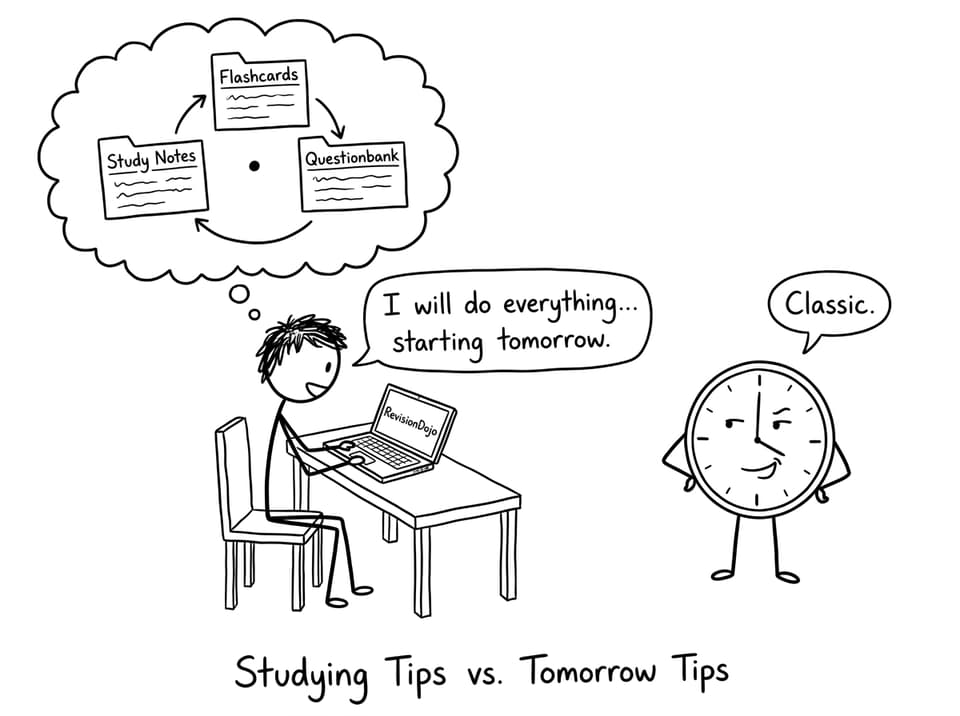
On RevisionDojo, this becomes a loop:
-
Patch one weak topic using Study Notes.
-
Convert the key ideas into Flashcards.
-
Pressure-test with the Questionbank (topic-filtered).
-
Use AI Chat to ask one precise question about your mistake pattern.
Practice like training, not like rereading
Most students “revise” by rereading and hoping. Recovery requires measurable reps.
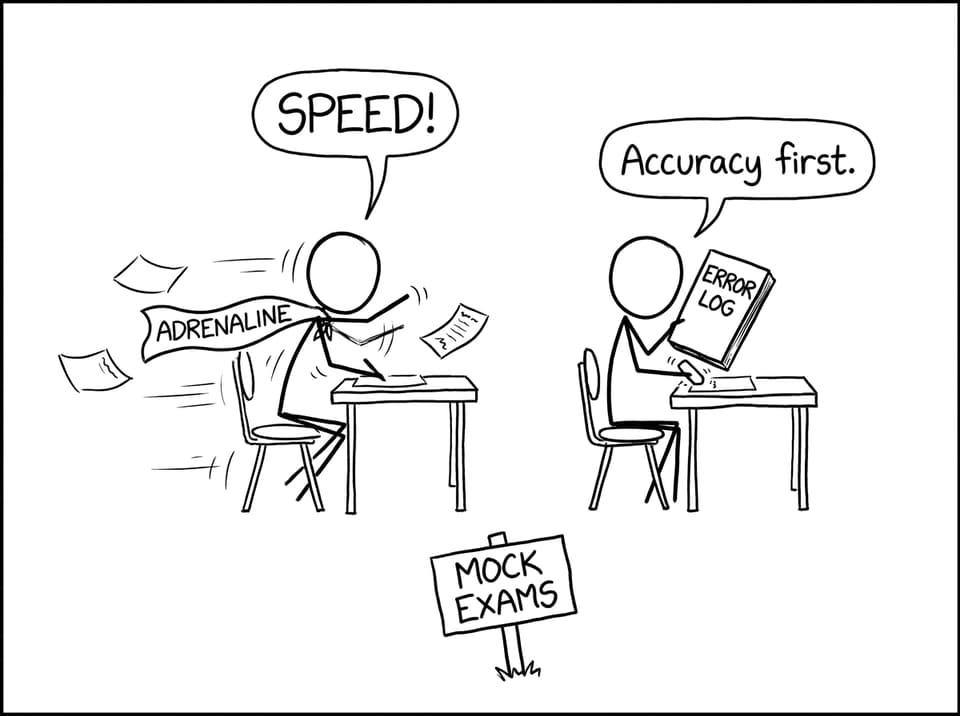
Use Mock Exams to train timing and reduce unforced errors. Then review longer than you sat the timed section. That’s where marks come from.
If you’ve ever studied hard and still underperformed, Why Some Students Fail IB Even After Studying will feel uncomfortably accurate in a helpful way.
Track progress with real numbers (not vibes)
A recovery plan works best when you can see the climb.
Use the IB Grade Calculator to translate your timed practice marks into an estimated total. If you’re unsure how to interpret the output, read How to Predict Your IB Scores in 2025 and compare assumptions with Predict Your IB Score Before Exams (Without Guessing).
Closing: your next week matters more than your last one
A bad predicted grade feels like a door closing. In reality, it’s a dashboard warning light: specific, annoying, and useful if you respond early.
Choose one subject, run a two-week loop, and let the evidence change. Use RevisionDojo to keep the cycle tight: Study Notes for clarity, Flashcards for recall, Questionbank for targeted practice, AI Chat and Grading tools for fast feedback, Mock Exams and Predicted Papers for realism, and the Coursework Library plus Tutors when you need a human or rubric-driven reset.
If you want one action right now: do a 30-45 minute timed set today, log your top three error types, then apply those Studying Tips tomorrow with targeted practice. That’s how a prediction stops being a label and becomes a starting point.